

TSMC and Taiwan researchers engineered an interface only 0.42 nanometers thick to improve next-generation MoS2 transistors


TSMC and Taiwan researchers engineered an interface only 0.42 nanometers thick to improve next-generation MoS2 transistors
Representational AI photo

Researchers from Taiwan’s National Yang Ming Chiao Tung University (NYCU) and TSMC Corporate Research have developed a new way to improve transistors made from atomically thin materials. They focuses on the tiny boundary where two materials meet, which allowed them to build transistors with an extremely thin insulating layer while maintaining strong electrical performance.According to Science Daily, atomically thin semiconductors have been studied for more than a decade because some can be just one atom thick while still showing useful electrical properties. Such materials could allow transistors to become smaller, faster and more energy efficient than conventional silicon-based devices.However, making these very thin transistors work well has been difficult. One major problem involves the gate dielectric, an extremely thin insulating layer that helps control the movement of electrons. Making it thinner can improve transistor control, but when it is placed on an atomically thin semiconductor, problems can develop at the boundary between the two materials. These can interfere with electron movement and reduce performance.The new study, published in Nature Electronics, addresses this problem by engineering the atomic interface between the semiconductor and the insulating layer.

Focus on Atomic Boundary

The NYCU team worked with TSMC Corporate Research to engineer the narrow region where the two materials meet. Instead of focusing only on finding a new semiconductor, the researchers changed the interface itself.The team used monolayer molybdenum disulfide, or MoS2, as the semiconductor. A monolayer is a material that is only one layer of atoms thick. The researchers first placed an ultrathin epitaxial aluminium layer directly on the MoS2.They then oxidised the aluminium to create an aluminium oxide layer about 0.42 nanometres thick. After this, they added a high-κ hafnium oxide gate dielectric, an insulating material that can provide strong electrical control while remaining very thin.The 0.42-nanometre aluminium oxide layer acted as a buffer between the MoS2 and hafnium oxide. It created a smoother surface, helping the hafnium oxide grow more uniformly, while also reducing unwanted electrical interactions between the two materials.“For many years, efforts to improve atomically thin transistors have largely focused on discovering better semiconductor materials,” said Professor Wen-Hao Chang, the study’s corresponding author from NYCU. “Our research shows that the atomic interface between materials can be just as important. By engineering that boundary, we were able to reduce one of the fundamental trade-offs that has limited two-dimensional transistors for many years,” he added.

Why interface matters

Atomically thin semiconductors create a particular challenge because their surfaces do not have dangling bonds. This makes it difficult to grow an extremely thin dielectric layer evenly across the surface.Standard deposition methods can leave gaps and defects at the interface. These can create electrical disorder and reduce carrier mobility, which refers to how easily electrons move through a material.

Science Daily photo

Science Daily photo

Researchers have explored different dielectric materials, molecular seed layers and other oxide deposition methods. However, achieving a very thin equivalent oxide thickness, strong electrostatic control and high carrier mobility at the same time remains difficult.The challenge is especially important for wafer-scale CVD-grown monolayer MoS2. CVD, or chemical vapour deposition, is a method used to produce thin material layers over a larger area.

0.42-nanometre buffer layer

The researchers’ approach was to redesign the interface rather than replace the semiconductor or gate dielectric. They placed the ultrathin epitaxial aluminium layer on monolayer MoS2 and oxidised it to produce the 0.42-nanometre aluminium oxide layer. The high-κ hafnium oxide was then added on top.The team built short-channel top-gate transistors using CVD-grown monolayer MoS2. The devices had an equivalent oxide thickness of about one nanometre.Tests showed low leakage current and minimal hysteresis. Hysteresis refers to unwanted differences in a transistor’s electrical response depending on its previous operating condition.The transistors reached a maximum transconductance of 0.45 mS μm-1, with channel lengths of about 100 nanometres. Transconductance measures how strongly a transistor’s current responds when the gate voltage changes.The devices combined a very thin dielectric with strong electrical control and continued carrier transport, a combination that has been difficult to achieve in atomically thin transistors.

Relevance for future chips

The findings highlight the growing importance of interfaces as transistor components become smaller. When materials are only a few atomic layers thick, the region where two materials meet can strongly affect how the device performs.“When transistor components become only a few atomic layers thick, the interface is no longer simply the boundary between materials, it becomes an active part of the device,” said Professor Tsung-En Lee, the study’s corresponding author. “Learning to engineer these interfaces with atomic precision opens new opportunities for designing future semiconductor devices that would be difficult to achieve by changing individual materials alone,” professor Lee added.The researchers believe the approach could contribute to future two-dimensional electronics. Using CVD-grown monolayer MoS2 also brings the work closer to materials and processes that could eventually be considered for wafer-scale manufacturing.




Source link

Pakistan Military Spending Oversight: Why US is questioning Pakistan’s Rs 3 trillion defence spending


Why US is questioning Pakistan's Rs 3 trillion defence spending
The US also criticised Islamabad for not publishing its executive budget proposal within a reasonable period (representative image)

The US state department has flagged a lack of adequate parliamentary and civilian oversight of Pakistan’s military and intelligence spending, while also raising concerns over limited disclosure of government debt and delays in publishing the executive budget proposal.The concerns were highlighted in the 2026 Fiscal Transparency Report, which assessed Pakistan’s public financial transparency and identified gaps in the country’s budgetary and fiscal disclosure practices.The report noted that Pakistan made its enacted budget and end-of-year financial statements widely available online. However, it said military and intelligence budgets remained outside adequate parliamentary or civilian public scrutiny.“The military and intelligence budgets were not subject to adequate parliamentary or civilian public oversight,” the report said.The US also criticised Islamabad for not publishing its executive budget proposal within a reasonable period.According to the assessment, this limits the time available for lawmakers and civil society to examine government spending before the budget is adopted.

US asks Pakistan to improve defence and debt transparency

The state department called for three key changes to Pakistan’s fiscal transparency framework.It urged Islamabad to make its executive budget proposal publicly available within a reasonable period, disclose detailed information about government debt obligations, including liabilities linked to state-owned enterprises, and bring military and intelligence agency budgets under parliamentary or civilian public oversight.The report also raised concerns about Pakistan’s disclosure of public debt, saying only limited information was available on debt obligations, including those of major state-owned enterprises.At the same time, the US assessment acknowledged some positive aspects of Pakistan’s public financial system.It said the country’s supreme audit institution met international standards of independence and noted that its audit reports were published in a timely manner and contained substantive findings.

Pakistan’s defence allocation rises to Rs 3 trillion

The US assessment comes against the backdrop of a substantial increase in Pakistan’s defence allocation for the 2026-27 financial year.In June, Pakistan’s federal government proposed allocating Rs 3 trillion for defence services, up 17.65 per cent from the previous year’s initial allocation of Rs 2.55 trillion, according to Dawn.The proposed defence services allocation amounts to about 2.08 per cent of Pakistan’s projected GDP of Rs 143.6 trillion and nearly 16 per cent of the federal government’s total outlay of Rs 18.77 trillion.Spending on civil works related to military infrastructure was projected to rise 7.92 per cent to Rs 363.16 billion, from Rs 336.49 billion previously.Military pensions are accounted for separately from the main defence services budget. The government has allocated Rs 822 billion for retired military personnel under the federal pension outlay, according to Dawn.The allocation for defence administration was set at Rs 10.9 billion, compared with Rs 7.9 billion in the outgoing fiscal year’s original budget. That allocation was later revised to Rs 11.75 billion.Major military imports and defence acquisitions are generally funded outside the main defence services allocation and remain undisclosed.The US state department’s assessment therefore highlights a distinction between Pakistan’s publicly disclosed defence allocation and the wider military spending that may not be fully visible through the country’s budgetary documents.

Defence spending remains a key transparency concern

The state department’s recommendations focus on bringing military and intelligence expenditure into the broader framework of public financial oversight.While the report recognised that Pakistan publishes key budget documents, it identified defence and intelligence spending, debt disclosure and the timing of budget publication as areas requiring greater transparency.The recommendations would require Pakistan to give lawmakers and the public greater visibility into military and intelligence allocations, as well as government liabilities linked to state-owned enterprises.


Source link

Candace Owens confirms Andrew Wilson debate as Turning Point USA faces fresh scrutiny over journalist ties


Candace Owens confirms Andrew Wilson debate as Turning Point USA faces fresh scrutiny over journalist ties
Candace Owens (Image via Getty)

A new social media post has put Candace Owens back at the center of a growing political dispute, with the post highlighting her confirmation of a Friday debate with Andrew Wilson and her claims about Turning Point USA. The screenshot also points to Owens’ allegations about the organization’s interactions with journalist Brandy Zadrozny, adding another layer to an already heated public feud.

Candace Owens confirms Andrew Wilson debate for Friday

The post from Project Constitution featuring a clip of Owens discussing the upcoming debate and the wider controversy surrounding Turning Point USA. According to the post, Owens confirmed that her debate with Andrew Wilson will take place Friday. She also said she plans to reveal the moderator during her show.The announcement gives the dispute a clear next stage. Rather than remaining limited to social media exchanges and competing claims, Owens and Wilson are now expected to face each other directly in a public debate.Owens also used the video to question what she described as Turning Point USA’s silence after she published uncompressed photographs. Her comments suggest she sees that silence as significant, particularly as the broader dispute continues to attract attention online.She then turned her focus toward journalists who she says have been working with the organization.“Okay, you guys, it’s official. The debate with Andrew Wilson is on for Friday and I’m going to announce who the moderator is today on the show. Also, strange silence from Turning Point USA after I published those uncompressed photos. I don’t think we’ve ever heard them this silent. I guess you wouldn’t hear them because they’re not saying anything. And I’m going to tell you a bit about the journalists that they were working with. Remarkably, despite the fact that they think a transgendered person, or I guess somebody who’s dating a transgendered guy killed Charlie Kirk, they’re willing to work with journalists that are interested in transing children. That doesn’t really check out. But of course, Erica has opened the company to them so they could land a hit piece on Candace Owens.”

Turning Point USA claims add another layer to the dispute

The most striking part of the image is not simply the debate announcement. It is the connection Owens attempts to draw between Turning Point USA, journalists and coverage involving her.The Project Constitution post claims Turning Point USA cooperated with MSNBC reporter Brandy Zadrozny, describing her as a journalist who recently published a critical report involving Owens and others investigating the case. Those claims are presented by the account and Owens, rather than independently established facts in the supplied material.That distinction matters as the accusations become part of a rapidly moving online debate. Claims involving political organizations, journalists and the investigation into Charlie Kirk’s death can spread quickly, making sourcing and attribution especially important.For Owens, however, the issue appears to be about more than one article. Her remarks suggest she believes the relationship between Turning Point USA and the journalist deserves scrutiny, particularly given the organization’s publicly stated positions on transgender issues.The Friday debate could therefore become another major moment in the ongoing conflict. With Owens promising to identify the moderator and continuing to challenge Turning Point USA publicly, attention is likely to shift toward what she and Wilson say when they meet face to face.For now, the image serves as a snapshot of the controversy: a confirmed debate, pointed accusations and another public confrontation that could push the dispute into an even more intense phase.


Source link

Who was Chandler David Hendry? Mormon YouTuber dies at 27 in tragic Utah car crash as his final afterlife video leaves followers mourning


Who was Chandler David Hendry? Mormon YouTuber dies at 27 in tragic Utah car crash as his final afterlife video leaves followers mourning

Chandler David Hendry’s sudden death has left followers of his religious content mourning a young creator whose online career had only begun to take off. The 27-year-old Mormon influencer and podcaster was killed in a three-vehicle crash in Lehi, Utah, on August 7. His death came just hours after he shared a video reflecting on the afterlife and eternal family connections.

Chandler David Hendry built a growing audience through faith-based content

Hendry became known online through his Restored Truth podcast and social media accounts, where he discussed Christianity, scripture, church history and questions surrounding the faith. Although he only began posting content in 2025, he quickly developed a following across several platforms.His audience included nearly 13,000 YouTube subscribers, more than 48,000 Instagram followers and around 15,000 TikTok followers, according to reports.The Utah crash happened at around 8:25 a.m. on August 7 at the intersection of Timpanogos Highway and Morning Vista Road in Lehi. Police said witnesses reported that Hendry ran a red light before his vehicle struck two other cars. The occupants of those vehicles were not injured, while Hendry was taken to a hospital and later pronounced dead. Police also said he was not wearing a seat belt.The circumstances have added a painful dimension to the loss for people who followed Hendry’s work. He had become a recognizable voice in a growing online community focused on religious discussion and Mormon faith.

Chandler David Hendry’s final Instagram video focused on the afterlife

Perhaps the most striking detail surrounding Hendry’s death is the subject of his final Instagram post. Shortly before the crash, he shared a video discussing a presentation by Anthony Sweat at the FAIR conference.Hendry focused on an illustration connected to Latter-day Saint teachings about sealings, family relationships and the afterlife. His discussion centered on the idea that family connections could continue into eternity.“So, last night at FAIR, Anthony Sweat presented this picture of the first rendition of the afterlife in Latter-day Saint Thought in regard to sealings. And this is the first ever picture of the plan of salvation and how it works within sealings of families. And basically identifying a link of lineages all the way back to Adam. That is what the eternities will look like. A link of the family is unit of God, which I find super interesting. Because this posits the idea in Doctrine and Covenants 132 when it says prosperity, it’s associated with the prosperity of all of the ages of your lineage. Not future creations that you’re going to have. Kinda interesting. I don’t know. Let me know your thoughts.”The timing of the post has resonated deeply with his followers, although there is no indication that Hendry knew what would happen later that morning.Tributes have since appeared across social media and within his religious community. A candlelight vigil was also held in his memory on August 10.For many who discovered Hendry through his videos, his legacy will be tied not only to his growing platform but also to the faith and family themes that shaped much of his short career.


Source link

Russian Missile Attacks: Russia kills at least 10 in Ukraine as Zelenskyy accuses Moscow of using North Korean missiles


Russia kills at least 10 in Ukraine as Zelenskyy accuses Moscow of using North Korean missiles
Firefighters work at a compound of a warehouse hit by an overnight missile strike, amid Russia’s attack on Ukraine, in Kyiv, Ukraine

At least 10 civilians were killed in Russian missile, drone and glide-bomb attacks across Ukraine on Tuesday, Ukrainian officials said, as President Volodymyr Zelenskyy accused Moscow of using North Korean ballistic missiles and preparing for further military escalation.Zelenskyy said Russian forces used ballistic missiles supplied by North Korea in an overnight strike on Zaporizhzhia in southeastern Ukraine. Seven workers at a steel plant were killed and 21 others injured in the attack, according to the company operating the facility.Three more people, including a 15-year-old boy, were killed by Russian drones and artillery in the central Dnipropetrovsk region, officials said.The latest strikes came as Zelenskyy said North Korea was preparing to deploy additional troops to Russia.Moscow and Pyongyang have significantly expanded military cooperation since Russian President Vladimir Putin and North Korean leader Kim Jong Un signed a strategic partnership agreement in 2024, which includes a commitment to provide mutual assistance if either country faces aggression.North Korea has already sent thousands of troops and large quantities of weapons to support Russia’s war in Ukraine, according to Ukrainian officials and Western assessments.

Zelenskyy warns of further Russian escalation

Zelenskyy said Russia was increasing ballistic missile production while continuing to receive military support from North Korea.“Every step Russia takes — increasing ballistic missile production, bringing in North Korean equipment, preparing for mobilisation — all of this shows that Moscow is preparing not for peace, but for escalation,” he said on social media.Ukraine has warned that Russia is seeking to exploit its shortage of Patriot air-defence interceptors, which are among the systems capable of countering ballistic missiles.The Institute for the Study of War, a Washington-based think tank, said Ukraine’s shortage of Patriot interceptors could allow Russia to cause significant damage over the coming winter and potentially contribute to prolonging the war.The think tank also assessed that the Kremlin was unlikely to make meaningful compromises in negotiations as long as Russian President Vladimir Putin believed Moscow had a viable military path towards achieving its objectives.US-led diplomatic efforts to end the war have made little progress, while Washington’s attention has also been focused on the conflict involving Iran.

Russian strikes damage Kyiv children’s hospital, steel plant

Russian forces also struck Kyiv overnight. One strike hit the grounds of a children’s hospital, creating two craters and shattering windows, according to Ukraine’s State Emergency Service.Children and medical workers were sheltering underground and nobody was injured in the attack, officials said.Another strike started a fire at a warehouse in Kyiv that spread across around 1,200 square metres, emergency officials said.The Russian defence ministry said its forces had targeted “military industrial facilities and transport and logistics centers” in Kyiv and Zaporizhzhia using ground-based precision weapons. It claimed that civilian storage facilities containing drones in Kyiv and a metallurgical plant in Zaporizhzhia were among the targets.Ukraine’s air force said Russia used Zircon anti-ship missiles and Iskander ballistic missiles against Kyiv and Zaporizhzhia, along with 120 long-range attack drones.The air force did not provide its usual daily figure for the total number of missiles launched, and it was not immediately clear why.Metinvest, a major Ukrainian mining and metals company, said seven employees at its steel plant in Zaporizhzhia were killed while attempting to reach shelters after an incoming ballistic missile warning.The company said the attack damaged a blast furnace and other equipment, forcing the plant to halt operations.

Ukraine strikes Russian oil facilities

The escalation came alongside Ukrainian attacks on Russian territory.Russia’s defence ministry said its air defences intercepted nearly 400 Ukrainian drones over 14 regions and Crimea overnight.Ukraine’s General Staff said its forces also struck an oil refinery in Orsk in Russia’s Orenburg region, around 1,500 km from Ukraine. The refinery has an annual crude-processing capacity of about 44 million barrels and produces fuels including gasoline, diesel and aviation fuel. The extent of the damage was being assessed.Separately, Ukraine has stepped up attacks on Russian energy infrastructure in recent months, targeting oil refineries as part of efforts to put pressure on Moscow.In another attack, at least 12 people were killed and 39 injured in a Ukrainian drone strike on industrial and civilian targets in Nizhnekamsk in Russia’s Tatarstan region, according to the city’s mayor.The attack also hit the TANECO oil refinery, one of Russia’s major refining facilities. The region declared a period of mourning following the attack.

UN says more than 16,000 Ukrainian civilians remain detained

The United Nations meanwhile said more than 16,000 Ukrainian civilians detained by Russia during the war remained deprived of their liberty.Claudia Fuentes Julio, the UN assistant secretary-general for human rights, told an informal UN Security Council meeting that many detainees were being held incommunicado and on grounds that did not comply with international law.She also said “widespread and systematic torture and ill-treatment” of Ukrainian civilian detainees and prisoners of war by Russia was continuing, including sexual violence.The latest Russian strikes and Ukrainian attacks come as the war enters its fifth year, with diplomatic efforts to secure a settlement showing little progress and both sides continuing to expand their long-range strike capabilities.


Source link

Trump’s move to curb birthright citizenship faces legal challenge


Trump's move to curb birthright citizenship faces legal challenge
The American Civil Liberties Union and other immigration advocacy groups filed the challenge to Trump’s new executive action before a New Hampshire federal judge

President Donald Trump’s latest move to restrict automatic citizenship is facing a legal challenge, months after the Supreme Court knocked down his earlier attempt at upending longstanding guarantees for children born in the US to non-citizens.Lawyers who defeated Trump’s original curbs on birthright citizenship asked a judge on Tuesday to declare that one of two executive orders the president signed on Aug 6 violates an existing injunction. That court order currently bars the administration from denying the status to babies whose mothers have temporary visas or who are undocumented migrants in the US illegally.The American Civil Liberties Union and other immigration advocacy groups filed the challenge to Trump’s new executive action before a New Hampshire federal judge, who had approved that case as a class action. “If the president issues 100 orders seeking to create new exceptions to the sacred guarantee of the Citizenship Clause, all 100 will be equally illegal,” the lawyers wrote. “The court should make clear that defendants may not take away class members’ birthright under the auspices of these or any other executive actions.Bloomberg


Source link

From fast fashion to fast repairs: Clothing brands push in-store mending to draw GenZ


From fast fashion to fast repairs: Clothing brands push in-store mending to draw GenZ
A clothing repair workshop at a Levi’s retail store in San Francisco

NEW YORK: Encouraging customers to mend worn clothes instead of buying new ones might seem like a self-defeating sales strategy. But in-store repairs and sewing workshops are becoming essential retail services for clothing brands as they try to appeal to young consumers who want to save money and the planet.While luxury fashion houses and select specialty retailers like Patagonia have offered product repairs for decades, the concept has caught on. Jeans giant Levi Strauss & Co., casual wear chain Uniqlo and budget retailer Primark are some of the apparel companies hoping to win over Generation Z shoppers with a needle and thread.Levi’s created a handstitching course for high school students after determining that many Gen Zers lacked the sewing skills to match their interest in thrift store shopping and sustainability. Employees spend 90 minutes instructing teenagers on four tasks: sewing on a button, hemming, patching a hole and fixing a tear.The Wear Longer programme, which the San Francisco-based company is expanding across the, US builds on the repair and customisation services Levi’s offers at hundreds of stores worldwide. “We think it’s important to empower the people who buy our clothes with the skill sets to maintain them, to get them to that second life,” Paul Dillinger, Levi’s head of global design innovation, said.The evolution of mending from an economic necessity and traditional craft to a method for cultivating customers didn’t happen overnight. The fashion industry as a whole has come under intensifying pressure to reduce its contributions to environmental pollution and climate change.Researchers broadly agree that repairing and reselling clothes can reduce a garment’s environmental impact, especially if it delays or replaces a new purchase. But many caution the practices remain too limited to offset continued growth in clothing production and consumption.Clothing production roughly doubled between 2000 and 2015, while the average number of wearings per garment declined by 36%, according to the Ellen MacArthur Foundation. The sustainability nonprofit estimated that less than 1% of discarded clothing material got recycled into new apparel.Enter Generation Z, born between 1997 and 2012. It’s the generation that grew up with fast fashion and e-commerce, then had school years and young adulthoods shaped by the coronavirus pandemic and post-pandemic inflation. Whether due to limited budgets or a rejection of materialism, Gen Z has helped the pre-owned clothing market grow much faster than retail apparel sales in the US, independent market intelligence firm GlobalData estimated in a report with resale platform ThredUp.The question facing the industry is whether repairs can evolve from niche service to commercially viable. Sweden’s H&M Group, which has presence in over 80 countries, has been candid about one of the biggest obstacles: the economics. The company has argued that repair and resale are desirable goals, but manufacturing new garments costs less than keeping existing ones in use. Making mending work in retail is challenging as it’s labour intensive and must be priced low enough to entice customers, Saunders, of GlobalData, said. AP


Source link

North Korea Ballistic Missile Launch: North Korea fires second ballistic missile in a week ahead of US-South Korea war drills


North Korea fires second ballistic missile in a week ahead of US-South Korea war drills
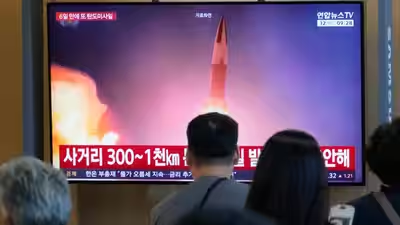
A TV screen shows a file image of North Korea’s missile launch during a news program at Seoul Railway Station (Picture credit: AP)

North Korea fired a ballistic missile towards the sea off the Korean Peninsula’s east coast on Wednesday, South Korean and Japanese authorities said, marking Pyongyang’s second reported ballistic missile launch in less than a week and coming days before major US-South Korea military exercises.South Korea’s Joint Chiefs of Staff said the missile was launched from the Wonsan area on the North’s eastern coast at around 6 am (local time) and travelled more than 700 km (435 miles).Japan’s defence ministry also detected the launch and said the missile landed in waters outside Japan’s exclusive economic zone (EEZ), between the Korean Peninsula and Japan.Japan said the missile reached a maximum altitude of about 90 km (56 miles.The latest launch came two days after South Korea and the United States announced that their annual Ulchi Freedom Shield military exercises would begin on August 17.The drills are scheduled to run until August 27 and are aimed at strengthening readiness against North Korea’s nuclear and missile threats.North Korea has repeatedly condemned the exercises, describing them as rehearsals for an invasion. The United States and South Korea have maintained that their military training is defensive.

Seoul, Tokyo condemn launch

South Korea’s National Security Council held an emergency meeting following the launch and described North Korea’s continued ballistic missile tests as acts of provocation. It urged Pyongyang to stop activities that violate UN Security Council resolutions.South Korea’s military said it remained prepared to respond to any provocation under its combined defence posture with the United States.According to Reuters, the military said it would respond “overwhelmingly” if necessary.Japan also lodged a protest with North Korea through diplomatic channels.“It’s a serious problem that affects the safety of the Japanese people,” Japanese defence minister Shinjiro Koizumi told reporters.Japan’s defence ministry said the missile landed outside its EEZ. Koizumi said Tokyo had “strongly condemned” the launch.There was no immediate statement from Pyongyang on Wednesday’s launch.

Second reported launch since August 6

The launch follows another reported ballistic missile test on August 6, when South Korea, the United States and Japan detected a short-range ballistic missile launched by North Korea.That was the North’s first reported ballistic weapons test since late June. North Korea did not immediately confirm that launch, although Pyongyang often releases details of weapons tests a day after they take place.The latest launches come amid a broader continuation of North Korea’s weapons-testing programme. The country has conducted tests involving short-range ballistic missiles, artillery rockets and other tactical weapons this year.Experts cited by news agency AP said North Korea has often used US-South Korean military exercises as a pretext to increase its own weapons testing.

Pyongyang continues to expand missile arsenal

UN Security Council resolutions prohibit North Korea from conducting ballistic missile launches.However, Pyongyang has continued developing its missile and nuclear capabilities, particularly since diplomatic efforts between North Korean leader Kim Jong Un and then-US President Donald Trump broke down in 2019.North Korea has since expanded its weapons arsenal and testing programme. Experts say Kim may seek to use the expanded capabilities to strengthen his negotiating position with Washington, including in any future discussions over sanctions.The latest test also comes as North Korea continues to strengthen its ties with Russia and China.North Korea has supplied troops and ammunition to support Russia’s war in Ukraine, while relations with China have also received renewed attention.Chinese President Xi Jinping visited Pyongyang in June, his first visit to the North Korean capital in seven years.


Source link

HasanAbi calls for permanent Asmongold ban from Twitch and YouTube as streamer feud explodes


HasanAbi calls for permanent Asmongold ban from Twitch and YouTube as streamer feud explodes

HasanAbi has reignited a fierce debate over streamer moderation after arguing that Asmongold should face permanent bans from both Twitch and YouTube. His comments came after Asmongold defended remarks that led to his recent Twitch suspension. Hasan questioned whether major platforms still enforce their rules consistently, while also pointing to what he sees as growing pressure from political groups and online campaigns.

HasanAbi says Asmongold should be permanently banned

During a livestream on August 9, HasanAbi responded to Asmongold’s YouTube video Why I’m Gone, in which the streamer addressed his two-week Twitch suspension. The controversy followed comments in which Asmongold described immigrants using dehumanizing language and advocated shooting people, including children, in a discussion about immigration.Rather than apologizing, Asmongold said he stood by his comments. That response became the focus of Hasan’s criticism.Hasan argued that Asmongold appeared to be testing how far Twitch and YouTube would allow him to go before taking stronger action. He also compared the current moderation environment with what he believes would have happened several years ago.“It’s pretty wild that I feel like this is a test. Right? He’s basically testing the boundaries of Twitch to be like, ‘Listen, what are you going to do? I’m not apologetic. I don’t care. I said what I said. Go ahead, keep me banned if you can. What’s wild about it is I feel like this is also testing the boundaries of YouTube’s terms of service, too. Because I feel like YouTube back in the day would quite literally ban someone for statements like this one.The argument places Asmongold’s suspension within a much larger discussion about platform rules. Twitch and YouTube have enormous creator communities, and decisions involving controversial political speech can quickly become flashpoints.

HasanAbi questions Twitch and YouTube moderation policies

Hasan also took aim at the business pressures he believes influence moderation decisions. He suggested that platforms may be increasingly cautious about taking action against prominent creators whose audiences could respond aggressively.“Oh, my god! It does say a lot about how things have gotten as far as like corporate culture in general that this will probably be a slap on the wrist by Twitch because they are ******* terrified of angering the right-wing masses that have spent a good deal of time doxxing people that work for the trust and safety team at Twitch. It’s like really ****** up!”Hasan went even further, saying Asmongold would likely have faced a permanent ban under the standards he remembers from previous years. He brought up Destiny as another example of a creator who, in his view, received harsher punishment for less serious remarks.“This would be an insta perma. Like, there is no shot! I would say, pre-Trump 2.0, this is a perma. Like, Destiny got banned for less, which is crazy to say. Like, he got perma’d for less, and he definitely deserved it! So, I don’t even know where we’re at now. You know? I feel like this would be a ban on ******* YouTube as well! Or at least a demonetization on YouTube as well!”The dispute now raises a familiar question for Twitch and YouTube: where should platforms draw the line between controversial political commentary and speech that violates their rules?Asmongold had not publicly responded to HasanAbi’s latest comments at the time of the report. For now, the clash between the two creators highlights how moderation decisions can become political battles of their own, particularly when major streamers are involved.


Source link

Quote of the day by Peter Thiel: ‘First mover advantage is a trap, it’s much better to be the last mover’


Quote of the day by Peter Thiel: 'First mover advantage is a trap, it's much better to be the last mover'
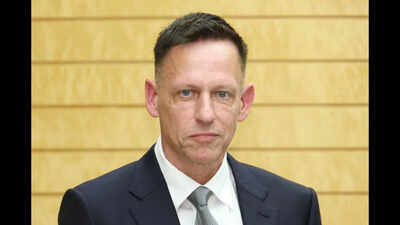
Quote of the day by Peter Thiel.

PayPal founder Peter Thiel contradicted the well-known business lesson that being the first mover in a sector has its own advantage and suggested that it is highly overrated and a trap. Because first-movers can become unseated by a new entrant and he supported his theory by citing how Microsoft remained the last operating system for a long time, Google the last search engine for a long time and neither first mover. Thiel presented this idea on several occasions: in his speeches and books, and said, ‘First mover advantage is a trap; it’s much better to be the last mover’. While starting early might generate temporary buzz, it rarely creates lasting value, he believes. What actually matters in business is not who enters the arena first, but who stays there last. In Thiel’s view, the ultimate goal of any ambitious startup is not to be a pioneer, but to become the last mover in its category — the company that makes the final major breakthrough and secures an unassailable monopoly for decades to come.

What is first-mover advantage?

The conventional wisdom in Silicon Valley has long celebrated the first-mover advantage. Business schools and startup incubators frequently teach that getting to a market first allows a company to capture brand recognition, secure early customers, and set the standards for an entire industry. Thiel rejects this premise as a dangerous distraction. Being first, he points out, often means absorbing massive research and development costs, educating a skeptical consumer base, and making critical strategic mistakes that later competitors can analyze and avoid for free. A first mover clears the path, but a fast follower with a better business model usually captures the rewards.To illustrate this point, Thiel points to the history of the technology industry, which is littered with the forgotten remains of first movers. Netscape was the first modern web browser, but Internet Explorer and Google Chrome eventually wiped it out. Myspace and Friendster were the first major social networks, but Facebook displaced them entirely. AltaVista and Yahoo were the early leaders in web search, but Google redefined the category with a far superior algorithm. In each case, the first mover did the hard labor of proving that a market existed, only to be overtaken by a later entrant that executed better, scaled faster, and built a vastly superior product.Thiel argues that a company’s true economic value resides entirely in its future cash flows. If a startup generates impressive revenues for five years but gets disrupted and erased by a competitor in year six, its long-term value is remarkably low. Conversely, if a company can achieve dominance and maintain it for twenty or thirty years without being displaced, its value becomes almost immeasurable. This is why being the last mover is so critical. A last mover enters a market, makes the definitive technical or operational leap, builds deep competitive moats, and permanently shuts out future competitors.

How to be a last-mover?

Thiel outlines a specific, step-by-step framework that runs counter to standard growth strategies.First, startups should avoid targeting massive, broadly defined markets from day one. When a founder claims they are going to capture just one percent of a hundred-billion-dollar market, Thiel sees a major red flag. Large markets mean fierce competition, slim profit margins, and constant price wars that burn through capital. Instead, a startup should aim to dominate a very small, tightly defined niche where it can quickly capture eighty or ninety percent market share.PayPal did not start by trying to revolutionize global payments for everyone. It focused exclusively on a tiny subset of users: high-volume power sellers on eBay who desperately needed a faster way to process payments. By solving that specific problem better than anyone else, PayPal captured that small niche completely. Only after dominating eBay payments did the company expand into broader financial services. Similarly, Facebook did not launch as a global network for billions of people. It launched exclusively for Harvard undergraduate students. Once Mark Zuckerberg achieved near-total adoption within that single campus, he expanded to other Ivy League schools, then to all universities, and finally to the general public.Second, to ensure that no latecomer can displace you once you dominate a niche, Thiel emphasizes the need to build durable economic moats. The most powerful of these is proprietary technology. A company’s core technology must be at least ten times better than its closest substitute to create a true last-mover advantage. An improvement of ten percent or twenty percent is easily copied or bypassed, but a tenfold improvement makes the competition obsolete. Google’s early search algorithm was not just slightly better than Yahoo’s; it was orders of magnitude faster and more accurate, making it nearly impossible for users to switch back.Ultimately, Thiel’s philosophy on the last mover is a challenge to how founders think about competition and innovation. Being first might gain headlines, but being last builds an empire. The real winners in business are not the speed demons who sprint out of the gate, but the strategists who design a product so complete, so dominant, and so hard to replicate that no one ever needs to build a better version again.


Source link