
A Texas homeowner thought they had a snake problem. Then more than 20 rattlesnakes emerged from beneath the house

A Texas homeowner thought they had a snake problem. Then more than 20 rattlesnakes emerged from beneath the house

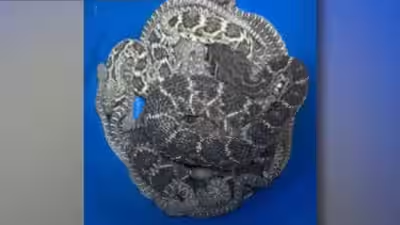
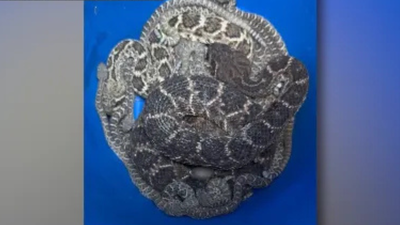
A routine wildlife-removal call in Aledo, Texas, turned into a startling discovery when specialists found more than 20 rattlesnakes living beneath a home. The homeowners had initially sought help with what appeared to be a typical animal-removal problem, but snake wrangler Sheila Taber soon realised the situation was far more serious. As the team worked in the crawl space, snakes continued to emerge, prompting Taber to describe the site as “a whole den”. Dallas Fort Worth Wildlife Control eventually removed more than 20 rattlesnakes from beneath the residence, with company owner Randall Kennedy estimating the final count at roughly two dozen. The discovery highlighted how easily wildlife can find shelter in spaces around human homes.

More than 20 rattlesnakes found beneath a Texas home

According to NBC 5 DFW, the wildlife-control team discovered a large group of rattlesnakes in the crawl space beneath the Aledo property. Taber, who has more than a decade of experience handling snakes, said the job initially appeared relatively straightforward. However, the number of snakes continued to increase as the team searched the area. “That was a whole den. They just kept coming out,” she said. Dallas Fort Worth Wildlife Control ultimately removed more than 20 rattlesnakes, while Kennedy said the final number was approximately two dozen.The space beneath the house appears to have offered several conditions that made it attractive to snakes. According to the report, the crawl space was cooler than the hot conditions outside and contained a ready supply of prey. Kennedy said rats and rabbits were present beneath the home, providing an available food source for the rattlesnakes. Texas Parks and Wildlife Department notes that snakes may be attracted to residential areas because they provide food and shelter. Rodents around homes can therefore indirectly attract predators that feed on them.

Texas is home to several rattlesnake species

Rattlesnakes are a natural part of the Texas ecosystem and are found across large parts of the state. Texas Parks and Wildlife Department says Texas has 10 species of rattlesnakes, while the western diamondback is the state’s most widespread rattlesnake. It can be found across much of Texas, although it is absent from the easternmost part of the state. Rattlesnakes play an ecological role as predators, helping regulate populations of rodents and other small animals.The discovery does not necessarily mean the snakes deliberately targeted the home. Wildlife often makes use of spaces that provide protection from predators, extreme weather and other threats. A crawl space can offer shade and relatively stable temperatures, while rodents living nearby can provide food. In this case, the combination appears to have created conditions suitable for a sizeable concentration of snakes. Kennedy described the situation by noting that if a space feels comfortable to people, it can also provide attractive conditions for snakes.Although rattlesnakes generally avoid people, coming across one unexpectedly can be dangerous because they are venomous and may strike when they feel threatened. Texas Parks and Wildlife Department advises people who encounter rattlesnakes to stop, locate the snake and slowly move away rather than approaching it. The danger becomes more significant when snakes are hidden beneath a house, because residents may unknowingly enter a confined space where they are difficult to see. Children and pets can also be at greater risk if they come too close to a snake.

Homeowners should not attempt to remove rattlesnakes

Wildlife experts advise against trying to capture or kill venomous snakes. The safest option is to keep a safe distance and contact trained wildlife-removal professionals or local animal-control authorities. The CDC similarly recommends contacting animal control or wildlife professionals when a wild animal poses a potential danger around a home. People should also keep children and pets away from the area until the animal has been safely dealt with.

How to make a home less attractive to snakes

Homeowners can take several steps to reduce the chances of snakes settling around their properties. Texas Parks and Wildlife Department recommends controlling rodents, removing potential hiding places and sealing openings that could allow snakes to enter buildings. Gaps around doors, windows, pipes, foundations and other parts of a structure should be inspected and sealed where appropriate. Removing piles of debris, wood and other materials can also reduce potential shelter for rodents and snakes.Anyone who encounters a rattlesnake should avoid approaching it or attempting to move it. The safest response is to back away slowly and give the snake plenty of space. If it is inside or immediately around a home, a qualified wildlife professional should be contacted for removal.


Source link

A remote Alaska village is slowly sinking as the frozen ground beneath it thaws, releasing ancient carbon locked away for thousands of years


A remote Alaska village is slowly sinking as the frozen ground beneath it thaws, releasing ancient carbon locked away for thousands of years

A remote village on Alaska’s North Slope is facing a growing threat from beneath its feet. In Point Lay, also known as Kali, thawing ice-rich ground is causing the land to sink unevenly, damaging buildings and essential infrastructure. Researchers studying the community have documented widespread ground subsidence and found that large quantities of ice are frozen within the soil beneath the village. As that ice melts, the ground can lose volume and stability, leaving foundations and utility systems vulnerable. But the problem extends far beyond the village itself. The frozen soil also contains ancient organic material that has remained trapped for thousands of years. As the ground thaws, microbes can break down that material and release carbon dioxide and methane, adding to concerns about climate change.

Why this remote Alaska village is slowly sinking

Point Lay is a small Iñupiat community on Alaska’s North Slope, where much of the ground remains frozen for most or all of the year. The frozen soil contains large amounts of ground ice, including ice wedges that formed over long periods. As temperatures rise, that ice can melt and leave empty spaces underground. The surrounding soil then settles into those spaces, causing the surface to sink or deform. Researchers have observed signs of this process across Point Lay, with uneven ground affecting buildings, roads and buried utilities. Some structures have become tilted as the land beneath them changes, turning what once appeared to be a stable foundation into a moving landscape.A detailed study published in Environmental Research: Communications examined Point Lay using field investigations, boreholes, ground-temperature measurements, remote sensing and interviews with local residents. Researchers found widespread thermokarst development and ground subsidence associated with thawing ice-rich permafrost. In parts of the community, excess ice made up roughly 40% of the ground investigated, while some ice wedges extended more than 12 metres below the surface. The researchers also identified evidence that the seasonally thawed active layer has become deeper over time, with particularly pronounced changes during the 21st century. These findings provide direct evidence that warming is changing the physical structure of the ground beneath the community.

What happens when frozen ground begins to thaw

Permafrost is ground that remains at or below 0°C for at least two consecutive years. It can contain soil, sediments and large amounts of frozen water. In areas such as Point Lay, that frozen water helps give the ground its strength and structure. When the ice melts, the soil can compact and settle. If the thaw occurs unevenly, some areas can sink much more than others, creating depressions and unstable surfaces. This process, known as thermokarst development, can damage building foundations and place stress on roads, water pipes, sewer lines and other infrastructure. The changes can happen gradually, but their effects can become increasingly difficult and expensive to manage.The consequences in Point Lay are not limited to scientific measurements. The community has experienced problems involving water, sanitation and infrastructure as the ground becomes less stable. The University of Alaska Fairbanks has documented past incidents linked to permafrost degradation, including the drainage of the community’s freshwater drinking lake in 2016 and damage involving water infrastructure. Residents have also reported changes to the landscape that affect travel and access across the area. For a community in a remote Arctic environment, damage to basic infrastructure can be particularly difficult because repairs are expensive, specialised equipment is often required and transportation options are limited.

This is part of a much bigger Alaska problem

Point Lay is one example of a wider challenge facing communities throughout Alaska. A study published in Communications Earth & Environment assessed buildings and roads in 285 Alaskan communities and estimated that permafrost-related damage could cost the state between $37 billion and $51 billion by 2055 to 2064, depending on the future emissions pathway. The researchers mapped about 53 million square metres of building footprints and more than 50,000 kilometres of roads. Their findings suggest that the financial consequences of thawing ground could be far greater than previously estimated because large amounts of infrastructure are exposed to changing soil conditions.The physical damage is only part of the concern. Arctic frozen soils contain huge quantities of organic carbon accumulated from plants and other organisms over thousands of years. Extremely cold conditions have slowed decomposition, allowing much of that material to remain stored in the ground. When the soil thaws, microorganisms can become active and begin breaking down the previously frozen material. That process can release carbon dioxide into the atmosphere and, in waterlogged or oxygen-poor conditions, produce methane. Scientists are particularly interested in this process because it creates a climate feedback in which rising temperatures can accelerate thaw, while greenhouse gases released from thawing soils can contribute to additional warming.

Thawing ground can become much more permeable

A 2026 study led by researchers at the University of Leeds found that thawing permafrost can become 25 to 100 times more permeable to gases. In laboratory experiments, the researchers warmed frozen samples and monitored how easily gases could move through them. They found that permeability changed dramatically as the frozen material approached and passed through the thawing point. The result suggests that gases stored within or produced inside thawing ground may gain additional pathways to escape. However, the research does not mean that all Arctic frozen ground will suddenly release massive amounts of methane. Gas release depends on local soil, temperature, moisture and microbial conditions.The large carbon store in Arctic soils has become one of the major uncertainties in future climate projections. When frozen organic material thaws, some carbon can enter the atmosphere, while some can remain in the soil or move into rivers and coastal waters. The amount released varies depending on whether thaw happens gradually or through abrupt ground collapse, as well as local vegetation and hydrology. This makes the process difficult to predict precisely. Scientists therefore generally describe permafrost carbon as a climate feedback rather than an inevitable sudden carbon release event. The concern is that continued warming could gradually transform some Arctic landscapes from long-term carbon stores into sources of greenhouse gases.

The threat is not just about carbon

Thawing frozen ground can create other environmental and public health concerns as well. Changes in soil structure can alter drainage, destabilise slopes and affect water systems. Researchers have also investigated whether thawing ground could allow naturally occurring radon, a radioactive gas, to move more easily through soil and into buildings. The significance of that risk varies widely between locations, and it should not be interpreted as evidence of a confirmed radon emergency in Point Lay. Still, it illustrates how the breakdown of frozen ground can affect systems that communities have long relied upon.

Point Lay offers a warning for other Arctic communities

What is happening in Point Lay shows how climate change can reshape a community without a single dramatic disaster. There is no sudden flood sweeping the entire village away. Instead, the ground itself is gradually changing. Foundations can shift, roads can deform and buried pipes can become vulnerable as the ice supporting the landscape disappears. The same process is occurring in different forms in other Arctic communities across Alaska, Canada and Siberia. The extent of the damage varies, but the underlying problem is similar: infrastructure designed for permanently frozen ground is increasingly being exposed to a warmer and less predictable environment.Point Lay’s sinking ground offers a visible example of a much larger Arctic transformation. The melting of ground ice can threaten homes and infrastructure today, while the thawing of ancient organic material could influence the climate beyond Alaska in the decades ahead. Scientists are still working to determine how quickly different landscapes will thaw, how much carbon will ultimately be released and how much of that carbon will become carbon dioxide or methane. What is already clear is that the frozen ground beneath Arctic communities is not a permanent foundation. As temperatures rise, it is becoming an active part of the climate system, with consequences that can extend from a small village on Alaska’s coast to the wider world.


Source link

When did AOC break up with long-term partner Riley Roberts? Ocasio-Cortez stopped wearing her engagement ring over 18 months ago


When did AOC break up with long-term partner Riley Roberts? Ocasio-Cortez stopped wearing her engagement ring over 18 months ago
AOC secretly split from her partner Riley Roberts long before she went for egg freezing.

After Congresswoman Alexandria Ocasio-Cortez announced that she was going to freeze her eggs so that she could choose the right time to become a mother, speculations were rife about her relationship with Riley Roberts, her long-time boyfriend and partner. The duo got engaged in 2022. Many social media users asked why she was not choosing to be a biological mother now as she was already engaged to her college sweetheart.Leigh Ann Caldwell, Puck News’ chief Washington correspondent, revealed that a “reputable Democratic source” told her about 18 months ago that Ocasio-Cortez and her partner Riley Roberts had ended their engagement. “AOC stopped wearing her engagement ring several months before that,” Caldwell wrote on X Tuesday. “There have been no public photos of her and Riley together in recent history.”Last photograph around 2021-22Ocasio-Cortez and Roberts were last photographed together at the 2021 Met Gala, according to TMZ. Months later, in May 2022, the congresswoman confirmed that she and Roberts were engaged. Both of them kept the relationship private.Ocasio-Cortez and Roberts met at Boston University when they were both 19. They started dating in their 20s, and more than a decade later, Roberts proposed AOC while on vacation in Puerto Rico. “I feel like I won the men lottery in my life,” Ocasio-Cortez told GQ when talking about her relationships, including the good examples her father and cousins set.The 36-year-old did not address the break-up rumors though she answered many questions on social media about the egg freezing process and its cost. “I want to share this because I was weighing it for a very long time, and I think that, you know, I was saving for it for a very long time, and there just isn’t a ton out there, I feel, and sometimes it can feel very daunting,” Ocasio-Cortez said during a live video on her Instagram story Saturday.


Source link

Iran knew Trump’s hotel floor, targeted his aircraft during Nato summit: Report


Iran knew Trump's hotel floor, targeted his aircraft during Nato summit: Report
The US intercepted intelligence indicating Iran knew Trump’s exact location in Ankara and posed a missile threat to his aircraft during the Nato summit, NYT report

The US intercepted several pieces of intelligence indicating Iran knew President Donald Trump’s exact location in Ankara during the Nato summit and that there was a potential threat involving a missile capable of targeting his aircraft, according to a New York Times report.Two US officials familiar with the intelligence told NYT that authorities detected a specific surface-to-air missile threat against whichever aircraft was carrying Trump. Someone near the Nato summit was also reportedly spotted with a shoulder-fired missile, while Iranian operatives were said to know which floor of Trump’s hotel he was staying on.The intelligence was considered serious enough to trigger an elaborate security deception. Trump publicly boarded the older Air Force One, but was then secretly moved out of the airport inside a catering container and transferred to a military aircraft that flew him out of Turkey.The original Air Force One, meanwhile, departed with senior US officials, government employees, journalists and military personnel aboard, apparently serving as a decoy. The passengers were reportedly not informed of the full extent of the threat.The New York Times reported that the operation may have shifted the risk from Trump to those who remained aboard the presidential aircraft. Among them were secretary of state Marco Rubio, treasury secretary Scott Bessent and senior White House aides Stephen Miller and Steven Cheung.The passengers were instructed to keep the plane’s window shades closed during its July 8 flight from Ankara to Britain. Trump later secretly rejoined Air Force One before disembarking in front of cameras, creating the appearance that he had travelled on the aircraft throughout.The unusual manoeuvre has drawn criticism from some former White House officials, who argued that people aboard the decoy aircraft should have been protected or informed. Others defended the decision, saying protecting the president could justify extraordinary measures during a credible threat.The White House did not respond to questions about the operation. Trump later said he had followed Secret Service advice and rejected the suggestion that the passengers had been placed at greater risk, arguing that the aircraft he travelled on may actually have been the more likely target.


Source link

Oregon’s Siletz Bay is restoring 37 acres of tidal wetland this summer, digging new channels where more than a century of diking turned marsh into pasture


Oregon's Siletz Bay is restoring 37 acres of tidal wetland this summer, digging new channels where more than a century of diking turned marsh into pasture
Drift Creek Unit of Siletz Bay National Wildlife (Image Credit: Wikipedia)

Oregon’s Siletz Bay is undergoing a major wetland restoration effort this summer, with crews working to bring back natural tidal flows to land that was dramatically altered by more than a century of diking and land conversion. According to the U.S. Fish and Wildlife Service, the project is restoring 37 acres of wetlands in the Drift Creek Unit of Siletz Bay National Wildlife Refuge, including by filling old drainage ditches and digging new tidal channels. The work is intended to improve habitat, water quality and flood resilience while creating better conditions for fish and other wildlife.

How the wetlands changed

The lower Drift Creek floodplain was once a complex coastal landscape made up of tidal marshes, scrub-shrub areas, spruce swamps and winding channels that carried water toward Siletz Bay. Over time, however, people changed the landscape through diking and land conversion.The dikes restricted the movement of tides, while drainage and other alterations transformed large portions of the historic wetlands into pasture. Natural channels gradually filled with sediment, leaving the floodplain far less connected to the tidal system than it had been in the past.The loss of these natural connections also affected the floodplain’s ecological functions. Tidal wetlands provide habitat for fish and wildlife and help move water and nutrients through coastal ecosystems. The current restoration project is designed to reverse some of those changes by reconnecting historic floodplain surfaces and allowing tidal processes to return.

New channels reshape the landscape

Through the end of August, heavy equipment including excavators and trucks will be working across the 37-acre restoration area. Crews are filling old linear drainage ditches and excavating new tidal channels designed to resemble the pathways that once carried water through the floodplain. The project also involves placing large pieces of wood in the landscape. These structures can provide shelter for young fish while eventually becoming part of the wetland’s natural habitat structure. Crews are also regrading low areas so different parts of the floodplain can reconnect with one another.The work is expected to change how water moves through the site. Instead of being confined by old drainage systems and dikes, water will be able to spread across the restored floodplain. This will help reduce flooding while allowing wetlands to perform their natural functions.The restoration is also expected to help filter sediment and nutrients from upstream flows, contributing to better water quality. For fish that depend on estuarine environments, the changes can create safer areas for movement and additional feeding habitat. Young coho and Chinook salmon, steelhead and cutthroat trout are among the fish expected to benefit, along with smaller marine species that use the estuary for shelter.

From construction to a living wetland

The restoration will not end when the excavators leave. Once the heavy construction work is completed, the landscape will continue changing as tides, rainfall, plants and wildlife begin interacting with the newly created channels and floodplain. By fall, crews plan to plant and seed native wetland species. These will include sedges, rushes, salt-tolerant plants and coastal spruce. Over time, the vegetation is expected to help rebuild the structure of the marsh and provide additional habitat.The project is part of a larger, multi-year restoration effort rather than an isolated construction project. A first phase was completed in 2023, restoring 41 acres of former tidal wetlands east of Drift Creek Road. That phase included lowering old dikes, creating more than a mile of new tidal channels, installing large wood structures, building habitat mounds and removing aging infrastructure. Since then, native marsh and scrub-shrub vegetation has begun returning, while rare spruce swamp habitat has also started to regenerate.Several organisations are involved in the broader effort, including the MidCoast Watersheds Council, the U.S. Fish and Wildlife Service’s Oregon Coast National Wildlife Refuge Complex, Oregon Department of Fish and Wildlife, Bureau of Land Management, Wild Salmon Center, Lincoln Soil and Water Conservation District, Wolf Water Resources and the Confederated Tribes of Siletz Indians.The goal is ultimately to allow the floodplain to function more like a natural tidal wetland again. As the new channels fill with water and native vegetation takes root, the landscape will gradually become more capable of supporting fish, wildlife and plants while helping manage water and improve coastal ecosystem health.For people travelling along U.S. Highway 101 near the refuge, the site will initially be marked by excavators and restoration crews. Once the machinery leaves, the restored landscape will continue developing with the seasons and tides.


Source link

One-third of global farmland accounts for about two-thirds of agriculture-linked biodiversity and natural carbon-storage loss, a new study finds


One-third of global farmland accounts for about two-thirds of agriculture-linked biodiversity and natural carbon-storage loss, a new study finds
Beef and dairy drive 41% of biodiversity damage linked to global farmland

A single third of the world’s agricultural land is responsible for roughly two-thirds of all farming-related biodiversity loss and the loss of natural carbon storage, according to a global study published in Nature Food.The research, led by scientists from Leiden University’s Institute of Environmental Sciences (CML), together with experts from the Oxford Martin School at the University of Oxford and China Agricultural University, maps the environmental damage caused by food production in greater detail than previous studies. The findings show that agricultural damage is concentrated in certain regions and is strongly linked to a small number of food products, especially beef and dairy.By studying carbon storage loss and the risk of species extinction together, the researchers say governments and conservation groups can focus on these farming hotspots to make progress on both climate change and nature protection.

High-impact geographic hotspots

Agriculture now covers more than 40 per cent of the Earth’s habitable land. The conversion of natural habitats into farmland has permanently removed an estimated 300 billion tonnes of stored carbon. This is equal to about 140 years of agricultural emissions at current rates. Land conversion for farming has also put around 14 per cent of the world’s species at risk of extinction.But the damage is not spread evenly around the world. The study identifies major environmental hotspots in parts of South America, Central America, sub-Saharan Africa, South-East Asia, India, and China.Lead author Baoxiao Liu, a researcher at Leiden University’s CML, says these hotspots are found where farming overlaps with areas that are especially important for nature and carbon storage.‘These are mainly regions where agriculture is either very intensive or takes place in ecosystems that naturally store large amounts of carbon and are rich in biodiversity, such as tropical forests,’ Liu explains. ‘When these areas are converted into farmland, both values are lost at the same time.’The concentration of damage is even greater when only carbon loss is considered. Half of all agricultural carbon loss comes from just 12 per cent of the world’s farmland.

Beef and dairy have a particularly large impact

The researchers also looked at how individual agricultural products contribute to environmental damage. Animal-based foods were found to be the biggest drivers of this damage, even though they provide a relatively small share of the world’s calories.On average, animal-based foods cause eight times more carbon loss and 14 times more biodiversity loss per calorie than plant-based foods. Cattle farming has the largest impact because cattle need large areas of land for grazing, as well as land to grow feed such as maize and soy.Together, beef and milk production are responsible for 41 per cent of biodiversity loss and 29 per cent of the loss of natural carbon storage linked to global food production.‘Animal-based products, and especially products from cattle, have a disproportionately large impact,’ says Liu. ‘Cattle require large amounts of agricultural land, both for grazing and for growing feed crops.’Liu says individual food choices can add up to significant environmental effects.‘Food production on farmland has ongoing environmental costs that are often overlooked. We link long-term damage to both climate (carbon loss) and nature (biodiversity loss) to foods we currently consume. If farmland were no longer used for food, it could potentially be used for nature, helping to restore carbon stocks and provide habitat for more species. Our daily eating choices therefore have a real impact.’

Global trade shifts environmental damage

The study also examines how international trade moves the environmental impact of food production between countries. About 18 per cent of all agricultural carbon and biodiversity losses are connected to food and other agricultural products that are exported across national borders.The research shows major differences between countries. Brazil is the world’s largest net exporter of carbon and biodiversity loss linked to agriculture, largely because of its agricultural exports. China, meanwhile, is the largest net importer of these environmental impacts. International trade in meat and dairy accounts for many of the biggest flows.

Targeted restoration could bring major benefits

Earlier environmental studies often looked at carbon loss and biodiversity decline separately and used less detailed global maps. The authors of the Nature Food study say that examining both problems together and at a high level of detail shows that the same areas can offer solutions to both.The researchers estimate that allowing the 30 per cent of farmland with the highest combined environmental impacts to return to natural habitat could capture about 170 billion tonnes of carbon. This is equal to around 15 years of global fossil fuel emissions at current levels.At the same time, restoring these areas could prevent about 60 per cent of the extinction risks currently caused by agricultural land use.Professor Paul Behrens of the Oxford Martin School at the University of Oxford says climate and biodiversity policies should be more closely connected.‘Climate and nature have been treated as separate problems for too long, with separate targets and separate negotiations. Our findings show they’re often the same problem on the same piece of land, with two-thirds of the carbon damage and two-thirds of the biodiversity damage from farming happening on just a third of agricultural land. There is a huge opportunity to target the specific places and foods. The same actions can deliver for the climate and for nature at once.Liu is also optimistic about the potential for targeted action.‘By targeting a relatively small share of agricultural land, we can already achieve major benefits,’ Liu says. ‘If we target a relatively small share of agricultural land, this can already deliver major benefits for climate and nature. The losses we see also represent potential gains. Agriculture can therefore not only be part of the problem, but also offer major opportunities to address both crises.’


Source link

‘This is just the beginning’: Trump official on 175,000 visa revocations; ‘All we ask is a couple of things…’


'This is just the beginning': Trump official on 175,000 visa revocations; 'All we ask is a couple of things...'
Tom Homan said revoking 175,000 visas is just the beginning.

President Donald Trump’s border czar Tom Homan reacted to the State Department’s announcement of revoking 175,000 visas in the second Trump administration so far and said this is just the beginning. The US administration is reviewing all visas and they consider US visa to be a privilege; and not a right. Appearing on Fox News’ The Will Cain Show, Homan said the administration is not asking for something huge. “All we ask is a couple things: Number one, be truthful about who you are and why you’re coming here, and number two, obey the laws while you’re here. So, you know, this is an ongoing process,” Homan said.“We are reviewing refugee applications that need to be reviewed that were just the unlawful process of the Biden administration. All this needs to be reviewed. Let’s remember, not only did millions come across the border illegally and get released into the United States, we had over half a million people from Haiti, Nicaragua, and Venezuela come to American airports, 30,000 a month. So we’re reviewing all of this and cleaning the system up and get rid of those that, number one, shouldn’t be here. Number two, that are a national security threat or public safety threat. They need to go home,” Homan said.The border czar blamed the lax vetting process of the previous administration and said the previous administration used to believe that everybody who was let in was properly vetted. Calling this a “stone-cold lie”, Homan said, “When they say vetted, they may run against NCIC, our criminal database. They didn’t have access to most countries’ criminal databases. And when it comes to people from, you know, Russia and China and Turkey and Syria, do you think those countries are going to share any national security information on these people? You’re talking tens of thousands of Chinese nationals released in the United States. Do we honestly think China will share with us any national security information on these people? Of course not.”“So President Trump not only gave us the most secure border in the history of the nation, not only are we arresting [and] deporting a record number of illegal aliens from this country—promises made, promises kept—but we’re looking at the ones that Biden brought in either lawfully or illegally through parole. And we gotta clean house, and President Trump’s serious about it and we’re all over it. It’s the State Department [and] Department of Homeland Security [that] are working very closely together along with the Department of Justice.

Who are those who got their visas revoked?

The State Department said the majority of these visas were revoked due to law enforcement encounters for a range of criminal activity, with assault, driving under the influence, theft and drug crimes being the leading causes. Other reasons include reckless driving, sexual assault, child abuse, fraud and embezzlement.


Source link

465 Soviet gold bars sank with a British warship in 1942. Nearly 40 years later, divers found the wreck 800 feet below the ocean’s surface in a daring salvage mission


465 Soviet gold bars sank with a British warship in 1942. Nearly 40 years later, divers found the wreck 800 feet below the ocean’s surface in a daring salvage mission

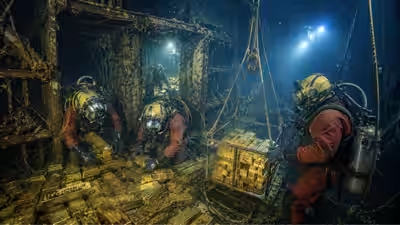
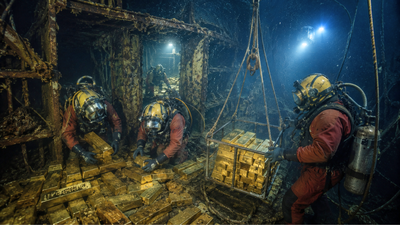
In 1942, British light cruiser HMS Edinburgh sank in the Barents Sea after being badly damaged by German torpedoes, taking 58 crew members and 465 Soviet gold bars with it. The bullion, weighing about 4.6 tonnes, was being carried as part of wartime payment for supplies and equipment. The wreck settled about 800 feet below the surface, where the gold remained for almost four decades. In 1981, British salvage diver Keith Jessop led an ambitious expedition to locate the ship and recover its cargo. After weeks of dangerous saturation diving in freezing Arctic waters, divers finally reached the bomb room and recovered hundreds of gold bars from the wreck.

How 465 Soviet gold bars ended up on a British warship

The gold was being transported as part of wartime financial arrangements between the Soviet Union and its Allies. HMS Edinburgh left Murmansk on April 28, 1942, carrying 465 gold bars connected to Soviet purchases of wartime supplies, including equipment from the United States. The bullion was worth around £1.5 million at the time and was covered by a 1942 War Risks Insurance agreement. The journey soon turned into a disaster when German forces detected the convoy. The submarine U-456 fired torpedoes at HMS Edinburgh, with two striking the cruiser and severely damaging it. The attack killed 58 sailors and left the ship crippled. British vessels attempted to tow it towards safety, but another German attack made recovery impossible, and the damaged cruiser was eventually scuttled in the Barents Sea. The ship sank with the gold stored in its bomb room and became the final resting place of the sailors who died. A salvage contract was prepared as early as 1954, but the operation was delayed because of political difficulties involving the Soviet Union, concerns about disturbing the wartime grave and doubts about the technology available to recover the bullion safely. The gold therefore remained underwater for decades.

Keith Jessop and the search for the sunken gold

Interest in the lost fortune returned in the late 1970s as gold prices increased sharply. British salvage diver Keith Jessop assembled a consortium of specialist companies and secured a contract with the British government under a “no cure, no gain” arrangement. The agreement meant the consortium would receive nothing if it failed to recover the gold but would receive a substantial share of its value if the operation succeeded. The team combined survivor accounts, historical records and information from Norwegian fishermen whose nets had become caught on underwater obstructions to identify a likely search area. In April 1981, they began searching using sonar and echo-sounding equipment. On May 14, an underwater remotely operated vehicle inspected a wreck and confirmed that it was HMS Edinburgh, lying on its port side roughly 800 feet below the surface. Before beginning the recovery, the team studied HMS Belfast, Edinburgh’s surviving sister ship, at the Imperial War Museum in London to understand the sunken cruiser’s layout and locate the bomb room. The preparation was crucial because the divers would have to work inside a damaged wartime vessel that still contained dangerous material.

Divers spent weeks underwater to recover the gold

The depth and Arctic conditions made the operation extremely dangerous. The divers used saturation diving, living and working inside a controlled pressurised environment for extended periods before travelling to the wreck in a diving bell. They breathed a helium and oxygen mixture suited to extreme depths, while gas-reclamation technology helped recycle helium during the lengthy operation. The original plan was to enter through the torpedo damage that had crippled the ship, but debris blocked the route. The team instead had to cut through the hull and spent about a week clearing a passage towards the bomb room, where ammunition and other hazards remained. The breakthrough came on September 16, 1981, when diver Jon Rossier located the gold and radioed the surface to announce that he had found it. The divers then began bringing the bullion up in metal cages, with each bar weighing about 23 pounds. By the time worsening weather forced the expedition to leave, 431 of the 465 bars had been recovered. The gold was worth around £45 million at the time, and the extraordinary operation became known as the “salvage of the century”.

Do you think the British government made the right decision to allow the salvage operation for HMS Edinburgh?

3k+ users shared opinion today

5k+ users already voted today

3k+ users shared opinion today

Share Opinion

460 bars were eventually recovered, but five remain missing

The recovery continued after the first expedition. The salvage team returned to HMS Edinburgh in 1986 and recovered another 29 gold bars, bringing the total recovered to 460 of the original 465. Five bars remain unaccounted for and could still be somewhere inside the wreck, beneath debris or in an inaccessible section of the ship. The recovered bullion was divided between the parties with claims to it. The salvage consortium received its contractual share, while the remaining gold was divided between the Soviet Union and Britain. Britain’s share was sent to the Bank of England, with much of it later melted down and refined, while some recovered bullion was used to produce coins at the Royal Mint. The salvage operation became a landmark in commercial deep-sea diving, demonstrating the potential of saturation diving, sonar, remotely operated vehicles and helium-reclamation systems in extreme conditions. More than eight decades after HMS Edinburgh sank, the five missing bars remain the only part of the legendary cargo that has never been accounted for.


Source link

New York woman pleads guilty to trafficking Indians from Canada, says she picked people from border and dropped them off inside US for profit


New York woman pleads guilty to trafficking Indians from Canada, says she picked people from border and dropped them off inside US for profit
New York woman pleads guilty to trafficking Indians into the US from Canada border.

New York woman Stacey Taylor, 43, who was arrested and charged with human trafficking in 2025, has now pleaded guilty to her role in an international smuggling conspiracy that primarily brought Indians to the US through the US-Canada border. On January 20, 2025, Taylor’s vehicle was stopped by the border patrol agents near Churubusco, New York. Four men, three Indians and one Canadian, were sitting inside her vehicleWhen law enforcement later examined Taylor’s cellphone, they learned that Taylor had received coordinates for the illegal migrants’ location and instructions for picking them up. The four migrants illegally entered the United States on foot through a wooded area and got into Taylor’s waiting vehicle, and she then drove them away from the border and further into the interior of the United States. Stacey’s role in the racket began this side of the US border after migrants crossed over.After law enforcement stopped her vehicle, Taylor admitted that she picked up the four migrants and expected to receive payment for doing so. Additional review of Taylor’s phone revealed text messages that indicated that she had been involved in multiple other human smuggling events in the days prior. But after the January incident, she went back to the racket and was found smuggling illegal migrants again in August and September, 2025.Taylor pleaded guilty to conspiracy to engage in alien smuggling and four counts of alien smuggling for profit. She is scheduled to be sentenced on December 3 and faces a statutory minimum penalty of five years in prison. A federal district court judge will determine any sentence after considering the U.S. Sentencing Guidelines and other statutory factors.

Human trafficking in the US-Canada borders

The US-Canada border is notorious for human trafficking and many facilitators are involved in gangs that operate these on both sides of the border. In 2022, a similar case of trafficking involving Indians came to the surface when an Indian family froze to death during a blizzard while crossing into the US from Canada. Harshkumar Ramanlal Patel and Steve Anthony Shand were convicted in the case in 2025.Jagdish Patel, 39, his wife Vaishaliben, 37, and their two children, 11-year-old Vihangi and three-year-old Dharmik, were found dead near the border in January 2022. They were caught in a blizzard with temperatures as low as -38C (-36F).


Source link

Minnesota, South Carolina & Wisconsin: Trump endorsement delivers mixed results in Republican primaries


Minnesota, South Carolina & Wisconsin: Trump endorsement delivers mixed results in Republican primaries
Trump’s post on Truth Social endorsing Lindell on August 11. (Photo: @realDonaldTrump)

President Donald Trump’s endorsements produced mixed results in Tuesday’s Republican primaries, with his preferred candidates losing one key race, advancing to a runoff in another and securing nominations in Wisconsin.The contrasting outcomes in Minnesota, South Carolina and Wisconsin offered a fresh test of Trump’s influence within the Republican Party, showing that his backing can be decisive but does not always overcome established local candidates, party support and campaign organisation.

Demuth defeats Trump-backed Lindell in Minnesota

NBC News projected Minnesota House Speaker Lisa Demuth as the winner of the Republican gubernatorial primary, putting Trump-backed candidate Mike Lindell behind less than a month after Trump formally endorsed the MyPillow founder.Trump endorsed Lindell on July 15, calling him one of America’s “greatest and most hard working Patriots” and giving him his “Complete and Total Endorsement”. He later urged Minnesota voters to “Vote for Mike Lindell for Governor” and returned to the race on primary day, saying Lindell “deserves a BIG WIN.”

Trump endorsed Lindell on Truth Social. (Photo: @realDonaldTrump)

Trump’s post on Truth Social endorsing Lindell on August 11. (Photo: @realDonaldTrump)

Lindell competed against two Republicans with established support within the state party. Kendall Qualls secured the Minnesota Republican Party endorsement after 10 rounds of voting at its May convention, while Demuth, the state House speaker, won backing from several Republican elected officials.Demuth had initially pledged to honour the convention endorsement but remained in the race after problems with the voting system disrupted the convention. Republican state chairman Alex Plechash later released candidates from their commitment to follow the convention result.Lindell’s electability had also become an issue during the campaign. News agency Associated P reported that Plechash had questioned his prospects in a general election, while some Republican voters expressed concern that his controversies could make it harder for the party to win in November.Demuth is expected to face Democratic US Sen Amy Klobuchar, who won her party’s gubernatorial primary after defeating six challengers. Klobuchar entered the race after Democratic Gov Tim Walz decided not to seek another term.Minnesota Republicans last won a statewide office in 2006.Republicans also nominated former NFL sideline reporter Michele Tafoya for the US Senate seat being vacated by retiring Democratic Sen Tina Smith. Tafoya defeated a crowded field that included former Navy SEAL Adam Schwarze and Royce White, the party’s 2024 Senate nominee.

In your opinion, should Trump continue to endorse candidates in future primaries?

3k+ users shared opinion today

5k+ users already voted today

3k+ users shared opinion today

Share Opinion

Trump-backed Darline Graham heads to runoff

In South Carolina, Trump’s endorsement helped Darline Graham finish first in a 10-candidate Republican Senate primary, but she fell short of the majority needed to secure the nomination.

Trump congratulated Graham on her win. (Photo: @realDonaldTrump)

Trump’s congratulatory post on Graham’s win on Truth Social, August 12. (Photo: @realDonaldTrump)

With about 80% of the vote counted, Graham had 32.6% against US Rep Ralph Norman’s 24%, according to Reuters. The two will meet in an August 25 runoff.Trump’s involvement in Graham’s candidacy began before she formally entered the race. On July 13, he recommended Lindsey Graham’s sister to South Carolina Gov Henry McMaster for an interim Senate appointment. McMaster appointed her later that day to fill the vacancy created by her brother’s death.Four days later, after meeting Graham at the White House, Trump urged her to run for the full term and gave her his “Complete and Total Endorsement”, ending his appeal with “RUN, DARLINE, RUN!”Eight candidates were eliminated in the primary, including US Rep Russell Fry, former governor Mark Sanford and businessman Mark Lynch.Graham entered the race without previous elected experience, while Norman and other rivals had established campaign operations. Norman, a member of the House Freedom Caucus who has represented South Carolina’s 5th District since 2017, has also aligned himself with Trump’s “America First” agenda.The winner of the August 25 runoff will face Democratic nominee Annie Andrews in November.

Trump-backed candidates score wins in Wisconsin

Wisconsin delivered the strongest results for Trump’s endorsed candidates.US Rep Tom Tiffany won the Republican gubernatorial nomination, defeating Andy Manske and advancing to the November election. Democratic Gov Tony Evers is not seeking another term. Trump endorsed Tiffany in January.

Trump congratulated Tiffany on Truth Social. (Photo: @realDonaldTrump)

Trump’s congratulatory post for Tiffany on Truth Social, August 12. (Photo: @realDonaldTrump)

Tiffany’s move to the governor’s race created an opening in Wisconsin’s Republican-leaning 7th Congressional District. Michael Alfonso, 26, won the Republican primary in a five-way contest after receiving Trump’s endorsement and support from US Transportation Secretary Sean Duffy.Alfonso is married to Duffy’s daughter. Duffy represented the district before leaving Congress in 2019. Trump also joined a telephone rally for Alfonso ahead of the primary.

Trump congratulated Alfonso on Truth Social. (Photo: @realDonaldTrump)

Trump’s congratulatory post for Alfonso on Truth Social, August 12. (Photo: @realDonaldTrump)

Republican Rep Derrick Van Orden advanced without a primary challenger in Wisconsin’s 3rd Congressional District after receiving Trump’s endorsement for re-election in April 2025.

Trump congratulated Orden on Truth Social. (Photo: @realDonaldTrump)

Trump’s congratulatory post for Orden on Truth Social, August 12. (Photo: @realDonaldTrump)

Democrat Rebecca Cooke won her party’s primary and will face Van Orden again after narrowly losing their 2024 contest. Democrats are targeting the district as they seek to gain seats in the House in November.

Scott advances in Vermont

In Vermont, Republican Gov Phil Scott advanced unopposed as he seeks a sixth two-year term. Scott won 73% of the vote in his 2024 re-election.

Lamont, Fazio set for Connecticut governor race

In Connecticut, Republican state Sen Ryan Fazio had already secured his party’s gubernatorial nomination before Tuesday’s primary. He won 92% of delegates at the Republican convention on May 16, while Betsy McCaughey failed to reach the 15% threshold required to qualify for the primary.Democratic Gov Ned Lamont won his party’s primary on Tuesday, setting up a Lamont-Fazio contest in November.


Source link