Putin’s vacation home exposed to attack, missile launch pad guarding Putin’s Palace blazing for three hours after drone strike: Report


Putin's vacation home exposed to attack, missile launch pad guarding Putin's Palace  blazing for three hours after drone strike: Report
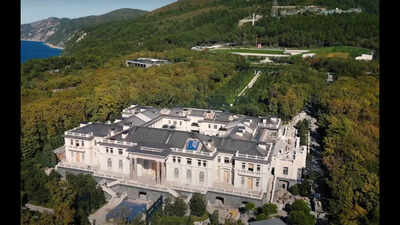
Putin’s Palace (Credit: east2west news)

The vacation home of Russian President Vladimir Putin was exposed to a drone attack after a missile launch pad that used to guard one of Putin’s lavish vacation homes was set ablaze, the Telegraph reported. The missile launch pad is around 12 miles from Putin’s Italianate palace complex near Gelendzhik, southern Russia. Major Robert Brovdi, the commander of Ukraine’s unmanned systems forces, claimed that the launchpad was ablaze and sputtering for three hours.Ukrainian media claimed that the S-400 air-defense system that guarded the residence fired six missiles before getting damaged. Satellite images taken after the strike showed at least one launcher was destroyed, Brovdi said.On August 7, Ukrainian forces disabled a nearby electronic-warfare station known as Volna Kupol Garant, which had been jamming Starlink satellite communications within a roughly 20-kilometer radius around the residence, a Moscow Times report said. Military analyst Yan Matveev told The Moscow Times that knocking out the large, easily recognizable station opened the way for the attack on the S-400; the station had been effective against drones.

What is inside Putin’s vacation home?

Not much is known about the vacation home, but The Telegraph reported, based on claims, that the luxurious complex housed a casino, vineyard, spa, ice rink, theatre, pole-dancing room, hookah lounge, “aquatic disco”, miniature railway room and more. In 2023, it was reported that a chapel had been added.Putin rarely visits the Black Sea vacation home and prefers his highly fortified luxury dacha on Lake Valdai, 185 miles east of Moscow. This residence is believed to be home to Alina Kabaeva, his secret long-term partner, and their two sons. It is protected by at least 27 towers mounted with Pantsir anti-aircraft systems, costing some £16m per unit.Ukraine’s military intelligence said on Monday that Kyiv’s drones had also struck two Russian S-400 Triumf air defence launchers, as well as an antenna it uses to control medium-altitude Orion drones in occupied Crimea. Losses from the strike could amount to the equivalent of tens of millions of dollars, Ukraine’s directorate of intelligence said.


Source link

Viral Wedding Moments: Maid of honour plays bride’s old voice memo for wedding toast; stunned bride says she ‘couldn’t believe’ it


Maid of honour plays bride's old voice memo for wedding toast; stunned bride says she ‘couldn’t believe’ it
Pic courtesy: Instagram/ Caroline Powell

When Caroline Coady Powell, 26, picked her lifelong best friend Anna Cooper, 25, as the maid of honour, she never thought it would unfold into something the world would obsess over! On her friend’s big day, Anna was supposed to deliver an emotional toast, telling the newlyweds how perfect they are as a couple. Instead, she played an old voice memo that left the bride speechless!

The wedding toast that broke the internet

The moment Anna pressed play on her phone during her maid of honour speech, she knew she was about to destroy her lifelong friend in the best possible way! The 45-second audio clip was a condensed version of something the bride had recorded years ago. She had forgotten it even existed, so she never saw it coming. The whole thing was captured and later posted on TikTok, where it has raked in over 20 million views.So, what was in the voice memo? It was the recording Caroline sent to Anna hours after she met the man she would eventually marry! Caroline was talking to her best friend about someone she had just met and thought was nice. This was long before she knew she would eventually marry him.‘Hearing it again felt incredibly sweet and surreal. I’m so grateful to have that moment preserved, and even more grateful that Anna trusted her intuition to include it in her speech,’ the bride told People.

Best friends for life

Caroline and Anna have been in each other’s lives since 2004, when the latter’s family moved into a Nashville neighbourhood. Soon, the neighbours’ kids became close friends. Two kids only a year apart in age tend to do that. Over the next two decades, their connection became the kind of friendship that survives college, careers, and distance, the kind you actually work to keep alive!Their voice memos are epic, some even the length of ‘podcast episodes’, where they’d vent, laugh, and decompress about whatever was happening in their lives at that moment. And one of them was sent by Caroline on September 17, 2023, when she attended a wedding where she met her future husband, Colton Powell. She had heard about him earlier through mutual friends but had never actually met him, mostly because he’d been away at law school in California.He almost didn’t make it to the wedding that day. If his schedule had been different, if he’d decided differently about that last-minute trip, Caroline wouldn’t have walked up to him at the rehearsal dinner.“I was a bridesmaid, and we ended up meeting at the rehearsal dinner. It’s crazy to think that if he hadn’t made that last-minute decision, we may never have met,” Caroline said. After returning from the wedding, Caroline told Anna all about Powell.“I was slap-happy and so giddy, so naturally I sent a seven-minute voice memo to Anna. I definitely do not remember it being seven minutes long, but I’m not shocked by that at all,” Caroline recalled.But she never thought Anna would save that recording.“In the full seven-minute recording, it was so obvious [Caroline] was completely smitten with Colton. I already knew who he was, I knew he was a great guy, and I knew they’d met in such an organic way through mutual friends, so I felt like there was real potential there,” Anna said.So, when the couple were getting married, Anna knew what should be in her wedding toast. She wanted to make a meaningful gesture for the couple, and this voice memo was too perfect to discard. She edited out some parts and kept the perfect ones for the toast.“I was really intentional about what I included, and I know Caroline well enough to know she’d love it. I know her family well enough to know they’d love it too, and I knew Colton would love hearing what she had to say about him just 24 hours after they met. If I’d had any doubt that it wasn’t the right thing to do, I never would’ve played it,” Anna said.The bride had ‘absolutely no idea’, but once she heard it, she was in tears, and so were the attendees.


Source link

‘This building alone has 500+ approved H-1B applications’: Trump official in Texas reveals shocking reality, no one is opening doors


'This building alone has 500+ approved H-1B applications': Trump official in Texas reveals shocking reality, no one is opening doors
Trump official reveals shocking reality of H-1B visa program from his field inspection in Texas.

Anthony D’Esposito, the inspector general of the US Department of Labor, revealed the shocking reality that they found during their field inspection in Texas: companies that were allowed H-1B visas do not have any existence. “We are on the ground in Texas. We are in a building here with two stories, probably a couple of dozen offices.. tech companies,” the Trump official said to Newsmax from his ground visit.“We have been knocking on the doors. Just this building alone has over 500 approved H-1B applications. And we are knocking on doors and not getting many answers. So it’s very hard to believe that these visas that were supposed to be issued for unique uses by companies who need them to stay in business in the United States. Not only are they not even behind the door; but the doors are shut, the lights are off. It doesn’t seem like anybody has been here for a while,” D’Esposito said.

What is the H-1B investigation going on?

A major crackdown on OPT and H-1B visa programs was announced by the Donald Trump administration in July. As part of the investigation, officers are visiting companies that employ H-1B visa holders and checking whether they have physical offices and employees.“This is not just fraud: This is a criminal enterprise that stretches far beyond the borders of America,” D’Esposito told Breitbart News before his Texas visit. “Without revealing too much of an investigation, I think that when complete, one of the things that will probably make the American people most angry… and will probably lead to the biggest change from lawmakers… they will probably bring oversight to this...[is] the fact that many of the individuals that you’re talking about that are selling these jobs, getting kickbacks. We will clearly outline and define their relationships with… whether it’s gangs [or] whether it is transnational criminal organizations,” he said.D’Esposito said that the target of this investigation is not the migrant workers because they are only “pawns in a dangerous chess game being played by big companies”.


Source link

‘You are loved’: US cop hugs man battling mental health crisis, talks him out of jumping off bridge


‘You are loved’: US cop hugs man battling mental health crisis, talks him out of jumping off bridge
US cop hugs man battling mental health crisis.

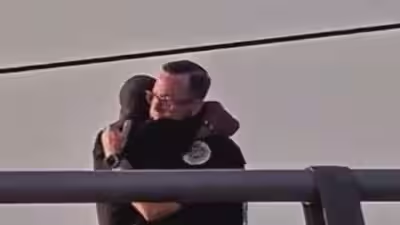
A Metro Nashville police lieutenant is being credited with saving a man’s life after talking him out of jumping from a bridge over the Cumberland River. The tense encounter on the Victory Memorial Bridge ended with the man stepping away from the ledge and embracing the officer who had spent several minutes simply listening to him.According to News Channel 5, the incident took place on July 23 after the man began livestreaming online and said he planned to jump from the bridge.Lieutenant Mike Hotz, a member of Metro Nashville Police Department’s crisis negotiation team, responded to the scene.Rather than rushing toward the man or trying to physically intervene, Hotz began talking to him. He told the man he wanted to help him get through what he described as the worst day of his life.The approach appeared to slowly break through the man’s resistance. As the conversation continued, Hotz moved closer, eventually earning enough trust for the man to step away from the edge.The two then shook hands before the man hugged Hotz.

‘You are loved here’

Hotz, a combat veteran, said his own experiences with fellow service members helped shape the way he approached the crisis.“We veterans are disproportionately affected by suicide and mental health issues,” Hotz said, explaining that he had encountered several fellow veterans during moments of crisis.He said he drew on those experiences to connect with the man in front of him and focus entirely on helping him reach a safe resolution.The encounter also reflected Hotz’s belief that helping people through difficult moments is at the heart of police work. At one point, he told the man: “I just want you to feel like you are loved here because you are.”

Man opens up about his struggles

The man, identified as 44-year-old Gary Butler, later described how he had reached the bridge believing it would be his final day.News Channel 5 reported that Butler said he had stopped to get a three-piece chicken meal and had decided it would be his last meal. He said he spent about 15 minutes contemplating what to do before hearing Hotz speak to him.Butler initially warned officers not to come closer, saying he would jump if they approached.As Hotz continued talking, Butler opened up about being homeless and struggling to afford his mental health medication. Rather than judging him, Butler said, the lieutenant listened and offered to help.“I’ve had no one to talk to or talk to me,” Butler recalled.Butler eventually stepped away from the bridge. Hotz told him, “I love you. It’s going to be alright.”Weeks after the incident, Butler said he was grateful to be alive. He had found temporary housing, obtained his medication and was seeing a therapist.

A career built around helping people

Hotz has served with the Metropolitan Nashville Police Department since 2010 and has worked in several assignments, including patrol, narcotics and specialized investigations.He was promoted to lieutenant in 2025 and currently serves with the department’s Overdose Unit. Before joining the police department, Hotz served in the US Army infantry and was deployed to Afghanistan and Iraq. He was awarded the Purple Heart after being wounded in combat.Hotz also helped develop Nashville’s One Box programme, which has placed overdose-reversal kits at more than 500 locations across the city, including bars and other public venues.His work earned him the DEA’s Excellence in Protection Award at a summit in Orlando.The bridge encounter showed the importance of opening up and having difficult conversations during a crisis, showing how timely support can help save a life.


Source link

Quote of the day by Agatha Christie: “If you place your head in a lion’s mouth, then you cannot…” – a sharp lesson on risk, responsibility and thinking before you act | World News


Quote of the day by Agatha Christie: "If you place your head in a lion's mouth, then you cannot…" - a sharp lesson on risk, responsibility and thinking before you act
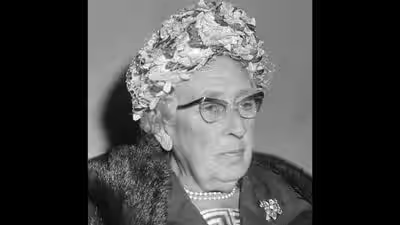
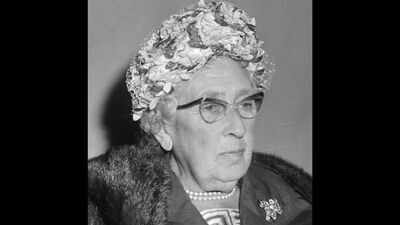
Quote of the day by Agatha Christie (Image: Wikipedia)

Life often involves genuine risk, but not every risk is actually worth taking. Some decisions place someone in a situation where the possible consequences were obvious from the very beginning. Agatha Christie captured that exact idea in one vivid image. “If you place your head in a lion’s mouth, then you cannot complain one day if he happens to bite it off,” she wrote. It is an extreme picture used to make a genuinely simple point about responsibility, one that has stayed with readers far longer than the specific story it was originally written for, appearing right at the very start of her long and remarkable writing career.

Quote of the day by Agatha Christie

“If you place your head in a lion’s mouth, then you cannot complain one day if he happens to bite it off”

Where this quote actually comes from

This line appears in The Mysterious Affair at Styles, published in 1920, Christie’s very first novel and the book that introduced her most famous detective, Hercule Poirot, to the world. It would go on to launch one of the most successful writing careers in publishing history, and this particular line, tucked inside her debut, has outlived the specific plot it appeared in, circulating today as a piece of standalone wisdom about consequences.

What the quote by Agatha Christie is actually saying

The “lion’s mouth” stands for a genuinely dangerous situation, and deliberately placing your head inside it represents knowingly taking on a serious risk. Christie is not really arguing that people should avoid every form of risk. Progress often genuinely requires courage and real uncertainty. The point is narrower than that, that people should actually recognise the risks they are accepting before taking the action in the first place. If a consequence was reasonably foreseeable from the start, complaining about it afterward does not change the fact that the original decision was a conscious choice.

Why understanding consequences actually matters

Every decision carries consequences, even when they are not immediately visible at the time. A choice can feel convenient or exciting in the moment, without much thought given to what might happen later. Once the consequences eventually do appear, the original decision can look very different in hindsight. Thinking ahead never guarantees everything will go exactly to plan, but it does help someone tell the difference between a genuinely calculated risk and one that was simply unnecessary.

The real difference between courage and recklessness

One useful lesson buried inside the quote is the distinction between taking a risk for a genuinely meaningful reason and taking one without really considering the consequences at all. Courage means recognising a risk clearly and deciding the potential benefit still justifies it. Recklessness means ignoring or underestimating the actual danger involved. Someone starting a business or changing careers faces real uncertainty, and that kind of risk can still be worthwhile when it has actually been thought through. Knowingly ignoring an obvious warning sign is a different matter entirely.

Why people sometimes ignore obvious warning signs

Decisions are rarely made on pure logic alone. Excitement, ambition, pressure or simple fear of missing an opportunity can all quietly influence someone’s judgement. A person can focus so heavily on the potential reward that the actual risk becomes an afterthought, and by the time the consequences finally arrive, it can be tempting to blame circumstances rather than the original choice. Christie’s image is really encouraging people to pause before that particular step is actually taken.

Taking real responsibility for a choice

Personal responsibility was never about accepting blame for absolutely everything that happens. Genuinely unexpected events occur even when someone has acted carefully, and circumstances can shift in ways nobody could have predicted. The lesson here is more specific than that. When someone knowingly chooses a genuinely risky course of action, they should also be willing to acknowledge that the eventual outcome was always part of that same choice.

How this idea applies to ordinary, everyday situations

The message clearly applies far beyond dramatic scenarios. Someone who repeatedly ignores real financial warnings may eventually run into serious money problems. A person who keeps damaging a relationship without addressing their own behaviour may eventually lose someone’s trust entirely. None of this is really about living in fear. It is about genuinely understanding what a decision actually involves before making it.

Why calculated risks are not the same thing as mistakes

Not every risk is a mistake waiting to happen. Plenty of important achievements require stepping outside a comfort zone entirely. Entrepreneurs invest in businesses that might genuinely fail. Athletes push themselves despite a real risk of injury. The real difference lies in preparation and awareness. A calculated risk involves genuinely understanding the possible outcomes and deciding the potential reward still justifies them, which is considerably different from simply ignoring an obvious danger and hoping nothing happens.

Other memorable quotes by Agatha Christie

  • “The impossible could not have happened, therefore the impossible must be possible in spite of appearances.”
  • “Very few of us are what we seem.”
  • “Good advice is always certain to be ignored, but that’s no reason not to give it.”
  • “An archaeologist is the best husband a woman can have. The older she gets, the more interested he is in her.”

Why this quote remains relevant today

The strength of Christie’s image comes from exactly how simple it actually is. Nobody needs to understand any complicated philosophy to picture someone voluntarily placing their head near a lion’s mouth. Choices and consequences are usually connected far more closely than people would like to admit, and taking a genuine risk is sometimes necessary, provided the risk itself has actually been understood first. Occasionally the bravest decision really is to take that risk. Just as often, the wiser decision is simply knowing exactly when not to put your head anywhere near the lion’s mouth in the first place.


Source link

A diver found a $3 million gold cross in a Spanish shipwreck; 20 years later, it vanished from a museum | World News


A diver found a $3 million gold cross in a Spanish shipwreck; 20 years later, it vanished from a museum
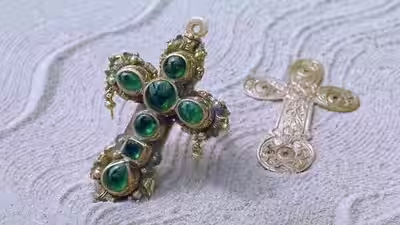
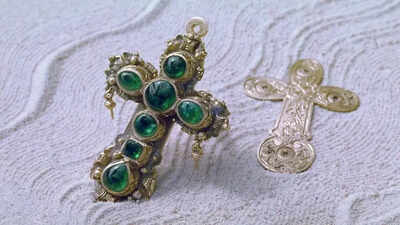
Golden Emerald Cross From 16th‑Century Shipwreck, PC: Teddy Tucker

In 1955, a Bermudian diver named Teddy Tucker pulled a gold cross studded with seven emeralds from the wreck of a sixteenth-century Spanish galleon resting in the reefs off Bermuda. It would go on to be called one of the most valuable single objects ever recovered from a shipwreck. Tucker eventually sold the entire haul to the government of Bermuda so the treasure could stay on the island, and the cross went on public display, first at the Bermuda Aquarium and later at the Bermuda Maritime Museum. Then, in 1975, just before Queen Elizabeth II arrived for a scheduled visit to the museum, the real cross vanished from its case and was replaced with a near-identical plastic replica. Decades of investigation followed, yet the original has never been recovered, and no one has ever been charged.

How Teddy Tucker found the wreck that changed his life

Tucker was a former British Royal Navy diver trained in underwater demolition during the Second World War, and after returning home to Bermuda, he built a career as a salvage diver, working closely with local fishermen and following long-standing rumours of ships lost on the island’s reefs. In 1950, while cruising Bermuda’s outer reefs, he spotted six cannons lying in the sand between two reefs, marking his first sighting of the wreck. He returned five years later, in 1955, for a proper excavation, and over repeated dives that year recovered ship’s timbers, porcelain, coins, gold ingots, pearl-studded gold buttons and finally the cross itself, found beneath a plank of the ship’s hull. According to the National Museum of Bermuda’s own account of its collection, items from the wreck, including a Ligurian majolica plate now held by the museum, were recovered from the San Pedro, a Spanish vessel that wrecked off Bermuda in 1596 while returning to Spain from Cartagena, Colombia.

Why the ship’s exact identity remains disputed

Pinning down precisely which ship Tucker found has proven difficult, since San Pedro was a common name for Spanish vessels during this period, and several ships carrying it wrecked in the general area around the same decade. Tucker himself believed the wreck belonged to a San Pedro lost in 1594, based on the location of the find and markings on some of the recovered items, though other researchers have argued the ship dates closer to 1596. Sixteenth-century Spanish and Portuguese fleets typically sailed return routes linking ports such as Cartagena, Havana, Portobelo and Veracruz back toward Seville, Lisbon or the Azores, and Bermuda’s position along the Gulf Stream made it a notorious hazard for ships pulled off course on those journeys, which only adds to the difficulty of matching this particular wreck to a single confirmed voyage in the historical record.

What made the cross so exceptional among shipwreck treasures

Made of 22-karat gold and set with seven emeralds, the cross stood out immediately for both its craftsmanship and value. When Smithsonian Institution curator Mendel Peterson examined it, he valued the piece at around 250,000 dollars at the time, a figure worth well over three million dollars today, and by the time it had spent decades on public display, it was widely regarded as the single most valuable object ever recovered from a shipwreck anywhere in the world. Tucker sold the full San Pedro collection to the Bermuda government in 1959 specifically so the treasure would remain on the island rather than leave with a private collector, and the cross went on to become one of the centrepieces of Bermuda’s public exhibitions on its maritime history.

How the theft unfolded just before a royal visit

The cross was moved to the newly established Bermuda Maritime Museum in 1975 ahead of a planned visit from Queen Elizabeth II, and Tucker himself was invited to help guide her through the exhibition. It was during that visit that Tucker reportedly noticed something was wrong with the cross on display, and closer inspection confirmed the object in the case was a convincing but unmistakably fake replica rather than the original gold and emerald piece. Investigators at the time suspected the swap had been carried out by someone with inside access to the museum, given how difficult it would have been to replace a heavily displayed object without detection, yet years of inquiry failed to produce solid evidence pointing to any specific suspect.

Why the mystery has never been solved

More than five decades on, the location of the real Tucker’s Cross and the identity of whoever replaced it remain unknown, making it one of the most enduring unsolved art thefts connected to any shipwreck discovery. The case has taken on a strange irony over time, since a treasure recovered from centuries beneath the sea, preserved specifically so it would never leave Bermuda, disappeared instead from a supposedly secure museum case in broad daylight. What survives today, alongside other artefacts from the San Pedro now held in the National Museum of Bermuda’s collection, is a plaster cast replica made before the original vanished, along with a mystery that has outlasted the very treasure it was meant to protect.



Source link

California woman refused to sell her home despite repeated lucrative offers; developers eventually built a 246-unit apartment complex around her house covering five acres | World News


California woman refused to sell her home despite repeated lucrative offers; developers eventually built a 246-unit apartment complex around her house covering five acres

Carolyn Carter had spent 50 years living in her modest home in Burbank, California, when a major residential development began transforming the neighbourhood around her. Properties along Hollywood Way were being acquired by the Chandler Group, and more than two dozen of Carter’s neighbours agreed to sell their homes. Carter, however, refused several lucrative offers from the developer and chose to remain in the house she had known for half a century. As one property after another disappeared, her home became increasingly isolated. The developer eventually moved ahead with its plans without acquiring Carter’s property, constructing a five-acre apartment complex that left her one-storey house surrounded by 246 new neighbours on three sides.

California woman refused to sell as developers bought the homes around her

Carter’s decision came as the Chandler Group was assembling adjoining properties along Hollywood Way for a large residential project. According to the 1991 Los Angeles Times report, more than two dozen of her neighbours sold their properties to the developer, clearing most of the surrounding land. Carter was approached with several offers but remained unwilling to move. She made clear that money was not what mattered to her, telling the newspaper that she did not care about the value of her property and simply did not want to leave. Her refusal meant that the developer could acquire nearly all the surrounding properties but could not obtain the small parcel containing her home. Instead of forcing Carter out or abandoning the wider development, the builders proceeded with a design that left her property in place.

Her house became an island inside a massive development

As construction progressed, the contrast between Carter’s home and the new development became increasingly striking. The surrounding neighbourhood that had existed during her first five decades in the house was largely replaced, while the new apartment complex rose around the property. The Los Angeles Times described Carter as being virtually surrounded by the new five-acre complex, with the apartment development leaving her house untouched. Once the project was completed, Carter effectively had 246 new neighbours on three sides of her one-storey home. The unusual arrangement was not the result of an accident or an abandoned construction plan. It was the direct consequence of one property owner retaining her land while the developer assembled almost everything around it. Her home therefore remained as a small remnant of the earlier residential landscape within a much larger modern development.

Developers chose to build around Carter’s property

The decision to continue construction around Carter’s home demonstrates the practical dilemma created by a property holdout. Large developments often require several adjoining parcels to create one continuous site, but a single owner can prevent the complete acquisition of the land if they refuse to sell. In Carter’s case, the Chandler Group had already acquired the surrounding homes and was able to proceed with its apartment project despite not obtaining her property. The bulldozers left her house untouched while construction transformed the surrounding area. Rather than allowing one small parcel to stop the larger project, the developers incorporated it into their plans. The result was a development that effectively wrapped around the existing home, creating an unusual landscape in which an older private residence stood immediately beside and within a much larger apartment complex.

Carter’s decision was about staying, not getting a higher price

The most important detail in Carter’s story is that her refusal was not presented as an attempt to negotiate a better deal. The Los Angeles Times reported that she turned down several lucrative offers, but the article did not disclose the exact amounts offered by the Chandler Group. Carter instead indicated that the property’s financial value was not her concern. Her position was personal: after living in the home for 50 years, she did not want to move. She was also notably private about her age, telling the newspaper only, “I’m as old as my teeth.” Her comments reflected the central reason some property owners become holdouts: the market price of a house does not necessarily determine its personal value to the person living there. For Carter, remaining in her home was more important than accepting the offers being made for it.

The development transformed the neighbourhood around her

Carter’s home had originally been part of an ordinary residential neighbourhood where she lived among friends and neighbours. The arrival of the development changed that environment almost completely. More than two dozen neighbouring property owners sold their homes, allowing the Chandler Group to consolidate the land and replace the existing residential landscape with a much larger apartment project. Carter’s decision meant that her home survived while the properties around it disappeared. The five-acre development eventually brought hundreds of new residents into the immediate area, leaving Carter’s small house visually and physically distinct from the surrounding buildings. What had once been one home among many therefore became a lone holdout surrounded by a large-scale development.

Carolyn Carter’s home became a classic holdout story

Carter’s case became part of a broader discussion about real-estate holdouts, referring to property owners who refuse to sell while developers assemble surrounding land for larger projects. The reasons can vary, but Carter’s story was particularly straightforward because she openly said she did not want to move. Her neighbours had made a different choice, accepting the developer’s offers and leaving the area, while she remained in place. The result showed how a single property owner can influence the shape of a major development without necessarily stopping it altogether. In Carter’s case, the developer adapted to the one parcel it could not acquire, while she retained the home where she had spent five decades. Her decision ultimately left a remarkable visual and historical record of the neighbourhood that existed before the five-acre apartment complex transformed the area.


Source link

Erik Santana-Garcia: Deported multiple times, Mexico man sneaks back into US; gets 20 years for exploiting 2 minors


Deported multiple times, Mexico man sneaks back into US; gets 20 years for exploiting 2 minors
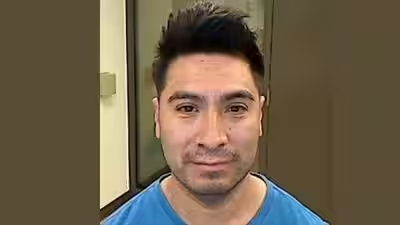
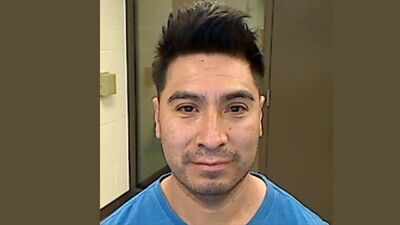
Mexican national Erik Santana-Garcia.

A Mexican national who had been deported from the US multiple times before illegally reentering the country has been sentenced to 20 years in federal prison for sexually exploiting two minors, the US Department of Justice said.Erik Santana-Garcia, 34, of Salt Lake City, Utah, was sentenced on July 30 to 20 years in federal prison without parole, followed by lifetime supervised release, according to the DOJ.He was convicted of interstate transportation of a minor with intent to engage in illegal sexual activity, possession of child pornography and illegal reentry into the US following a prior deportation.ICE said Santana-Garcia had been removed from the US before illegally reentering the country and will be deported to Mexico after serving his 20-year prison sentence.The agency said the Trump administration has “zero tolerance” for child predators and people who illegally enter the US.

Transported minor from Utah

Santana-Garcia pleaded guilty on March 3, 2026, according to court documents. Prosecutors said he transported a minor across state lines with the intention of engaging in illegal sexual activity with the child.He left Utah with the minor on November 10, 2024, intending to take the child to New York. However, officers with the Oak Grove Police Department in Missouri located the pair two days later.

Material involving second minor found

Homeland Security Investigations later found child pornography depicting a second minor on a phone seized from Santana-Garcia at the time of his arrest, prosecutors said.Santana-Garcia had previously been deported and removed from the US multiple times, most recently on March 6, 2019, according to the DOJ.


Source link

Your will may not decide where your super goes: About 15.7 million Australians are estimated to lack a binding death-benefit nomination


Your will may not decide where your super goes: About 15.7 million Australians are estimated to lack a binding death-benefit nomination
Super Consumers Australia research has found that many Australians either don’t have a binding nomination or may have been inadequately informed about making one.

Millions of Australians may believe their superannuation will automatically go to the people they name in their will when they die. But this is not necessarily so. A recent news report by ABC Information & Services News suggests that around 15.7 million Australians may not have a legally binding death-benefit nomination, which would give super funds a fair amount of discretion over who gets the money. The issue is drawing attention as regulators and consumer advocates call for clearer rules and faster processing of death-benefit claims.

Why your super isn’t controlled by your will

If we go by the report, superannuation is not automatically included in a person’s estate as a general rule. Instead the money is put in a trust and managed by the super fund’s trustee. The trustee determines who is entitled to receive the accumulated superannuation and any insurance benefits payable on the death of a member. This means a member’s will may not be enough to ensure their super goes to their preferred beneficiaries. Binding death benefit nominations can add certainty, by legally binding the trustee to pay the benefit to eligible beneficiaries or the member’s estate.

15.7 million Australians could be nomination-free

According to a Super Consumers Australia research, experts have found many Australians either don’t have a binding nomination or may have been inadequately informed about making one. In a 2025 survey of 5,000 people by the organization, 67 per cent said they had not been contacted by their super fund in the past year to make a binding death-benefit nomination. Only 10 per cent said they had been contacted and 13 per cent said they already had a binding nomination. Based on these findings and Australian Taxation Office data showing approximately 18 million people have a superannuation account, Super Consumers estimated that about 15.7 million people may not have a binding nomination.It is also mentioned that super funds need to do more to explain the significance of these nominations and to make the process easier for members, the organization said.A family dispute brings the issue to light. ABC eported the story of Brooke Allan, whose uncle had added her and her cousin to a death benefit nomination form with Cbus. After his death in 2024, the two nieces tried to claim the superannuation, thinking the nomination showed his wishes. Later, however, the fund discovered that the nomination was not legally binding. Cbus eventually paid out about $130,000 to the man’s estranged son, identified by the trustee as his sole dependant under superannuation rules.The case shows the distinction between a member expressing a preference and a binding legal nomination. If a person has made their wishes known, even in the form of a non-binding nomination, the trustee has the final say.

Not all nominations are created equal

Death benefit nominations come in different forms and not all super funds offer the same options. The news report states tha a binding death-benefit nomination is a legally enforceable direction to the trustee to pay the benefit to eligible beneficiaries or the member’s estate, if the nomination satisfies the relevant requirements. And, the non-binding nomination only reflects the member’s preference. The trustee can choose who gets the money. Also, a reversionary nomination (for some pension accounts) means your pension will continue to an eligible dependant when you die. Depending on the fund and the type of nomination, binding nominations may also need to be renewed from time to time. Some funds allow you to make non-lapsing binding nominations.

Who can get Superannuation?

Death benefits are generally subject to superannuation law restrictions, states the report. Eligible beneficiaries can include a spouse or partner, children and people who were financially dependent on the deceased. A member may also nominate their legal personal representative. Where this is the case, the benefit will be paid to the member’s estate and distributed according to the member’s estate arrangements. This means members need to understand the rules of their super fund and the legal obligations for beneficiaries.

Regulators tell funds to improve process

The report states that ASIC has been looking into how super funds deal with death benefit claims. Its reviews have found that the processing time for claims involving no nomination and a non-binding nomination can be longer. ASIC has also expressed concern at the frequency with which funds require members to update their nominations. Some trustees had contacted members once before a nomination had expired, while others had contacted members near expiry. The regulator has urged super funds to be more proactive in helping members understand and retain their nominations, states ABC report.

Government to think about compulsory time frames

The federal government is also considering introducing mandatory timeframes for super funds to respond to insurance claims, including death-benefit claims. Consumer advocates say the end-to-end deadlines need to be tightened up, arguing families shouldn’t have to wait forever for claims to be assessed. But industry representatives have said complicated cases involving competing claims may require more time for trustees to carefully assess the circumstances.Images Courtesy: istock


Source link

World’s longest national road in Australia is 14,500 km long and forms a giant loop around the continent, crossing deserts, rainforests and major cities  | World News


World’s longest national road in Australia is 14,500 km long and forms a giant loop around the continent, crossing deserts, rainforests and major cities
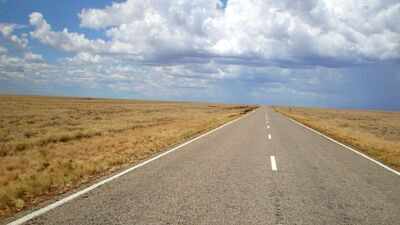
Highway 1, Australia. Image Credit: Tony Bowden/Wikipedia

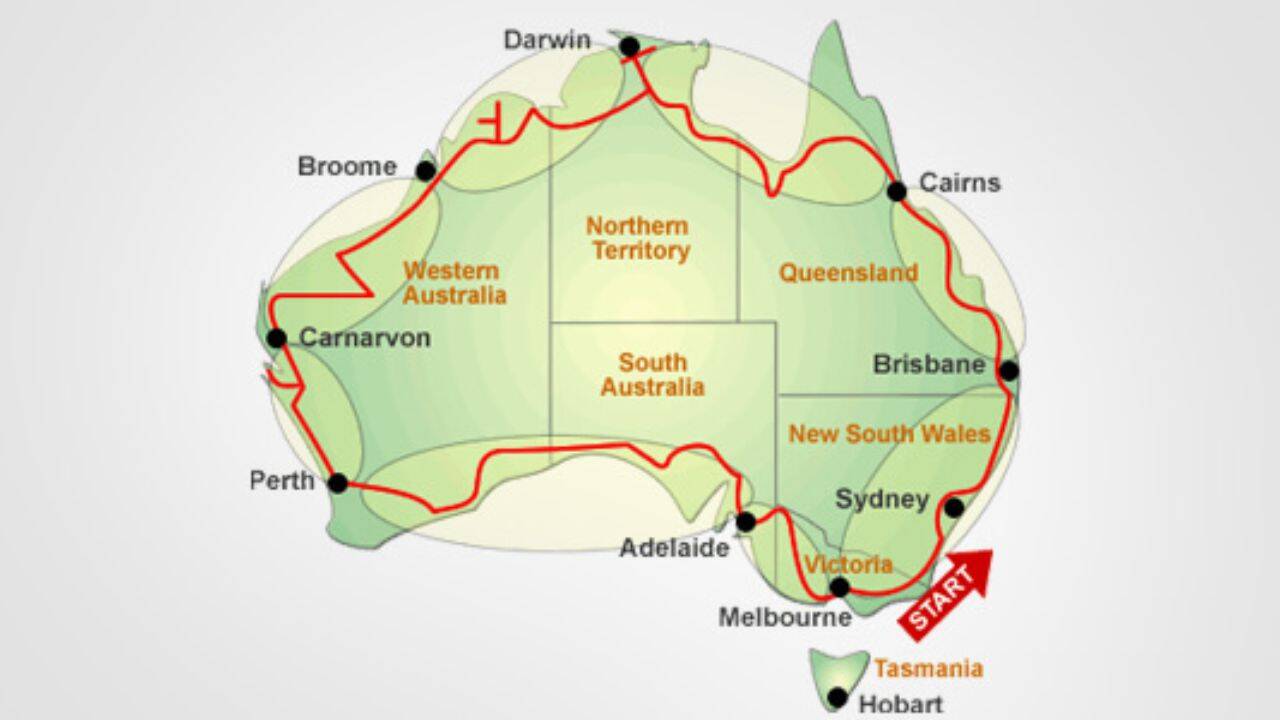
Australia has the world’s longest national highway, which is a marvelous engineering example known simply as ‘Highway 1.’ Spanning approximately 14,500 kilometres, this massive highway covers around the entire mainland continent like a belt, acting as an important transport base that connects every state capital city from Sydney to Perth and Darwin.The Pan-American Highway covers more total distance, but it has the roadless Darien Gap in between, which makes the Highway 1 in Australia as the ‘longest uninterrupted national route’ on Earth. This looping road is not a single highway, but a sophisticated network of connected sealed roads that runs along the vast coastline. It serves as the bloodline for the nation’s commerce, tourism, and travel, by providing a continuous path through tropical rainforests, desolate deserts, and bustling metropolitan centres, which makes the vast Australian continent accessible to everyone.

How the idea of National highway 1 first came together in Australia

According to historical records from Ozroads, Highway 1 was officially established in 1955 as part of the National Route Numbering initiative. Before this, road systems in Australia were largely fragmented and managed independently by various states with little cohesion across borders. The creation of National Route 1 was designed to unify these different paths into a single, national network.For a long time, various parts of this route have been given different names depending on the region, like the Pacific Highway in New South Wales or the Eyre Highway across the Nullarbor, but they all remain part of this singular National highway 1. Ozroads guide explains that the original ‘Route 1’ shields are slowly being replaced by modern alpha-numeric signs, but the highway remains the greatest road of the nation, following the coast for the majority of its journey.

Why National Highway 1 follows the coastline of the Australian continent

The decision to build a circumferential route rather than a network of internal roads was taken because of the geography and history. Research by Mikhail Prokopenko and his team notes that the dominance of coastal routes is due to early European settlements starting at the sea, where boats were the primary mode of transport. Furthermore, the harsh continental climate of the interior part of the land, which contains arid conditions and a lack of water, made large-scale agricultural or urban development more than 1,000 kilometres from the coast nearly impossible.The Prokopenko study used ‘slime mould’ logic to evaluate the road network, which says that the Highway 1 loop copies the way how biological organisms find paths to food sources. This evaluation suggests that the highway is a logically optimal network for connecting the distributed urban population centres of Australia. The dominance of these coastal routes, along with the internal short-cuts like the Stuart Highway, ensures the country remains connected even through its most challenging terrain.

Why the National Highway 1 follows the coastline

Image Credit: Continentlist.com

The ‘Big Lap’ of Australia

In their local culture, driving through the entire length of Highway 1 is known as the ‘Big Lap.’ The Cooee Tours guide for 2026 describes this journey as the ultimate Australian road trip, covering around the mainland and sometimes extending to Tasmania via ferry. The official length of the highway is roughly 14,500 kilometres, but most travellers end up covering between 25,000 and 30,000 kilometres once they include the side trips and detours to iconic spots like the Kimberley or the Red Centre.The guide suggests that completing the full circuit properly requires anywhere from 3-12 months, because road trip fatigue is a very real factor on such long stretches of highway. Today, the entire route is fully sealed, which means a standard two-wheel-drive vehicle can complete the loop without a heavy-duty off-road rig. This accessibility has made the ‘Big Lap’ a preferred passage for retirees, families, and international visitors.

How this highway project was funded and completed

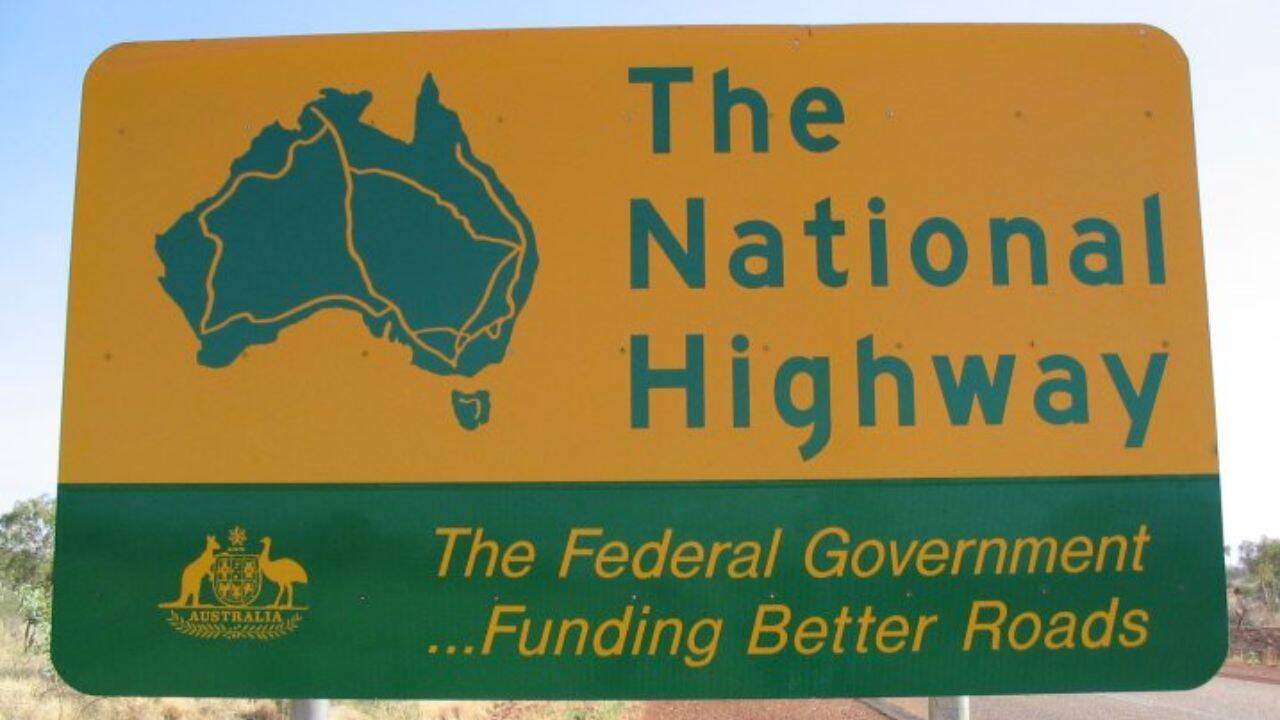
The infrastructure present today was largely influenced by the National Roads Act of 1974. As detailed by Ozroads, this legislation allowed the Commonwealth Government to provide 100% federal funding for a ‘National Highway’ system to ensure that the roads were constructed with high safety and standards. This was a massive challenge that involved major deviations and thousands of kilometres of bitumen covering to make sure the route was all-weather capable.Australia couldn’t claim to have a fully paved route encircling the continent until 1986, which is when the sealing of the final section of the Great Northern Highway was completed. As reported in the Ozroads archives, the federal funding model was replaced in 2005 by the Auslink program, but these routes still kept their strategic importance as the most favourable paths between capital cities. The green and gold shields which are used to mark these national highways still act as a guide for motorists covering the vast distances between states.

How the highway was funded and completed

Road sign of the National Highway. Image Credit: GlidingRon/Wikipedia

Is it safe to travel on National Highway 1

Safety is a primary concern because of the extreme remoteness of certain sections like the Nullarbor Plain in South Australia. Wildlife encounters, particularly with kangaroos, emus, and wombats, are a major road hazard, especially at dawn and dusk. Travellers are advised to never drive at night in rural areas and to take breaks every two hours to manage fatigue.Despite the challenges posed by the environment, the highway network is robust. The Ozroads records and the Prokopenko study highlight that the combination of the main coastal loop with interior short-cuts makes the Australian network highly resilient. This connectivity ensures that even if one section is blocked by local disasters, the continent remains largely accessible through this grand loop design that has belted an entire continent together.


Source link