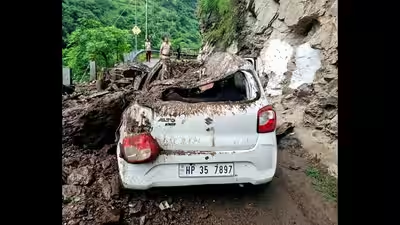
Car lies damaged after falling rocks and debris from a hillside hit it following continuous heavy rainfall in the Anni area of Kullu
Heavy monsoon rains continued to disrupt life across Himachal Pradesh, with 204 roads blocked, 70 people killed in rain-related incidents and damage to public property estimated at more than Rs 910 crore over the past 43 days, according to the latest State Emergency Operation Centre (SEOC) assessment.The assessment covers the period from June 30 to August 11 and captures the impact of repeated heavy rainfall, landslides, cloudbursts and other weather-related incidents across the hill state.
70 disaster deaths, public property damage crosses Rs 910 crore
According to SEOC data, 70 people have died in direct disaster-related incidents since June 30. Landslides accounted for 14 deaths, while 23 people died after falling from steep slopes, rocks or trees. Seven deaths were caused by snake bites, six by electrocution and four by cloudbursts.Lahaul and Spiti reported the highest number of direct disaster-related deaths at 14, followed by Kangra with 12.The wider toll has also been compounded by road accidents. As many as 93 people have died in road accidents during the same period, with Chamba reporting 16 fatalities, followed by Kullu (13), Sirmaur (12) and Shimla (11), as reproted by ANI.Meanwhile, cumulative damage to public property has reached around Rs 910.35 crore. The Public Works Department has suffered the biggest losses, estimated at Rs 686.36 crore, while damage to the power sector stands at around Rs 203.90 crore.The monsoon has also damaged houses, other private structures, livestock and crops across the state’s 12 districts, adding to losses for affected households.
204 roads blocked, power and water infrastructure hit
Mandi is the worst affected in terms of road connectivity, with 80 roads currently blocked. The Mandi-Kullu route has also been disrupted at Jalogi Dwada. Kullu has reported 56 blocked roads, while 23 roads remain closed in Sirmaur. Two national highways — NH-154 and NH-21 — are also among the affected routes.The road closures have disrupted inter-district connectivity and complicated the movement of essential supplies and emergency response teams.
The monsoon has also damaged the state’s power and drinking water infrastructure. Forty-five distribution transformer regions are currently out of service, including 41 in Sirmaur’s Nahan subdivision.Around 82 drinking water supply schemes have been affected across the state. Sirmaur accounts for 31 of the disrupted schemes, followed by Hamirpur with 11 and Mandi with eight.Authorities and emergency response teams are continuing restoration work, including clearing landslides and debris, reopening roads and restoring power and water supply. However, persistent rainfall and the risk of further landslides continue to hamper relief and restoration efforts.
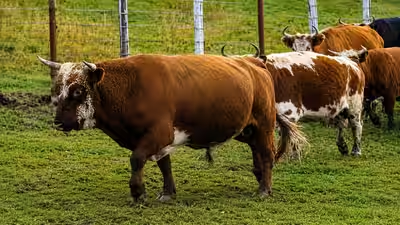
For generations, cattle have roamed Chirikof Island, a remote island in the western Gulf of Alaska where human management became almost irrelevant to their survival. Cut off from the mainland and living in a harsh environment, the animals persisted as a feral population while generations of domesticated cattle elsewhere were shaped by deliberate breeding.A 2016 study published in Heredity, ‘Origins of cattle on Chirikof Island, Alaska, elucidated from genome-wide SNP genotypes,’ by J. E. Decker, J. F. Taylor, J. Kantanen, A. Millbrooke, R. D. Schnabel, L. J. Alexander and M. D. MacNeil used genome-wide genetic data to investigate where these unusual cattle came from and how distinct they had become. The researchers found that the herd was not simply an abandoned American breed. Instead, it carried a distinctive mixture of Siberian Yakut and British, particularly Hereford, ancestry, with genetic evidence suggesting that life on Chirikof Island had further influenced the population.
How cattle ended up isolated on a remote island in the Gulf of Alaska
Chirikof Island lies about 61 kilometres from the nearest land and roughly 74 kilometres southwest of the Kodiak Archipelago. Its lack of a deepwater harbour made movement to and from the island difficult, meaning that relatively small groups of cattle could become isolated there.The cattle’s history reaches back to the period of Russian colonial rule in Alaska. The researchers note that Yakut cattle from Siberia were likely introduced first, with cattle from Yakutia being brought to settlements in Russian America during the late 18th and 19th centuries.The genetic evidence indicates that these Yakut-related animals eventually formed part of the ancestry of the Chirikof herd. Later, European cattle were introduced, adding another layer to the population’s history.Historical records indicate that cattle originating from the United States reached Chirikof Island by the mid-1880s. By 1927, a count recorded approximately 400 beef cattle on the island. Additional cattle, including Herefords and potentially other breeds, were reportedly introduced during the 20th century.The result was not a single conventional breed, but a genetically mixed population developing in unusual isolation.
Genome-wide testing revealed a rare mixture of Yakut and Hereford ancestry
To understand exactly what had happened to the island herd, Decker and his colleagues analysed DNA from 10 Chirikof Island cattle and compared their genetic profiles with cattle from around the world.The researchers examined more than 43,000 single-nucleotide polymorphisms (SNPs) across the cattle genomes. They then compared the island animals with 137 breeds and populations using several population-genetic methods. The results revealed a striking pattern.The Chirikof cattle fell genetically between Hereford and Yakut cattle, consistent with substantial ancestry from both. Their analyses estimated approximately 49-59% Hereford-like ancestry and 33-40% Yakut-like ancestry, with the remainder coming from other cattle populations.Another analysis estimated that about 34.4% of their ancestry came from a Yakut ancestor, with the rest being most similar to Hereford.The genetic results also matched the historical timeline. The researchers inferred that Yakut-related cattle arrived first, European taurine cattle were introduced approximately 120 years before the study, and a later wave of Hereford cattle arrived around 40 years before the study. This combination made the Chirikof herd unusual among North American cattle.
Harsh island conditions may have reshaped the cattle’s genetic architecture
The most intriguing part of the study was not simply discovering where the cattle came from. It was finding evidence that life on Chirikof Island may have changed the genetic composition of the herd.The animals had been living unmanaged in an isolated and relatively harsh environment for many generations. Natural selection therefore had an opportunity to favour genetic variants that helped some individuals survive and reproduce under those conditions.The researchers identified 12 SNPs across eight loci showing patterns consistent with strong selection. The analysis was considered underpowered because of the small sample size, so the authors treated these findings cautiously. Nevertheless, genes near the identified regions were associated with functions including immune defence, embryonic development and cancer.The findings suggest that the island cattle were not merely a frozen remnant of the breeds originally introduced there. They had been changing.
Why the Chirikof cattle became important to conservation scientists
The discovery had implications beyond the history of one isolated herd. Feral livestock can retain genetic variation that is rare or absent from intensively managed commercial breeds. Because domesticated animals are often subjected to strong selective breeding for traits such as growth, milk production or meat quality, unusual populations can preserve genetic variants that have disappeared elsewhere.The Chirikof cattle appeared particularly interesting because their mixed ancestry and long isolation had produced a population that was genetically distinctive compared with other North American cattle.The researchers concluded that the population appeared to be at least as distinct as recognised cattle breeds and that its combination of British and Siberian ancestry was unique among the North American breeds included in their comparisons. They also suggested that the animals could contain variants associated with adaptation to the island’s demanding environment. That made the herd potentially valuable as a source of genetic diversity.
A wildlife refuge faced a difficult decision over the feral herd
There was an important conservation conflict surrounding the cattle.Chirikof Island became part of the Alaska Maritime National Wildlife Refuge in 1980, and the US Fish and Wildlife Service sought to reduce the impact of introduced animals on island ecosystems. The final grazing lease for Chirikof expired in 2000, while a permit to remove the cattle expired in 2003. The cattle nevertheless remained on the island.Wildlife managers wanted the cattle removed because grazing could damage habitat, particularly habitat important to birds. Their removal, however, could also lead to the disappearance of a genetically unusual cattle population.That created a complicated conservation question: should the animals be treated simply as an introduced species damaging a wildlife refuge, or should their unusual genetic characteristics also be considered?The researchers argued that understanding the herd’s genetic diversity could provide an objective basis for making that decision.
More than abandoned cattle, the herd became a record of evolution
The story of the Chirikof cattle is ultimately about what can happen when domesticated animals are removed from the systems that normally control their breeding.Their ancestors arrived through human migration and livestock introductions. But once the animals became isolated on Chirikof Island, their evolutionary trajectory was no longer entirely directed by people.Yakut and Hereford ancestry became intertwined. Geographic isolation limited further immigration. Generations passed under the demanding conditions of an Alaskan island. And natural selection appears to have left its own mark on the population.Decker and his colleagues’ study therefore revealed something more complicated than a herd of feral cattle. It uncovered a genetically distinctive population carrying a record of Russian, British and American livestock history, and potentially, the genetic signatures of adaptation to one of Alaska’s most isolated environments.
Emmanuel Ogbah is reportedly returning to the Kansas City Chiefs on a one-year contract ahead of their 2026 preseason opener. (Image via Getty)
The Kansas City Chiefs are going back to someone they already know.ESPN’s Adam Schefter reported Tuesday that veteran defensive end Emmanuel Ogbah is signing a one-year contract with Kansas City. Ogbah previously played for the Chiefs during their 2019 Super Bowl season, and his return adds an experienced option to a defensive end group that entered training camp with questions behind George Karlaftis.
Why are the Chiefs bringing Emmanuel Ogbah back now?
Kansas City needed another body it could realistically put into its defensive line rotation.The Chiefs released Mike Danna earlier this offseason, while Charles Omenihu left in free agency. Janarius Robinson also remained unsigned. That left Karlaftis as the most established defensive end on the roster and created opportunities for Felix Anudike-Uzomah, Ashton Gillotte and rookie R Mason Thomas.Gillotte has also dealt with a hamstring injury during camp, according to Chiefs On SI. Adding Ogbah gives defensive coordinator Steve Spagnuolo another option instead of forcing Kansas City to rely entirely on younger players behind Karlaftis.Schefter reported the deal Tuesday morning. “Free-agent defensive end Emmanuel Ogbah is signing a one-year deal with the Chiefs; per source. It’s a reunion. Ogbah won a Super Bowl with them in 2020.”Kansas City opens its preseason schedule against the Los Angeles Rams on Saturday, giving Ogbah only a short window to work his way back into the defense before roster decisions arrive later this month.
Where does Emmanuel Ogbah fit on the Chiefs’ defensive depth chart?
Ogbah should enter camp as part of the competition behind Kansas City’s primary edge defenders rather than as an automatic starter.Before the move, Ourlads listed Karlaftis and Mason Thomas on the left side, with Anudike-Uzomah and Gillotte on the right. The Chiefs also have younger depth options behind that group.Karlaftis is the safest bet for a major workload. Everything behind him is less settled. Anudike-Uzomah entered the NFL as a first-round pick in 2023 but is still trying to establish a larger role. Gillotte gives Kansas City another developmental option, while Thomas is entering his rookie season.Ogbah changes the equation because Kansas City no longer has to get all of its rotational snaps from that group.At 32, he does not need to become the centerpiece of the pass rush for the signing to work. If Ogbah earns a rotational role, handles early-down snaps and gives Spagnuolo another experienced defensive end to call on, the Chiefs will have addressed a clear depth issue without blocking their younger players from earning opportunities.
What kind of production is Emmanuel Ogbah bringing back to Kansas City?
Ogbah is returning with considerably more NFL experience than he had during his first Chiefs stint.He has played 136 career games with the Cleveland Browns, Chiefs, Miami Dolphins and Jacksonville Jaguars. Ogbah has recorded 332 tackles, 48 sacks and two interceptions during that span.His most productive stretch came after leaving Kansas City for Miami. Ogbah spent five seasons with the Dolphins and recorded 29.5 sacks and 28 tackles for loss across 73 games, according to Chiefs On SI.His numbers dipped last season. Ogbah appeared in 13 games for Jacksonville in 2025 and finished with 15 tackles and 0.5 sacks. Pro Football Rumors reported that he played 38% of Jacksonville’s defensive snaps and generated seven quarterback pressures.Those numbers make his expected role in Kansas City important. The Chiefs are not adding a player coming off a double-digit sack season. They are adding a veteran who has produced before, knows Spagnuolo’s defense and can compete for snaps in a position group that needed another proven option.
What happened during Emmanuel Ogbah’s first stint with the Chiefs?
Ogbah originally joined Kansas City through a trade with Cleveland before the 2019 season.He played 10 games and started four during his first year with the Chiefs, recording 5.5 sacks. A torn pectoral muscle ended his season before Kansas City’s playoff run, but Ogbah remained part of the team that went on to defeat the San Francisco 49ers in Super Bowl LIV.He then left in free agency and signed with Miami.Seven years later, the circumstances are different. Ogbah is now entering his 11th NFL season, and Kansas City already has Karlaftis established at the top of the position group.What has not changed is the defensive coordinator.Spagnuolo remains in charge of the Chiefs’ defense, which gives Ogbah familiarity with the broader structure he is returning to. That does not guarantee him a roster spot or a major workload, but it removes some of the uncertainty that usually comes with signing a veteran this late in training camp.
What happens next for Emmanuel Ogbah and the Chiefs?
Ogbah now has to turn the reunion into a role. Kansas City hosts the Rams in its preseason opener Saturday, giving the coaching staff its first game setting to evaluate a defensive end room that remains unsettled behind Karlaftis.The Chiefs then have the rest of the preseason to decide how Ogbah fits alongside Anudike-Uzomah, Gillotte and Thomas before the regular-season roster is finalized.Kansas City opens the regular season Sept. 14 against the Denver Broncos.Ogbah does not have to recreate his 2019 production for this move to matter. The Chiefs needed another credible option at defensive end. Instead of waiting for one of their younger players to solve the problem by default, they brought back a veteran who has already played in Spagnuolo’s system and has 48 career sacks to his name.
The programme offers a stipend of up to Rs 75,000 that will be disbursed upon the successful completion of the internship
NEW DELHI: Indian Army has opened its establishments to student interns through the second edition of the Indian Army Internship Programme (IAIP) hosted on the AICTE national internship portal and has expanded this programme this year by adding 43 specialised projects.The programme offers a stipend of up to Rs 75,000 that will be disbursed upon the successful completion of the internship and fulfillment of all program requirements. The final stipend amount will be based on the intern’s overall attendance during the period.The internships cover AI, cybersecurity, robotics, drones and counter-drone systems, hospital information systems, wargaming and simulation, and strategic communication. Through this internship programme, Indian Army envisions creating a strong ecosystem where education, technology and national service converge to prepare the next generation of innovators. The internship offers an opportunity to gain hands-on experience and professional exposure with the Army.
The Army started the pilot project in May 2025. The specialised tech-infusion trials, which began in 2025 focusing on wargaming, simulation and niche research, has now expanded into a structured multi-project initiative across army directorates offering up to 43 specialised tracks.The Army has already received over 77,000 applications since the programme opening, and the last date to apply is set as Aug 15. “A student can apply for multiple Indian Army internship opportunities, but a student can accept only one internship offer letter. Before accepting an offer letter, ensure it is the opportunity that best matches student’s skills, interests, and career aspirations,” the AICTE website said.
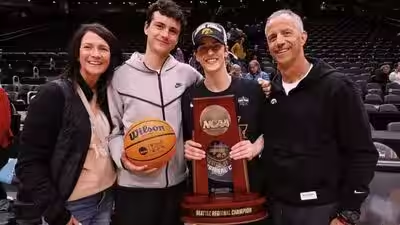
How Caitlin Clark’s family stood by her through records, criticism and pressure(Instagram)
Caitlin Clark’s rise has looked almost unstoppable from the outside. She became the biggest star in college basketball, shattered records that once seemed untouchable and quickly transformed the Indiana Fever and the WNBA. But behind the sold-out arenas and national attention was a family that helped her handle the pressure long before the world knew her name.From the first time she picked up a basketball to the moments when criticism, expectations and injuries became overwhelming, her parents, Brent and Anne Nizzi-Clark, remained the constant support system that kept her grounded.
How Caitlin Clark’s family helped shape her game and confidence from the very beginning
Caitlin Clark was born in West Des Moines, Iowa, in 2002. By the age of five, her basketball instincts were already drawing attention. Her grandfather, longtime Iowa high school football coach Bob Nizzi, recalled that she could dribble naturally and had an unusual ability to anticipate plays and see the floor.Sports were everywhere in the Clark household. Her father, Brent, was a standout athlete at Simpson College, where he earned all-conference honors in both baseball and basketball. Her older brother Blake later said that the family was constantly surrounded by games, practices, tournaments and sports discussions.Brent became Caitlin’s first basketball coach, and his toughest lessons were not about scoring. In an interview with ESPN, Clark explained that her father would not let her shoot many three-pointers as a young child because he wanted her shooting form to develop correctly.“I probably didn’t like it at the time and I was mad at him about it, but looking back, shooting form fundamentals are the best thing,” she said.Those repetitive drills eventually became the foundation of one of the most recognizable shooting motions in basketball.Her mother, Anne, provided a different kind of support. She often described Caitlin as having a “fun, spunky attitude” and encouraged her to keep enjoying the game even as competition became more serious. That balance between discipline and joy became crucial as Clark’s career accelerated.
Caitlin Clark journey from Iowa superstar to record-setting basketball star
Clark’s achievements quickly moved beyond local attention. At Iowa, she became one of the most dominant players in college basketball history.She became the NCAA’s all-time leading scorer in women’s basketball and then surpassed Pete Maravich to become the NCAA’s all-time leading scorer regardless of gender. She won back-to-back National Player of the Year awards and led Iowa to multiple deep NCAA tournament runs that helped drive record television audiences.The pressure that came with those records was enormous. Every game became a national event. Defenses were built entirely around stopping her, and every missed shot sparked debate.One moment that convinced Brent his daughter was becoming a true superstar came during Iowa’s 2022 game against Michigan. Even in a loss, Clark exploded for roughly 25 fourth-quarter points, and he later said that performance dramatically elevated her national profile as highlights spread across social media.Despite the growing spotlight, her parents kept repeating the same message.At the 2024 WNBA Draft, where Clark was selected No. 1 overall by the Indiana Fever, she shared the advice they had given her throughout the biggest moments of her life.“Be confident,’ but also the biggest thing over the course of the last couple of months, ‘Soak in every single second,’” she said of their advice. “‘It goes fast. This is once in a lifetime, so enjoy every single part of it.’How family stood by Caitlin Clark through criticism, Olympic disappointment and injury setbacksThe transition to the WNBA brought a new level of scrutiny. Clark’s rookie season in 2024 was historic. She averaged 19.2 points, 5.7 rebounds and 8.4 assists, became the first true rookie to lead the WNBA in assists, earned WNBA Rookie of the Year and All-WNBA First Team honors, and helped the Fever reach the playoffs for the first time since 2016.But the success did not eliminate criticism. Physical defense, constant media attention and debates about her impact on the league followed her throughout the season.Then came one of the most controversial moments of her career: she was left off the 2024 U.S. Olympic team. The decision created a national debate about whether the biggest new star in women’s basketball should have been included. Through the disappointment, her family remained publicly supportive and focused on the long-term picture.The next major challenge was physical. Clark’s 2025 season became a test of patience. She dealt with a left quadriceps strain, a left groin injury and a right groin injury, missed significant time and was eventually shut down for the remainder of the season after appearing in only 13 games. She later said the experience taught her how to support her teammates even when she could not be on the court.In 2026, she returned healthier and resumed her place among the league’s elite players, while continuing to attract intense attention around every game.Anne Clark once said she felt “lucky” to be Caitlin’s mother and called the journey “fabulous.” That perspective has remained consistent even as her daughter became one of the most famous athletes in America.What makes this story inspiring is not only the records. It is the way her family helped her navigate every stage of the journey. They pushed her to master fundamentals when she was young, reminded her to stay confident when expectations exploded, kept her grounded when fame arrived and stood beside her when criticism and injuries tested her most.Caitlin Clark has already changed women’s basketball. She is a college legend, a WNBA star, a Rookie of the Year, an All-WNBA player and one of the most influential athletes in the world.Yet the foundation of her career was built long before the trophies and television ratings. Through every record, every debate, every setback and every comeback, her family remained beside her, reminding her to stay confident, enjoy the moment and keep moving forward.And in many ways, that support may become the most important assist of Caitlin Clark’s entire basketball journey.
(Representative image) Gor said the partnership between India and the United States was important for tackling global security challenges (Photo: ANI).
NEW DELHI: US ambassador to India Sergio Gor met National Security Advisor Ajit Doval on Tuesday and held talks focused on strengthening strategic cooperation between Washington and New Delhi.Describing the discussions as “fruitful”, Gor said the partnership between India and the United States was important for tackling global security challenges. He said both countries have several shared objectives and that engagement between the two sides is continuing to expand.
“Had a fruitful meeting with National Security Advisor Ajit Doval to discuss deepening US-India strategic cooperation. Our close partnership with India is vital to addressing global security challenges. The United States and India share many of the same goals and our engagement continues to grow!” he said in a post on X.The meeting followed Gor’s discussions with Foreign Secretary Vikram Misri on Monday. The two officials discussed India-US bilateral ties, with Gor describing the interaction as “always good” in a post on social media, without sharing further details.Gor’s meeting with Doval also took place two days after US Vice President J D Vance spoke with PM Modi over the phone.
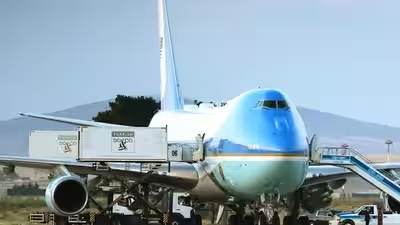
Catering trucks were parked at Air Force One on the tarmac as the motorcade carrying US President Donald Trump arrived to depart following the Nato summit at Ankara
TOI correspondent in Washington: US President Donald Trump, commander-in-chief of the world’s greatest military power, was reduced last month to something closer to a VIP hors d’oeuvre when American security officials reportedly stuffed him into a catering container to spirit him out of Turkey.Trump’s security team, worried about a credible Iranian threat to his life, devised an elaborate ruse during his departure from Ankara after the Nato summit. According to The Washington Post and The New York Times, Trump publicly boarded the older Air Force One, in full view of cameras, but minutes later, the MAGA supremo and a small group of aides were secretly moved from the presidential aircraft in an airport catering vehicle and transferred to a smaller Air Force C-32A.That plane then whisked him toward Britain on a four-hour flight while the decoy Air Force One followed. The operation was apparently so secret that the White House press corps traveling with Trump didn’t know they were being cast in a presidential security drama as unwitting extras. Neither, reportedly, did many White House officials.The comedy, however, sits atop a very serious security concern. Trump has been the target of multiple assassination attempts and serious threats, making presidential protection an unusually grim business. The attempted assassination at a rally in Butler, Pennsylvania in July 2024 came within inches of becoming a catastrophe. Another armed man was arrested after being discovered near Trump’s golf outing in Florida two months later, and more recently an armed man tried to storm a White House Correspondent Association dinner where Trump was present.The Turkey stuffing has also raised questions about the $400-million elephant – in this case the Boeing 747 supplied by Qatar, which had become a source of controversy even before this latest episode. Some security boffins have expressed concerns about its suitability for presidential use, particularly because converting a foreign-supplied commercial aircraft into something worthy of the presidential fleet involves installing the highly specialized communications, electronic-warfare and defensive systems expected on Air Force One.The plane may have a palace-like interior, but according to security experts, a presidential aircraft needs more than chandeliers, leather seats, and room for a presidential ego. It essentially has to be a flying presidential command center, with communications, electronic warfare, nuclear-attack survivability, medical bells and whistles, and physical security all integrated into one system.Expectedly, Trump critics and Trump courtiers saw the Turkish takeout quite differently. “WOW! President Trump outsmarted Iranian threats in Turkey by jumping in a CATERING TRUCK to swap planes when the world thought he was on the legacy Air Force One. This is a James Bond style mission.” one MAGA minion gushed on X. Critics meanwhile lambasted the President for using White House officials and reporters as expendable decoys. “The guy who posts AI images of himself saving George Washington and fighting alongside Revolutionary War heroes hid in a catering truck while his own allies and the media boarded the plane HE thought Iran might blow up,” sneered one critic.The American president is arguably the most heavily protected individual on Earth. His movements are choreographed down to the minute; Secret Service agents sweep buildings, roads and rooftops; fighter aircraft can be placed on alert; communications systems travel with him; motorcades can stretch for blocks; and millions of dollars are spent ensuring that nobody gets close enough to make history for the wrong reason.Yet in Turkey, the ultimate presidential security measure was apparently to stuff him into a food truck, a reminder of just how bizarre presidential protection can become.And there is another historical irony. Every assassination of a sitting American president has occurred inside the United States, carried out by domestic assailants. Four presidents — Abraham Lincoln, James Garfield, William McKinley and John F. Kennedy– were assassinated. Other presidents, including Theodore Roosevelt, Franklin Roosevelt, Harry Truman, Gerald Ford and Ronald Reagan, faced assassination attempts or serious attacks.The threats have generally not required an enemy air force crossing an ocean or ambushing a Presidential aircraft. It has pulled off by an American with a gun.
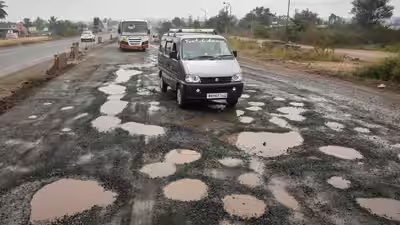
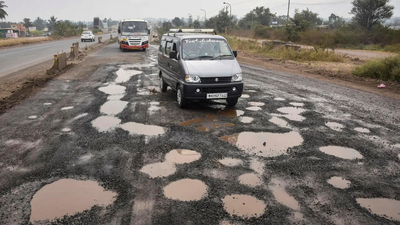
Pothole-related deaths in India rose by over 53% in five years, from 1,555 in 2020 to 2,385 in 2024.
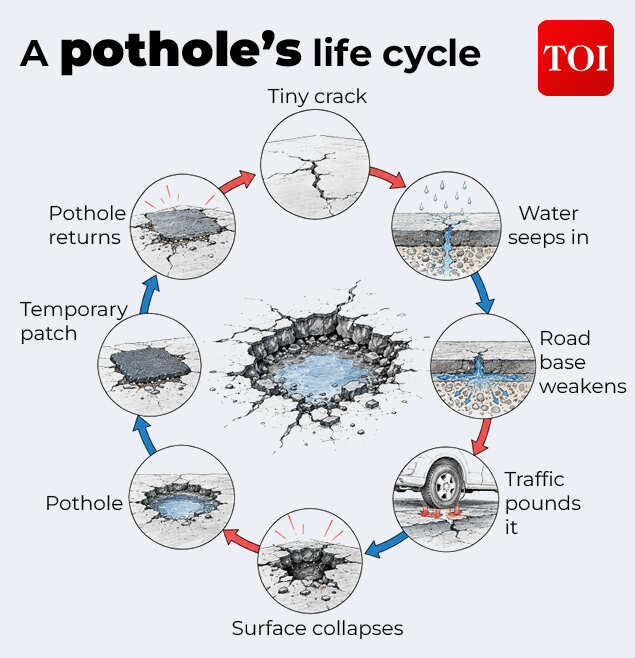
Do you also have a “work in progress” sign permanently living outside your house?One day, someone digs up the road to lay a water pipe. A few days later, another team arrives to fix a cable. Then comes the patchwork. And just when you think the road is finally back to normal, congratulations, it is dug up again.The road outside your house may technically be the same road, but it has seen so many rounds of digging, filling, breaking and repairing that it almost has a career history.And then, inevitably, the potholes arrive.We often blame potholes on bad roads, heavy rain or poor construction. But a pothole is rarely born overnight. In fact, that annoying crater that makes your car suspension groan or sends a two-wheeler rider swerving usually has a long backstory.A crack appears. Water gets in. The road weakens. Traffic keeps pounding it. The surface finally gives way.And if the underlying problem isn’t fixed, filling the hole may only be a temporary solution.The road gets dug up. Again. And again.Before we get to the pothole itself, there is another character in this story: road digging.Roads don’t just carry vehicles. They carry water pipelines, sewage lines, electricity cables, telecom networks and other utilities underneath them. Whenever something needs to be repaired, replaced or newly installed, the road may have to be opened.The problem begins when the road is not restored to the same standard after the work is completed.
From a tiny crack to a full-blown pothole, here’s how road damage turns into a recurring cycle of patch and repair.
A poorly compacted patch can become weaker than the surrounding pavement. Water can seep into the edges. Traffic repeatedly hits the repaired section. Eventually, cracks appear.And suddenly, the “temporary” patch becomes the next pothole.This is one reason why road maintenance cannot simply mean filling visible holes. What happens underneath the road matters just as much as what you see on top.
Every pothole starts small
The first warning sign is usually something you wouldn’t give a second glance: a tiny crack.Road surfaces are constantly under pressure. India’s roads have to handle enormous traffic volumes, heavy vehicles and, in many parts of the country, intense heat followed by heavy monsoon rain.Temperature changes cause pavement materials to expand and contract. Repeated traffic loads create fatigue. Overloaded vehicles put additional stress on the surface.Then the monsoon arrives.
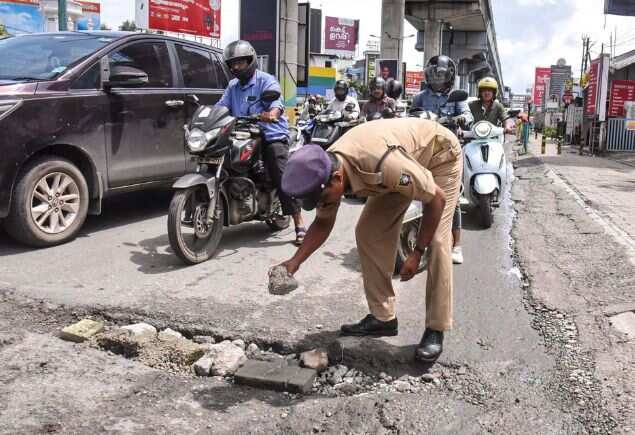
A police officer fills a pothole with stones on a road, at Edappally, in Kochi. (Image credit: PTI)
That tiny crack suddenly becomes a doorway.Water is the real troublemakerRain itself isn’t necessarily the villain. Water getting beneath the road is.Once water enters through a crack, it can reach the layers beneath the asphalt. If drainage is poor, clogged or badly designed, the water may remain there instead of being carried away.The result is gradual weakening of the road’s foundation.The surface may still look fine from above. Underneath, however, the supporting layers can lose strength and material can be washed or displaced, creating weak spots and voids.And then traffic does what traffic does best: keeps coming.Then the tyres take overImagine standing on a floor that has suddenly become slightly hollow underneath. Now imagine thousands of vehicles repeatedly pressing down on that same spot.That is essentially what happens to a road whose underlying layers have weakened.With every passing vehicle, the damaged surface experiences another load. Bits of asphalt loosen, the depression grows and eventually the surface collapses.That is your pothole.And once it forms, it can become a vicious cycle.Rainwater collects in the depression. More water finds its way into the surrounding pavement. The edges weaken. Vehicles hit the damaged section. More material breaks away.A small pothole can therefore become a much bigger one surprisingly quickly, especially during the rainy season.
Why does the pothole come back after it is fixed
Now comes the question every commuter has asked at least once:“Didn’t they just repair this?”Yes. But repairing the hole and repairing the road are not always the same thing.If workers simply fill the visible depression while the layers underneath remain damaged, the surface may fail again.It is a bit like filling a dent in a wall without fixing the leak behind it.The road may look perfect for a while. Then water gets in again, traffic starts pounding the weak section and — hello, pothole.
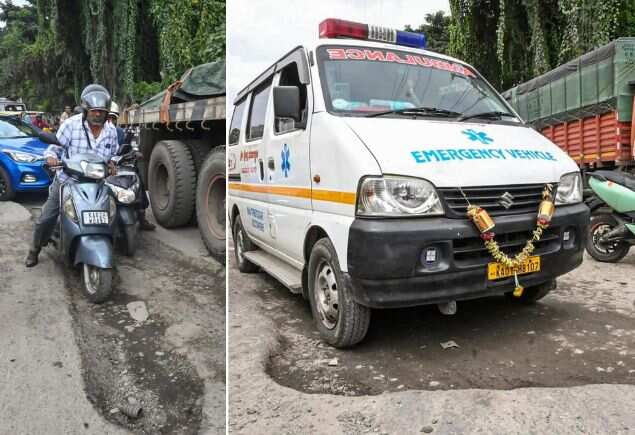
Potholes on Bengaluru roads (Image credit: PTI)
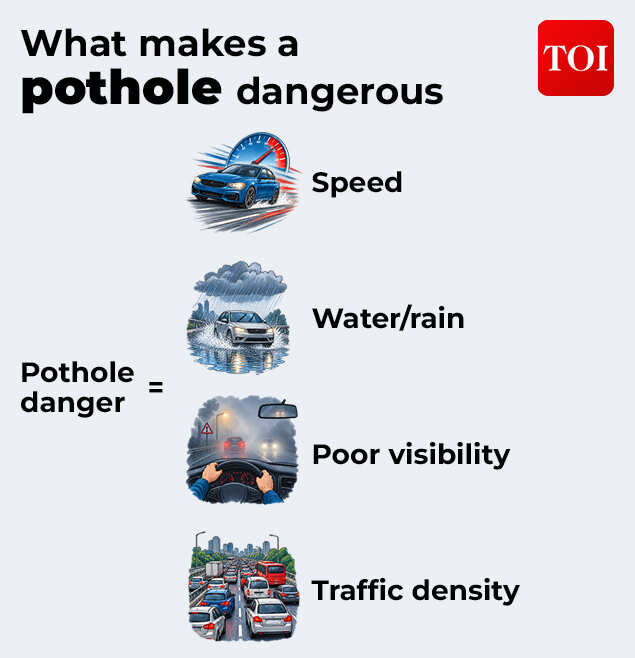
This is why preventive maintenance matters. A small crack can often be dealt with before it becomes structural damage. Once the road base itself has deteriorated, the repair becomes more complicated, expensive and disruptive.And not all potholes are equally dangerousA pothole’s danger isn’t determined by its size alone.A small hole on a busy, high-speed road can be far more dangerous than a giant one on an empty lane.For two-wheelers, an unexpected depression can destabilise the vehicle. On a crowded road, a driver trying to avoid a pothole may suddenly brake or swerve. At night, poor lighting can make the defect difficult to spot. During rain, water can completely hide its depth.So the real danger is a combination of the pothole, speed, traffic, visibility and road conditions.
What data shows
Potholes claimed 9,438 lives across India between 2020 and 2024, with annual fatalities rising from 1,555 in 2020 to 2,385 in 2024 — a jump of more than 53% in five years.Uttar Pradesh accounted for more than half of the national toll, reporting 5,127 deaths. Madhya Pradesh followed with 969 fatalities, while Tamil Nadu recorded 612, Odisha 425, Punjab 414 and Assam 395. Among Union Territories, Delhi reported the highest toll at 50.But the numbers also raise questions about how pothole-related crashes are recorded. States such as Andhra Pradesh and Bihar reported zero crashes, injuries or deaths under this category, even as states such as Manipur, Nagaland and Tripura reported fatalities. Experts say gaps in objective crash-cause reporting could mean the data does not fully capture the scale of the problem.The toll, however, remains below the 2017 peak of 3,597 pothole-related deaths. The Supreme Court took suo motu cognisance of the issue in 2018, observing that authorities responsible for maintaining roads were failing in their duties.
Can we stop pothole before it becomes a pothole?
Fortunately, the answer isn’t simply “keep filling holes”.A 2021 IIT Madras study found that nearly 78% of urban potholes reported by citizens remained unfixed for more than two weeks, with delays particularly serious in high-traffic areas.Technology can help road agencies identify damage earlier through road-condition monitoring, GIS mapping and scanning systems. Quick repair methods can deal with certain defects before they expand.Citizen reporting can also help — provided complaints actually lead to inspection and action.Because the person who encounters a dangerous pothole may not be a road engineer inspecting the highway once a month. It may be a delivery rider passing through it ten times a day.But technology alone won’t solve the problem.Road agencies need better coordination too. If one department digs up a road to lay a cable and another has to repair it later, someone needs to ensure the road is restored properly. Otherwise, the same stretch can enter an endless loop of dig → patch → crack → pothole → repair → dig again.
How speed, rain, poor visibility and heavy traffic can turn a road defect into a serious hazard.
The pothole is only the final chapterSo, the next time you see a pothole outside your home, remember: that hole probably didn’t just “appear”.
It may have started as a tiny crack.Then came rainwater. Maybe a badly repaired utility cut. Maybe years of heavy traffic. Maybe poor drainage. Maybe all of them.By the time you notice the crater, the real damage may already be underneath.Which is why the real solution isn’t simply asking, “Who will fill this pothole?”It is asking a much more important question:“Why did this road fail in the first place — and why wasn’t it fixed before it got this bad?”Because if the answer remains unclear, that freshly filled pothole may just be waiting for its next monsoon comeback.
Fitch projected India’s GDP growth at 6.4 per cent for the current financial year.
Fitch Ratings on Tuesday reaffirmed India’s sovereign credit rating at ‘BBB-‘ with a stable outlook. This extends India’s unchanged rating at the lowest investment-grade level to a 20th consecutive year.“Fitch Ratings has affirmed India’s Long-Term Issuer Default Ratings (IDRs) at BBB- with a stable outlook,” the agency said in its latest rating action.India has maintained the ‘BBB-‘ rating, the lowest investment-grade category, continuously since 2006.
Strong economic fundamentals
The ratings agency said the Indian economy continues to demonstrate resilience despite the energy shock arising from the conflict in West Asia, supported by a strong growth outlook and sound external financing fundamentals.Also Read | Beijing’s billion-barrel weapon: Why India must prepare for China-driven oil pricesFitch projected India’s GDP growth at 6.4 per cent for the current financial year, lower than the average annual growth of 7.4 per cent recorded over the previous three years.According to Fitch, the Bharatiya Janata Party’s (BJP) gains in state elections are expected to strengthen the implementation of the central government’s policy agenda.Fitch said India’s economy has remained resilient in the face of recent shocks and expects that trend to continue.Fitch said India’s sovereign rating is supported by the country’s strong growth prospects and healthy external financing position. The agency added that India’s improving track record of maintaining macroeconomic stability and strengthening policy credibility should continue to support robust economic growth and make the economy more resilient, despite near-term challenges arising from the energy shock.According to Fitch, sustained economic expansion should also lead to gradual improvements in India’s structural credit indicators and increase the likelihood of government debt declining over time.
Fiscal risk due to protests
At the same time, the agency cautioned that recent protests by young people could increase demands for higher government spending on education, job creation and skill development initiatives.While highlighting India’s strong economic fundamentals, the agency warned that recent youth protests over employment could increase pressure on the government to raise fiscal spending.“Recent protests, stemming from leaked medical exams, may point to rising concerns among youth over employment opportunities, risking fiscal spending pressures over time,” Fitch said.Last month, students organised large-scale demonstrations in the national capital over the alleged leak of the NEET medical entrance examination paper, demanding greater transparency in competitive examinations.Also Read | 100% tariffs: Why India may ignore Trump threat and continue buying Russian crude oil
Impact of crude oil dependence
India meets about 87 per cent of its crude oil requirement through imports, with nearly 46 per cent of those supplies passing through or close to the Strait of Hormuz. The vital shipping route has remained blocked following the outbreak of the US-Iran war on February 28.“There are residual risks from uncertainty related to the US-Iran conflict, given India’s position as large net energy importer position, but we do not expect a durable risk to growth prospects,” Fitch said.In the FY27 Union Budget, the government projected the debt-to-GDP ratio at 55.6 per cent, compared with an estimated 56.1 per cent in FY26. It has also set a goal of reducing the ratio to 50 per cent by March 2031.Fitch estimates India’s medium-term potential GDP growth at 6.4 per cent, driven by public capital expenditure, a recovery in private investment and favourable demographic trends.The agency said India’s external sector remains strong, supported by a low current account deficit (CAD), a net external creditor position and substantial foreign exchange reserves. It expects the CAD to widen modestly to 1.4 per cent of GDP in FY27 from 0.6 per cent in FY26, reflecting the impact of the energy shock.Fitch projects India’s foreign exchange reserves to reach $733 billion by the end of FY27, equivalent to 7.4 months of external payments. It noted that although capital outflows accelerated during the June quarter of FY27 against the backdrop of subdued foreign direct investment and portfolio inflows, the trend has since reversed following recent measures taken by the Reserve Bank of India and the government.
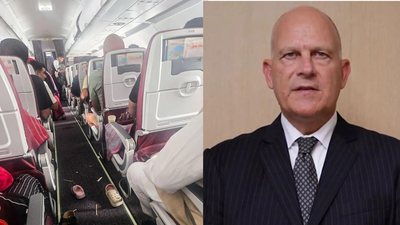
The airline’s outgoing CEO Wilson Campbell is set to have met govt officials over the incident
NEW DELHI: Air India’s outgoing CEO reportedly met government officials on Tuesday amid the ongoing row after the Delhi-Phuket flight turbulence incident.The airlines’ outgoing CEO Campbell Wilson met senior officials of MoCA and DGCA regarding the flight that suddenly lost about 300 feet of altitude last week, reported PTI, citing sources. The sources said the civil aviation ministry called the three senior airline executives for a meeting in the wake of the August 4 incident.Executive advisor to Tata Sons Chairman and former Civil Aviation Secretary Pradeep Singh Kharola as well as Air India’s Head of Flight Safety Deepak Joshi also attended the meeting, they said.However, Reuters reported, citing sources that the civil aviation minister has summoned the CEO. No confirmation has come from the airlines or the government.Although, as Campbell was leaving, after meeting thesenior officials of MoCA and DGCA, he said, “We were just giving an update on the status of the investigation…It is up to him (MoCA Minister) to give an update.”The meeting comes a day after the government advanced a probe into the incident, which involved the Airbus A320 suddenly losing about 300 feet of altitude during the flight. The Aircraft Accident Investigation Bureau (AAIB) has classified the incident as serious and is examining the circumstances surrounding the sudden descent.The pilot-in-command is also under scrutiny after his psychoactive substance screening test on arrival was found to be “not negative”. The sample has been sent to a designated laboratory for confirmatory testing, with the final report awaited, the aviation ministry said.
“Further action, as appropriate, will be taken based on the outcome of the investigation and confirmatory test results,” the ministry said.Under DGCA rules, a pilot whose initial screening is non-negative must be immediately removed from safety-sensitive duties until the confirmatory report is received. Both pilots of the August 4 Air India flight have been taken off flying duty pending the investigation.The AI 2379 flight was carrying 145 people from Phuket to Delhi when it suddenly lost altitude, injuring passengers and crew. The aircraft landed safely in Delhi, but 17 people were hospitalised.The AAIB probe is examining both possible mechanical issues and pilot behaviour. Investigators are also expected to analyse the aircraft’s flight data and cockpit voice recorders to establish the sequence of events.