Two former PoK premiers lost their strongholds in the third phase of elections marred by violence and rigging allegations, as the PML-N emerged dominant
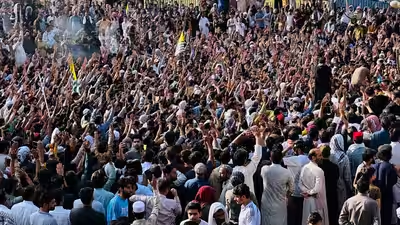
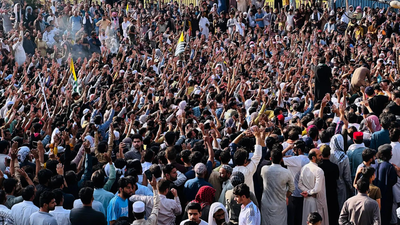
Two former so-called prime ministers of Pakistan-occupied Kashmir (PoK) lost their traditional strongholds in the third phase of elections, according to unofficial results released on Tuesday, while incumbent premier Faisal Mumtaz Rathore of the Pakistan People’s Party (PPP) retained his seat.The latest results came after voting in four constituencies on Monday, with the election process again overshadowed by violence and allegations of rigging. Polling in the remaining seven constituencies was postponed over concerns about the law-and-order situation and is expected to be held on August 21, according to the region’s election commission.The PPP won two of the four seats contested in the third phase, while the Pakistan Muslim League-Nawaz (PML-N) and the Awami Dast-o-Bazu Party won one each. The latter is backed by both Jamaat-e-Islami and Pakistan Tehreek-e-Insaf (PTI).Former prime minister and Muslim Conference president Sardar Attique Ahmed Khan, who was backed by the PML-N, lost the seat in Western Bagh’s Dhirkot constituency to Awami Dast-o-Bazu Party candidate Sardar Sajid Iqbal, according to unofficial results. The seat had been held by the Muslim Conference/PML-N since 1985.In Central Bagh, PPP’s Zia Qamar retained the seat, defeating PML-N candidate Mushtaq Minhas. Former premier Sardar Tanveer Ilyas, who joined the Istehkam-i-Pakistan Party, secured only a few thousand votes.The result in Eastern Bagh remained pending after authorities ordered a re-poll at 12 polling stations. PML-N candidate Sardar Mir Akbar was leading based on results from 174 of the constituency’s 186 polling stations, followed by PPP candidate Sardar Qamaruz Zaman Khan.The election comes against the backdrop of a striking shift in the Pakistani government’s treatment of the protest movement that has rocked PoK for months.Just days before the final phase of voting, Pakistan’s defence minister Khawaja Asif had described the protesters as “enemies of Pakistan” and ruled out talks with them. But Prime Minister Shehbaz Sharif’s adviser Rana Sanaullah subsequently said 99% of those associated with the Joint Awami Action Committee (JAAC) were “patriotic brothers”, promising that a PML-N government would engage with the group and seek to resolve its demands.The reversal in rhetoric came as the PML-N emerged as the dominant force in the election and prepared to form the next government in the region. The party has secured 25 of the 45 directly elected seats so far, while the PPP has won 12 and the Awami Dast-o-Bazu Party one.The first two phases, held on July 27 and August 2, were also marked by violent protests and allegations of widespread rigging, with the PML-N and PPP accusing each other of electoral malpractice. Supporters of the two parties clashed at several polling stations.The JAAC has been protesting across the region since early June, with demands including the abolition of 12 refugee seats that it says can be used to influence the formation of governments in PoK.The group has alleged that more than 40 people were killed during violence surrounding the first phase of voting and that around 400 protesters had been killed since the protests began. The Pakistani government has rejected the higher figure as exaggerated, while Sanaullah has acknowledged that deaths from the unrest were in the “double figures”.India does not recognise Pakistan’s control over the territory, maintaining that Jammu & Kashmir and Ladakh are integral and inalienable parts of India and describing Pakistan’s presence in areas under its control as “illegal and forcible occupation”.
(Representative Image) Tests showed that ethanol-blended diesel did not meet the required flash point specifications (Photo: PTI).
NEW DELHI: Blending ethanol with diesel may not be viable after tests by state-owned oil retailers found that it sharply lowers the fuel’s flash point, even as the govt is exploring ethanol’s use as an alternative cooking fuel to cut dependence on imported LPG.In a written reply in Rajya Sabha, minister of state for petroleum Suresh Gopi said oil retailers had conducted scientific evaluations of ethanol-diesel blending through their research and development centres in collaboration with accredited laboratories and automobile manufacturers.The tests showed that ethanol-blended diesel did not meet the required flash point specifications. The flash point was lowered drastically due to the presence of ethanol, minister said.In a separate reply, Gopi said isobutanol was currently not being blended with diesel.Govt, however, is exploring use of ethanol as a clean cooking fuel, which could help reduce LPG import dependence as well as provide an avenue to utilise surplus ethanol production capacity in the country.
LPG Equipment Research Centre (LERC), a joint undertaking of Indian Oil, HPCL and BPCL, has undertaken development efforts for clean cooking solutions based on ethanol, Gopi said.The initiative assumes significance as India imports nearly 60% of its LPG requirements and is seeking to expand the use of ethanol beyond transport sector. Govt has so far focused its ethanol blending programme on petrol and has achieved the 20% blending target.
A 48-year-old house help was killed by a speeding BMW car in Delhi. (AI image)
NEW DELHI: A 48-year-old woman was killed after she was allegedly hit by a speeding BMW while crossing a road at a zebra crossing in Delhi’s Mehram Nagar on Tuesday afternoon, police said. The driver of the car has been apprehended.The deceased was identified as Jaiwanti, a resident of East Mehram Nagar who worked as a domestic help. The accident took place around noon when she was crossing the road to return home for lunch. The impact was severe and she died on the spot, police said.According to police, a PCR call was received about a car hitting a woman. A police team reached the spot and found that Jaiwanti had been shifted to DDU Hospital, where doctors declared her dead.The BMW driver was identified as 38-year-old Deepak, a resident of Pratap Nagar in Mandoli. Police said he had been working as a driver for the past six months and was returning alone from the airport when the accident occurred.“We have apprehended the driver and further investigation is in progress,” a police official said.A case has been registered and legal action initiated.The accident triggered protests by local residents, who gathered at the spot and blocked the road, disrupting traffic movement. Heavy police deployment, including paramilitary personnel, was made to maintain law and order.Jaiwanti’s family alleged that the driver fled the spot after hitting her.Her daughter-in-law said the family rushed to the accident site after receiving information and found Jaiwanti lying on the road. Her husband took her to the hospital and informed police.“We want justice for her,” she said, adding that Jaiwanti had been supporting the family after her son died around five years ago.Jaiwanti’s daughter also alleged that the driver fled after the accident.“We wanted to meet him and ask him why he was driving so fast and why he did not slow down while passing through the area. If he had been driving carefully and at a controlled speed, perhaps this tragedy could have been avoided,” she said.The woman’s son alleged that the stretch had witnessed several accidents in the past and said residents had repeatedly raised concerns over speeding vehicles.“Many of us have complained to authorities about the need for a speed breaker or traffic signals because vehicles often pass through this stretch at high speed,” he said.He also alleged that the driver could have taken Jaiwanti to a nearby hospital or called for medical assistance immediately after the accident.“Had my mother received timely treatment, her life might have been saved. Instead, she was left bleeding on the road. We want strict action against the driver and justice for my mother,” he said.The accident and subsequent protest affected traffic movement near Terminal 3 of Indira Gandhi International Airport and adjoining areas.Delhi Traffic Police said the stretch between NSG Red Light and T-3 was closed due to an obstruction caused by local villagers following the fatal accident. Commuters were advised to take alternative routes.
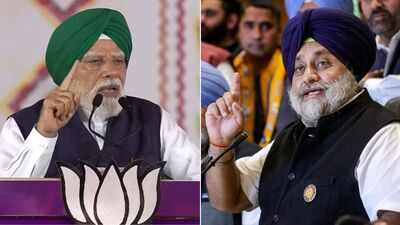
BJP-SAD alliance buzz grows after PM Modi-Badal meeting
NEW DELHI: Will the BJP and the Shiromani Akali Dal revive their decades-old ties in Punjab for the 2027 assembly elections? Haryana chief minister Nayab Singh Saini, who has been playing a key role in BJP’s Punjab plans, has ruled out any such possibility. His denial comes amid a strong alliance buzz triggered by a meeting between Prime Minister Narendra Modi and Shiromani Akali Dal (SAD) chief Sukhbir Singh Badal last week – the first such meeting after the two parties snapped ties 6 years ago over the 3 farm bills.BJP’s Saini has played down alliance rumours. When asked to comment on the meeting, Saini replied in Punjabi, “Nahi, aise koyi gall nahi hai (No, there is no such thing)”. The Haryana chief minister said the Prime Minister is the voice of 140 crore people. “If anyone wants to meet him, his doors are open; anyone can meet. Political parties keep meeting him for various issues.”Saini further added, “Bharatiya Janata Party ka gathbandhan Punjab di janta de naal hai. (BJP’s alliance is with the people of Punjab). And I say this with great confidence because I meet people there. In Punjab, the BJP is forming its government.”So, can Saini’s denial be taken at face value? Or is it just political rhetoric to keep pressure on a regional party which appears desperate for an alliance with the BJP?
SAD’s electoral decline
Sukhbir Singh Badal, who has served two terms as deputy chief minister of Punjab and whose father Parkash Singh Badal was a 5-time chief minister, has been struggling to make a political comeback in the state. In the last two assembly elections, his party, SAD, has been pushed to the margins.The decline began in the 2017 assembly elections, when the SAD won only 15 of the 94 seats it contested, with a vote share of 25.24%. This was a sharp decline compared to its 2012 performance when the SAD had won 56 seats with a vote share of 34.73%. If 2017 was a worry, 2022, after it snapped ties with the BJP and contested alone, was a clear warning: the SAD could win only 3 seats, and its vote share dipped to 18.38%.This decline was not limited to just assembly elections. In the Lok Sabha elections too, SAD suffered a decline. In 2019, the SAD polled 27.76% of votes and won 2 seats. Five years later, while the seat reduced to 1, the vote share dipped to 13.48%. In 2014, the SAD tally in Lok Sabha was 4 seats and a 26.37% vote share.Clearly, for Sukhbir Singh Badal, both the crisis and the test are real. And that perhaps explains his visible desperation for an alliance with the BJP. And while the saffron party may reject alliance rumours, the SAD has sent clear signals of a strategic shift — extending a friendly hand to the BJP.
Badal’s changed tune on delimitation
In April this year, Badal had criticised the Centre’s move on delimitation of Lok Sabha seats in the garb of the Women’s Reservation Bill. “Punjab is predominantly a minority character state. We will be the biggest victim of this population-based delimitation. Compared with a nominal increase in seats for Punjab, Haryana will witness a nearly hundred per cent increase and double the number of its seats in the Lok Sabha,” Badal had then said in a statement.Four months later, the SAD chief has literally taken a U-turn on the issue. After his meeting with PM Modi, Badal changed his stand and demanded the immediate implementation of the Women’s Reservation Bill. He also supported the Union government’s proposal to increase Parliament seats in states by 50 per cent.In a new statement after his meeting with PM Modi, Badal said the party stood for a fair and equitable delimitation exercise that ensured equal increase in representation to all states. “This will ensure justice is done to all states,” he said.
‘Why so desperate for BJP alliance?’
Badal’s changed stand prompted a dig from Punjab Congress president Amarinder Singh Raja Warring, who asked the Shiromani Akali Dal chief as to why he was so desperate for an electoral alliance with the BJP that he had to make a U-turn on a sensitive matter like delimitation of the assembly and parliamentary constituencies.“What changed within these months that you started seeing merit in the same Bill, you otherwise found against Punjab’s interests?” he asked. “Sukhbir has turned more loyal than the king within no time,” Warring said.He said when the Akalis had failed to reach an alliance with the BJP ahead of the parliamentary elections, Badal had claimed that he did not want to compromise on the interests of Punjab. “Now that you are desperate for your own survival, you have simply forgotten the interests of Punjab for which you claimed to have taken a stand in 2024,” said Warring.Chief minister Bhagwant Mann also took potshots at Badal and said, “BJP can make them do whatever they want. SAD just wants to get back into the cabinet in Delhi or get into an alliance with the BJP in Punjab.”These reactions would suggest that both the ruling AAP and the Congress are perhaps aware how a potential BJP-Akali alliance could change the dynamics on ground. While they may play down the possible impact of this alliance, they would be keeping a close eye on the developments. AAP would hope that the 2027 Punjab contest stays four-cornered so that the ruling party can benefit from the division of opposition votes. The Congress, on the other hand, realises that SAD could help the BJP in rural areas and add to the party’s challenges in the state.Little wonder, Badal would not mind their political barbs as long as he can secure the future of his party with the BJP. And that brings us to Saini’s remark playing down the meeting between PM Modi and Sukhbir Badal.
Why SAD alliance can help BJP
For the BJP, the Akali association is electorally important, at least for now. The BJP has just two seats in the current assembly with a vote share of 6.6%. The party could not win a single seat in the 2024 Lok Sabha elections despite polling 18.65% of votes. This was almost double of the 9.74% that the BJP managed in 2019 Lok Sabha elections. It was also a huge jump from the 2022 assembly elections when the BJP got just 6.6% of votes. But the fact that BJP could win 2 Lok Sabha seats in 2019 despite a low vote share points to the importance of SAD alliance in converting votes to seats in the state.Despite the sharp decline in its electoral fortunes, the Shiromani Akali Dal still has good support base in rural Punjab and also has a strong Sikh-centric regional identity – both of which can help the BJP in case of an alliance. Combined with BJP’s urban support base, this can turn into a winning combination for the two parties. The SAD has been going all out to increase its base and presence in the state.The controversy around movie Satluj, which narrates the life story of activist Jaswant Singh Khalra – who uncovered alleged extrajudicial cremations in Punjab between mid-1980s and early-1990s, gave SAD the much-needed boost to woo its core voters. When the movie was taken down from the OTT platform, SAD arranged its screening across Punjab. In a post on X in Punjabi, Badal had then said, “In every village and corner of Punjab, the SAD will screen the film ‘Satluj’ based on inhuman atrocities inflicted on thousands of innocent Sikh youth and Sikh personalities like Shaheed Bhai Jaswant Singh Ji Khalra during the Congress regime, so that our children and future generations can be thoroughly acquainted with the oppression inflicted.“Badal had justified the move and said:”This is aimed at ensuring that today’s youth and our coming generations know about the unspeakable tragedy and repression unleashed by the then Congress governments against Bhai Jaswant Singh Khalra and thousands of other innocent Sikh youth who were eliminated through fake encounters.” The aggressive SAD move was clearly a move to consolidate its ‘Panthic’ vote bank – a political mobilisation surrounding the Sikh community’s collective identity.The SAD perhaps can complement the BJP if the two parties eventually agree for an alliance.
BJP’s bid to dominate?
Hence, the BJP’s posturing vis-a-vis the SAD alliance at present perhaps has more to do with asserting who will dictate terms if and when the two parties join hands. And this is important as till 2020, when the partnership snapped, the SAD was the senior partner in Punjab’s NDA alliance and the BJP played second fiddle. That political dynamic has changed now. By repeatedly asserting that it will contest the Punjab elections on its own, the BJP has clearly spread the message that it will lead the fight and not play the junior partner to anyone.
Hence, the saffron party would not want to miss any opportunity to reinforce this message to the SAD leadership and its cadres.True, the BJP is working on a roadmap to increase its political base and strength and become an independent political force in Punjab. This is manifested in the several steps that the party has taken in Punjab. From Prime Minister’s Punjab rallies to party chief Nitin Nabin’s push and targeted acquisition from political rivals, the BJP has made it clear that it means business in Punjab. But the party perhaps will need more time to do a Bengal in Punjab, if at all it ever happens. For now, SAD perhaps could be its best bet in Punjab.
Singh shared another video, questioning its origin and stressing Punjab’s drug crisis
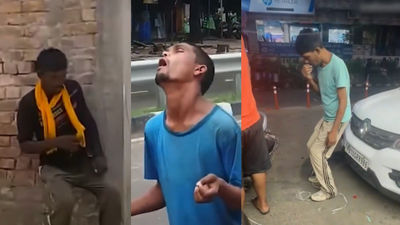
CHANDIGARH: BJP Rajya Sabha MP Harbhajan Singh has hit back after Punjab Police fact-checked a viral “zombie” video he had earlier shared while raising concerns over the state’s drug problem.The off-spinner said the issue cannot be brushed aside by calling out the location of a particular video.In a fresh post on X, Singh shared another video posted by BJP Punjab and questioned whether that footage, too, was from Rajasthan, while stressing that the larger discussion was about Punjab’s drug crisis.“Is this also a picture of Rajasthan? The discussion is about Punjab’s drug problem. This issue won’t be hidden by your paid trolls. Work will have to be done on this,” Singh’s post read.BJP Punjab posted the video on their X handle, captioning the video by alleging that drug use among Punjab’s youth was increasing and asked the Punjab Police to respond.“I hope you will give a response on this too,” the BJP Punjab post said.Singh’s latest intervention came after Punjab Police earlier clarified that a separate viral video he had shared was not from Punjab but from Sri Ganganagar in Rajasthan.The earlier video showed two men apparently in an intoxicated state.Singh had posted it with the caption, “Nazar lag gayi yaar hamare Punjab ko,” while tagging Punjab Police.Police subsequently said the video had no connection with Punjab and cautioned against assuming the location of an incident based on the language used in a clip.
‘Paid trolls’ remark
Taking a swipe at his critics, Singh said the controversy over the location of the first video should not be used to divert attention from the larger issue of drug addiction.“This issue won’t be hidden by your paid trolls. Work will have to be done on this. Running away from responsibilities won’t yield a solution,” he said.Singh also clarified that his concern was not aimed at any particular individual or political group.“The matter isn’t about targeting any specific individual,” he said, calling for efforts to help people battling addiction.
‘Punjab government should work on making state drug-free’
Singh said the focus should be on tackling narcotics consumption rather than political blame games.“For anyone in Punjab and across the entire country who consumes narcotic substances, whatever efforts are made to free them from addiction should be carried out,” he said.He also urged the Punjab government to focus on making the state drug-free.“Without pulling each other’s legs, the Punjab government should work on how to make Punjab drug-free,” Singh said.
AAP-BJP war over viral videos
The latest exchange comes amid a growing political confrontation between the AAP government and BJP over Punjab’s drug problem.After the earlier video was fact-checked, Punjab finance minister Harpal Singh Cheema accused the BJP of sharing “fake, fabricated and forged videos” to defame Punjab and its youth.AAP national convenor Arvind Kejriwal had also questioned whether the circulation of the earlier video was part of a coordinated campaign and asked whether the “order” had come from the PMO.
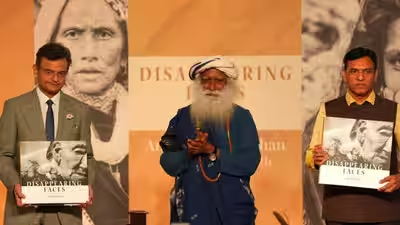
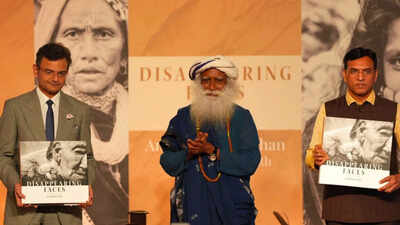
NEW DELHI: Isha Foundation founder Sadhguru on Monday launched a new photography book called “Disappearing Faces”, featuring photographs of people he encountered during his journeys through the remote Himalayas of Nepal and Tibet.Published by Penguin India, the book was launched by Union minister Mansukh Mandaviya at the India International Centre in New Delhi.The launch was followed by a conversation between Sadhguru and commentator Anand Ranganathan, exploring the stories and experiences behind the photographs featured in the book.“These faces represent an era that will soon disappear: faces etched only by sensory perception of light and darkness, heat and cold, of springs and winters – above all, uncontaminated by information that is disconnected from our senses. Our senses lead to a certain sense of life where there is no Non-sense,” Sadhguru said during the conversation.“These are the visages that represent life that seems rudimentary but is rich with strong experiences of the land, the winds, the waters and the people. Over the last five decades, year after year, beyond the beauty and wondrous nature of the mountains, these faces have drawn me into the deep crevices of the Himalayas,” he added.
Carrying a camera along the way, Sadhguru began documenting faces shaped by a life lived close to nature and increasingly distant from the cities.The book offers an intimate visual record of the people Sadhguru encountered during his journeys.Sadhguru first journeyed to Manasarovar and Mount Kailash in 2006 and has since returned repeatedly, leading seekers on the Himalayan pilgrimage. After undertaking his first motorcycle journey to Kailash in 2025, Sadhguru is set to return once again this year on a motorcycle, continuing his unique engagement with the sacred landscape of the Himalayas.The Himalayas have remained a significant part of Sadhguru’s life over the years, alongside his efforts towards human wellbeing, raising human consciousness and his commitment to ecological regeneration.
Confirmatory dope test of the pilot-in-command the flight last Tuesday has also come positive
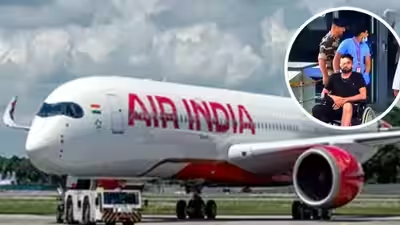
NEW DELHI: The confirmatory dope test of the pilot-in-command (PIC) operating Air India’s Phuket-Delhi flight last Tuesday has also come positive, say sources. His screening test done on arrival was “non negative” and then as per procedure, a confirmatory test was conducted whose report came Tuesday. The DGCA is now working for more strict dope test requirements to act as an effective deterrent.Meanwhile, aviation secretary Samir Sinha called Air India’s outgoing CEO Campbell Wilson where officials of the DGCA and AAIB were present. The officials asked AI to ensure safety of operations from all aspects and asked what steps is the airline taking to the effect.The pilots of Air India’s August 4 Phuket-Delhi flight, which had experienced a sudden loss of altitude of about 300 feet during cruise, were subjected to psychoactive substance (dope) screening test on arrival at the destination. The pilot-in-command or captain’s screening test report was “not negative” and has been sent for confirmatory tests, the aviation ministry said Sunday.The ministry has classified the incident, which led to 17 people being hospitalised, as a serious one and the Aircraft Accident Investigation Bureau (AAIB) will probe it. “Further action, as appropriate, will be taken based on the outcome of the investigation and confirmatory test results,” govt said.Directorate General of Civil Aviation (DGCA) rules stipulate that “in case the screening test (for psychoactive substances) is non-negative, the employee shall be immediately removed from the safety sensitive duty till a confirmatory report is received. In case of positive confirmatory test for the first time, the concerned employee shall be referred by the organisation” for de-addiction.Multiple passengers and cabin crew members on board the Airbus A320 operating as AI 2379 were injured when it suddenly lost altitude. The plane later landed safely in Delhi. “As standard operating procedures following such an occurrence, both flight crew members underwent the prescribed psychoactive substance screening test. The screening test in respect of the pilot-in-command (PIC) indicated a result requiring confirmatory testing. Samples have accordingly been sent to the designated laboratory for confirmatory analysis, and the final report is awaited,” the ministry statement added.Both the pilots have been taken off flying duty by the DGCA pending investigation.“… firmly committed to highest standards of aviation safety and ensuring that all such occurrences are thoroughly investigated and appropriate action is taken in accordance with the prescribed regulations and procedures,” the statement added.
Authorities are probing this case from all angles including what caused the sudden of altitude, weather or something else; the handling of this event; impact on the aircraft like did it suffer hydraulic failure due to impact and whether it should have flown all the way to Delhi after the episode and not diverted to some nearby airport like Varanasi or Lucknow.DGCA rules stipulate that a pilot testing positive for consumption of psychoactive substances for the first time be referred to for de-addiction and rehabilitation. Such crew member can return for active duties with a negative dope test report.But after resuming flying if the same person tests positive for psychoactive substances again, their licence will be suspended for three years. And if after resuming flying the same person again tests positive for the third time, the flying licence is cancelled.
MEA said that India is assessing Mecca pact’s implications for national security and regional stability.
NEW DELHI: India is examining the implications of the recently signed Mecca pact between Saudi Arabia, Pakistan and Turkey from the perspective of national security and regional stability, the ministry of external affairs (MEA) said on Tuesday.“The agreement that was signed recently. So, let me say that we continue to closely follow developments in the West Asia conflict. As far as this particular agreement is concerned, we are examining its implications, both from the perspective of our national security, as well as considerations of regional stability, peace and stability,” MEA spokesperson Randhir Jaiswal said.
“India remains fully committed to meeting or safeguarding its national interests and will take all necessary measures in this regard,” he added.Saudi Arabia, Pakistan and Turkey had signed the trilateral defence agreement last week, aimed at strengthening collective security amid continuing instability in West Asia linked to the conflict involving Iran.The agreement was signed following a joint defence summit attended by Saudi Crown Prince Mohammed bin Salman, Turkish President Recep Tayyip Erdogan and Pakistani Prime Minister Shehbaz Sharif.According to Pakistan’s foreign ministry, the pact is based on the three countries’ historical ties, shared strategic interests and longstanding defence cooperation. It includes a commitment that an armed attack against any one of the three countries would be regarded as an attack against all three.The agreement also seeks to strengthen collective deterrence and promote peace, security and stability in the region and beyond.
UK-based OCI cardholder booked by Pune Police in alleged religious conversion case
NEW DELHI: Pune Police on Tuesday registered an FIR against an Overseas Citizen of India (OCI) cardholder from the United Kingdom for allegedly attempting to convert people to Christianity through religious gatherings.DCP Prashant Amrutkar of the Pune City Police’s Special Branch said the accused, a Manchester resident, has been booked under relevant provisions of the Immigration and Foreigners Act, 2025, and the newly enacted Maharashtra Freedom of Religion Act, 2026.According to police, OCI cardholders are permitted to attend prayer meetings and participate in religious functions, but cannot preach or deliver religious speeches without the required permission.Police alleged that the accused spoke about following the path of Jesus and made statements about Hindu temples and deities that they claimed could create misconceptions, news agency ANI reports.The police suspect that the statements were made with the intention of misleading people and inducing them to embrace Christianity. Further investigation is underway.
Fadnavis rejects FCRA targeting particular community
In a separate case, Pune City Police arrested a 21-year-old man under the Maharashtra Freedom of Religion Act, 2026 and the POCSO Act for allegedly attempting to convert and sexually harassing a minor girl, news agency ANI reported.The case was registered at Fursungi Police Station on August 5, and the investigation is underway.Police said it is the first case registered in Maharashtra under the newly enacted Maharashtra Freedom of Religion Act, 2026.The developments come amid a wider debate over religious conversion and foreign funding. Maharashtra CM Devendra Fadnavis on Monday said organisations that operate transparently and comply with the law have nothing to fear from the Foreign Contribution (Regulation) Amendment Bill, 2026.
Fadnavis also rejected the suggestion that the FCRA legislation targets any particular community. “This is not an issue concerning any one particular community. FCRA is not meant only for Christian organisations. It is applicable to all organisations, irrespective of which community they belong to,” he said.
As a message to China, the ministry of external affairs called Arunachal Pradesh an integral part of India. A fact that cannot be changed (Photo: ANI).
India has rejected China’s latest objections, reiterating that Arunachal Pradesh is an integral part of the country.
Around 110 ABVP workers were detained during a march to the Jharkhand Assembly amid clashes with police.
Syria’s ousted leader has been sentenced to death by a Damascus court over crimes against humanity, according to the report.
Nasa has invited Isro to join its Moon Base programme, opening another avenue for India-US space cooperation.
Bengal Police arrested Delhi Capitals cricketer Abishek Porel in connection with a rape case filed by a medical student.
Here are the top 5 news stories of the day
‘Arunachal is integral part of India, nothing can change this’: MEA on China’s fresh ‘objections’
The ministry of external affairs on Tuesday reiterated that Arunachal Pradesh is an “inalienable and integral part of India”, rejecting China’s objections over the border state. MEA spokesperson Randhir Jaiswal said nothing could change this reality and stressed that maintaining peace and tranquillity along the India-China border remained essential for broader bilateral ties. His remarks came after India officially identified 27 locations in Arunachal Pradesh by their standard names on the Survey of India map. China has repeatedly attempted to assign Chinese names to places in the state, a practice New Delhi has rejected. Read full story
Jharkhand protest: 110 ABVP workers detained amid clashes with police
Around 110 ABVP workers were detained on Tuesday while marching towards the Jharkhand Assembly to protest alleged irregularities in recruitment examinations and police action against protesting students. Clashes broke out after protesters allegedly stopped a bus carrying detainees, with some sitting in front of the vehicle and others climbing onto it. Two students fainted during the demonstration. Police said the workers were detained, not arrested. The protesters have demanded a CBI probe into alleged examination irregularities and have been seeking reforms in the functioning of the JPSC and JSSC. Read full story
Syria’s ousted leader Bashar al-Assad sentenced to death for crimes against humanity
Syria’s former president Bashar al-Assad and former political security chief Atef Najib have been sentenced to death by a criminal court in Damascus, according to the report. The court convicted Assad of crimes against humanity, while Najib was found guilty of premeditated murder and torture. Assad fled Damascus and travelled to Moscow in December 2024 after his government collapsed following a strong wave of anti-regime forces. The court’s ruling was delivered in absentia, with Assad convicted over charges including war crimes and crimes against humanity. Read full story
Nasa invites Isro to join Moon base programme
Nasa has invited Isro to join its Moon Base programme, creating a new opportunity for cooperation between India and the US in lunar exploration and human spaceflight. The invitation was extended during the ninth meeting of the India-US Civil Space Joint Working Group in Bengaluru on August 5 and 6. The two sides discussed expanding cooperation in future space science and human spaceflight technologies, along with scientific data sharing under the Artemis Accords.
The meeting also reviewed wider efforts to strengthen cooperation on the long-term sustainability of activities in outer space. Read full story
IPL cricketer Abishek Porel arrested in rape case; Bengal Police take Delhi Capitals player into custody
Delhi Capitals wicketkeeper-batter Abishek Porel was arrested by Bengal Police on Tuesday in connection with a rape case filed by a medical student. Porel was taken into custody in Hooghly after questioning, underwent a medical examination and was produced before the Chinsurah Court. The woman has alleged that Porel established a physical relationship with her on the promise of marriage, besides making allegations of criminal intimidation and recording intimate moments. The allegations have not been established in court and remain under investigation. The arrest follows a July 14 Calcutta High Court order directing police to continue efforts to apprehend Porel. Read full story