

A Byzantine ship sank off Croatia more than 1,300 years ago; archaeologists have now recovered about 600 grams of gold that points to an imperial passenger

A Byzantine ship sank off Croatia more than 1,300 years ago; archaeologists have now recovered about 600 grams of gold that points to an imperial passenger

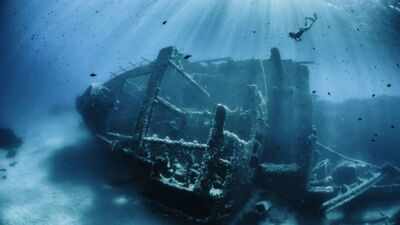
A shipwreck beneath the Mediterranean has recently revealed more gold than any other in the region to date. The vessel sank in the Adriatic Sea in the seventh or eighth century C.E. and its cargo included a gold signet ring likely associated with an emperor along with a gold belt encrusted with gems.More than 40 gold objects were found along with other luxurious imperial objects. The finds were located in the waters off the coast of Mljet, a Croatian island in the Adriatic Sea, which is home to more than two dozen sunken ships spanning nearly 2,500 years. But one stands out as “the most important shipwreck of its period,” opening up the portal into the little-known chapter in Byzantine history, according to Justin Leidwanger, an archaeologist at Stanford University as per Reuters.

The treasure trove

The vessel contained a rich cargo of four gold belt sets and a pseudo buckle decorated with emeralds, rubies and pearls, as well as coins minted under four emperors of the Heraclian dynasty. Excavations also revealed a gold signet ring that may bear the likeness of the dynasty’s founder, Heraclius, who ruled the Byzantine Empire between 610 and 641. Per a statement from the state-run Croatian Conservation Institute, which started surveying the wreck in 2015, the ring could only have been worn by a high-ranking official authorised to seal documents in the emperor’s name. When it comes to the trade context, there are amphorae, ceramic vessels, scales, weights, and ivory tokens and playing dice, all of which testify to the developed trade relations of the Byzantine Empire.Collectively, the gold treasures recovered from the sunken ship weigh more than 21 ounces, making the trove the largest of its kind “ever found on a shipwreck in the entire Mediterranean,” Igor Miholjek, the institute’s head of research, said to the outlet.The ship is believed to have sunk during the period once known as the Dark Ages, named after the widespread cultural decline that supposedly took place across Europe at the time. More recent research has debunked the myth of intellectual stagnation between roughly 500 and 1000, but written records from this period are scarce, and many aspects of the early medieval era remain poorly understood.“It’s a blank,” Francesco Borri, a medieval historian at the Ca’ Foscari University of Venice who wasn’t involved in the research, told National Geographic’s Roff Smith as per a report by Smithsonian Magazine. “That’s why the discovery of this ship is so exciting.”

How does the ship fit into the Byzantine Empire timeline?

According to Smith, the vessel sank “when the fortunes of the Byzantine Empire were at a low point and when some historians believe that the Adriatic was an impoverished backwater, virtually devoid of shipping.” The ship’s cargo suggests otherwise, testifying to continued maritime activity in the region.According to scholars, the interesting assortment of goods recovered from the wreck raises more questions than answers. Why was the ship carrying so much goldsmithing equipment? Were the luxury items intended as gifts and more? To find the answers, researchers plan to continue analysing artefacts associated with the wreck, in addition to revisiting the site in search of further evidence.For now, the exact nature of the doomed voyage remains unclear. But Miholjek told National Geographic that “whatever was going on here, this was no normal trading venture.” The presence of gold treasures directly linked to a Byzantine emperor suggests that a high-ranking official was travelling on the ship, perhaps at the head of a diplomatic party bringing gifts to a faraway ally. Alternatively, it’s possible that the individual was simply a wealthy elite who booked passage on an otherwise ordinary cargo ship.“The material evidence does not yet force a choice between those explanations,” medieval history enthusiast Luciano Anastasi wrote on his blog. “What it does rule out, or at least weaken sharply, is the image of a routine small-scale coaster carrying nothing but staple goods between neighbouring ports.”Miholjek announced that the results of the research will be presented to the public through a large exhibition accompanied by a catalogue and publication, and a documentary film about the work of the Department of Underwater Archaeology and the rich cultural heritage of the island of Mljet is also in preparation. The film is being shot by Paula and Đelo Jusić from the Adriaton production company, and the premiere is expected at the end of the year.




Source link

In 1983, an Atlantic City widow rejected $1 million for her home; in 1994, a state agency offered $251,250 and threatened eminent domain, but she ultimately won in court


In 1983, an Atlantic City widow rejected $1 million for her home; in 1994, a state agency offered $251,250 and threatened eminent domain, but she ultimately won in court

“Individual freedom finds tangible expression in property rights.” Those words, written by U.S. Supreme Court Justice Anthony Kennedy, capture a principle that lies at the heart of a free society. Yet across the country, that principle has often been tested, sometimes by powerful developers, sometimes by government agencies eager to serve private interests under the guise of public good.Few stories illustrate this tension more vividly than that of Vera Coking, an elderly widow from Atlantic City, New Jersey, whose modest boarding house became the centre of a decades-long legal battle involving Donald Trump, state condemnation powers and the limits of eminent domain, according to Institute of Justice.A home worth more than moneyVera Coking had lived in her three-story boarding house on Atlantic Avenue for more than 30 years. The property was not grand, but it was hers; a place of stability, independence and memory. In the early 1980s, as Donald Trump was expanding his casino empire in Atlantic City, he approached Coking with an offer to buy her home. According to later reports, Trump offered her more than $1 million, along with housing for life, if she would sell.Coking refused.She was not interested in the money. She wanted to stay in the home she had built a life in. For years, she turned down repeated offers from Trump and other developers. But the pressure did not stop.The state steps inIn 1993, Trump sought to acquire several properties adjacent to his Trump Plaza Hotel and Casino to build a limousine parking lot for high-rolling guests. Coking’s home stood in the way. When she continued to refuse to sell, Trump turned to a government agency, the New Jersey Casino Reinvestment Development Authority (CRDA), to intervene.The CRDA filed a lawsuit to condemn Coking’s property using the power of eminent domain, offering her just $251,250, far less than Trump’s earlier offer and a fraction of what the property might have been worth in a different market.Eminent domain allows governments to take private property for public use, provided just compensation is paid. But in this case, the stated “public use” was a parking lot for a private casino. For Coking and her legal team, that was a clear abuse of power.A legal battle for principle

Representative image

Representative image

Coking refused the offer and fought back. With the help of the Institute for Justice, a public-interest law firm dedicated to defending property rights and individual liberty, she challenged the condemnation in court.The case dragged on for years. Coking, then in her 70s, became a symbol of resistance, a small homeowner standing up to a billionaire developer and the machinery of the state. Her story drew national attention, raising questions about how far governments should go to serve private interests under the banner of economic development.In July 1998, a New Jersey Superior Court judge ruled in Coking’s favour. The court found that the condemnation served private interests, specifically Trump’s, rather than a legitimate public purpose. The judge noted that there were insufficient assurances that the property would actually be used for the stated purpose and that the CRDA had failed to demonstrate a genuine public use for the taking.Thanks to the Institute for Justice’s advocacy, Vera Coking won in court and was able to remain in her home for more than a decade after the ruling.A folk hero, and a final chapterCoking’s victory made her a folk hero in Atlantic City and beyond. She had done what many thought impossible: she had beaten Donald Trump and the state in a legal fight over her home.But the story did not end there. In 2011, at the age of 86, Coking decided to move to California to be closer to family. She put her property up for auction. Bidding started at $199,000, reflecting Atlantic City’s depressed real estate market at the time. The home eventually sold for $530,000 plus commission to an anonymous buyer.Even in sale, Coking’s legacy endured. She had resisted decades of overtures from developers, including Trump, who later claimed he had offered her millions. She had stood firm when the state tried to take her home for a private project. And she had won.Why the case still mattersThe Vera Coking case is more than a local property dispute. It reminds us of the fragility of property rights when governments become agents of powerful private interests. Supposedly, eminent domain is for the public good, but it can be perverted to serve private gain. Political and economic expediency can trump constitutional protections.The triumph of coking showed you can push back. It demonstrated that ordinary people, armed with the right legal support, could stand up to even the mightiest of foes.Today, Vera Coking’s story remains relevant as the debate over development, gentrification and government power continues. This is evidence that property rights are not just about land and buildings, they are about dignity, autonomy and the right to say no.In the end, Coking did not just keep her home. She defended a principle. In so doing, she became a symbol of standing up for individual freedom in the face of overwhelming pressure.


Source link

Meet Rosie, the five-year-old who turned a princess-dress scooter ride into a £4,000 fundraiser for her friend


Meet Rosie, the five-year-old who turned a princess-dress scooter ride into a £4,000 fundraiser for her friend

Not all superheroes wear capes, some don tiaras and do the good work such as five-year-old Rosie. After befriending Sid at a birthday party and learning he uses a wheelchair due to having spinal muscular atrophy type 1 (SMA1), a condition which causes muscle weakness and a lack of motor neuron function in infants, she wanted to help.Rosie set herself a challenge, to scoot four miles in her favourite princess dress and so far, she has raised over £4,000, all to help her friend.Rosie’s mother, Michelle, said Rosie was curious about Sid’s condition and became “quite emotional” when she learned of some of the difficulties he faced. “Sid is a wheelchair-user and Rosie had questions around that,” Michelle said to the BBC. The mother said she explained to Rosie about SMA1 and how Sid’s parents had been raising funds to make their home more accessible. “Rosie wanted to raise money to help Sid. I initially struggled to think what she could do, given she’s only five,” she added.In the end, it was decided that Rosie would take on a 6.8 km (4.2 mile) scooter challenge, completing a lap of Leybourne Lakes Country Park in her favourite princess dress. “She’s never been all the way round the park before, but we’re confident she could do it,” Michelle said.“Every penny gets Sid closer to the house adaptations he and his family so desperately need,” Michelle said. A date for the scooter challenge has not yet been set, due to weather conditions.According to the charity Tree of Hope, Sid was treated with the £1.8m single dose of gene therapy Zolgensma. There is still no cure for SMA, but medications and therapies can help manage the condition.Sid’s mum Sophie said they needed a through-floor lift, which requires an extension including an accessible bedroom and bathroom. “He’s big for his age and, with low muscle tone, it’s unsafe to carry him, especially on the stairs,” the 37-year-old said. “Last year he broke his arm falling off the toilet, so we’re desperate to make our home accessible.”The entire work, she said, would cost £138,000. She added that she was “grateful” for every donation and especially thankful to Rosie’s “incredibly thoughtful” support. The family is being supported by Tree of Hope, which helps families navigate their child’s healthcare journey by offering a fundraising service. “We’re really pleased to be supporting Sid’s family as they raise funds for the home adaptations he needs,” said chief executive Becky Andrew.


Source link

Mexico cleaned over 100K tons of sargassum at the beginning of 2026, but is still facing a seaweed crisis due to the invasive species deeply impacting its tourism


Mexico cleaned over 100K tons of sargassum at the beginning of 2026, but is still facing a seaweed crisis due to the invasive species deeply impacting its tourism

A vast belt of brown seaweed is stretching across the Atlantic Ocean, from the coast of West Africa to the Gulf of Mexico, creating a phenomenon so extensive that it can be tracked from space. Known as the Great Atlantic Sargassum Belt (GASB), it has reached extraordinary proportions in 2026, about 5,000 miles in length.Satellite measurements showed 37.5 million metric tons of sargassum across the Atlantic in May, while researchers at the University of South Florida (USF) recorded 33.6 million metric tons across the monitored Atlantic basin in June. They now expect 2026 to be at least the second-biggest year on record.The transformation has been remarkably fast. The enormous belt was virtually nonexistent before 2010. Within a year, about 1 million metric tons were recorded across the region in 2011, compared with approximately 40 million in 2025. Brian Barnes, a research assistant professor at USF’s College of Marine Science, told Reuters that the trend suggests the amount could be doubling roughly every five years.

What is sargassum and why is it spreading?

What is sargassum and why is it spreading?<br><br>

Sargassum is a brown seaweed that naturally forms floating mats and has long been associated with the Sargasso Sea in the North Atlantic. Around 2010, extremely strong winds carried it into tropical waters off West Africa, where it was met with favourable growing conditions. Consistent ocean currents then helped establish the recurring belt extending towards northern South America, the Caribbean and the Gulf of Mexico. Sargassum requires nutrients, particularly nitrogen and phosphorus. Scientists believe its growth is being supported by several sources, including material carried into the Atlantic by the Amazon, Orinoco and Congo rivers, nutrients rising from deeper ocean waters and Saharan dust. Warmer ocean temperatures may also be helping create favourable conditions. Previous research found that the nitrogen content of sargassum increased by 55% between the 1980s and 2010s, while its nitrogen-to-phosphorus ratio rose by around 50%.Sargassum itself plays an important ecological role. Floating mats provide habitat for fish, turtles and numerous other marine species. Problems arise when huge quantities reach the coast and begin decomposing. The seaweed releases hydrogen sulfide, a toxic gas responsible for its distinctive rotten-egg smell. Large accumulations can also reduce oxygen levels in coastal waters, damage coral reefs and release methane.

Record amounts reaching the Caribbean

The consequences of this growth and spread are increasingly visible along the Caribbean coastlines. Around 1 million metric tons of sargassum were already present in the western Caribbean in January, approximately 10 times the usual amount for that month. By June, USF researchers were describing Caribbean levels as record high.Mexico in particular has been having a difficult season. By late July, authorities had collected approximately 100,000 metric tons of sargassum in 2026, already surpassing the roughly 92,783 metric tons removed during the whole of last year.A round-the-clock defence is underway against the invasion in the country’s tourism hub, including boats, barriers and manual beach cleaning teams. An AFP team travelled through the Riviera Maya and Tulum aboard one of the 27 specialised ships the Mexican Navy has used since 2019 to contain the proliferation of sargassum, a type of algae with tiny berry-like sacs allowing it to float, that started arriving in 2011. The boat moves as if through a video game, searching for concentrations of the weeds to suck up. A ramp built into the prow uses a mechanical belt to scoop the sargassum off the surface of the water, bringing it into a chute inside the boat.Efforts to scoop up sargassum are carried out on the high seas with a ship that can carry 300 tons of the seaweed, as well as smaller boats and amphibious vehicles. The final tactic entails gathering the brown algae by hand.

A loss for Mexican tourism

A loss for Mexican tourism<br><br>

While operations to weed out the seaweed are ongoing, sargassum has still managed to reach numerous beaches of the Mexican Caribbean, where tourists don’t want to sunbathe or swim while enveloped in the stench of rotting eggs.

While operations to weed out the seaweed are ongoing, sargassum has still managed to reach numerous beaches of the Mexican Caribbean, where tourists don’t want to sunbathe or swim while enveloped in the stench of rotting eggs. Businesses have reduced their staff to adjust to the drop in tourism. Azul Lucero, a 26-year-old Argentine waitress who works in Playa del Carmen, where she makes the majority of her income off tips, said her restaurant “doesn’t have over 50” customers a day, as per a report by Gulf Today. Normally, that number is closer to 400 when the ocean is clean and clear.The government insists that foreign tourists are arriving in record numbers, although President Claudia Sheinbaum acknowledged a slight drop when she unveiled an ambitious joint strategy between the government and hotel industry to fight the weedy invasion.“There haven’t been major losses,” she added, attributing the shift to the price of plane fuel. Hotel occupancy this summer has floated between 55 per cent and 70 per cent depending on the destination, whereas the high-season average reached up to 90 per cent 15 years ago, according to industry statistics. Near one mountain of sargassum is the Playa del Carmen hotel where Tere May, 47, works as a chef, but she complained that the “unbearable stench” was keeping all 24 rooms empty.“There is nothing right now,” she said. The sargassum “has affected everything.” Bianca Ibanez, 33, had come to spend a few days of vacation with her family but was surprised by the sheer quantity of seaweed on the beach. “You can’t really enjoy things,” she said.Chuanmin Hu, distinguished university professor of optical oceanography at the University of South Florida (USF), said the warning signs appeared unusually early. “The primary reason [for the large amount of sargassum] is that this year, the western Caribbean, including the Mexican coast, started high: about 1 million metric tons of sargassum in January, about 10 times the typical amount for that month.”As of now, scientists expect conditions along Mexico’s Caribbean coast to improve significantly by late October or early November. But a long-term solution is still unclear.


Source link

Meet Dusty Langby, the 12-year-old Australian boy preparing to walk 540km to Canberra to raise $1 million for rural children’s healthcare


Meet Dusty Langby, the 12-year-old Australian boy preparing to walk 540km to Canberra to raise $1 million for rural children's healthcare
Photo: Jessica Hromas/AAP PHOTOS

At just three years old, Dusty Langby was already learning what it meant to be a caregiver. After a tragic accident left his father with lifelong injuries, young Dusty stepped up to help around the family farm in Warren, a small town in central western New South Wales.Now 12, Dusty is preparing for his biggest challenge yet. This month, he will begin a 540-kilometre walk from his remote hometown to Parliament House in Canberra. His goal is simple but ambitious: raise $1 million for Little Wings, the children’s charity that helped his younger brother access vital medical care, and use the funds to support other sick children in rural Australia, as reported by CityNews.com.au.A family shaped by resilienceDusty’s journey began long before he planned his first step toward the nation’s capital. In 2017, his father, Andrew Langby, was driving home from an overnight shift as a farmhand when he hit a pig on a dark country road. The car rolled, fracturing Andrew’s pelvis and spine. The injuries left him with permanent mobility challenges and a long road of recovery.With his mother, Sarah, working as a nurse, Dusty took on responsibilities far beyond his years. He helped prepare meals for his father and younger brother, Angus, learning to cook fish fingers and steam vegetables in the family’s air fryer. To this day, the Langbys don’t eat much mashed potato; little Dusty couldn’t manage the mashing, and the habit stuck, as per the report.“I went back to work and Dusty stayed here, he would cook dad tea because he couldn’t walk for months,” Sarah told AAP. “He’s very independent. He’s got great initiative, he’s got great insight.”Little Wings changes the game for rural familiesThe Langby family first came into contact with Little Wings when Angus began struggling with his health. The young boy suffered full-body tics and found it difficult to attend school. Specialists in Sydney could help, but getting there from Warren was a major challenge.Little Wings stepped in. The charity provides free flight and ground transport for seriously ill children and their families living in regional, rural and remote areas of NSW, Queensland and the ACT. Volunteer pilots fly children to cities for treatment, while volunteer doctors travel the other way, bringing paediatric care to regional towns through day clinics.For the Langbys, the support was life-changing. Angus was flown to Sydney to see specialists, and the intervention helped him improve dramatically. But the impact went beyond one family.For more than a year, a paediatrician has been flying to Warren once a month to run a clinic, offering multiple appointments in a single day. Similar monthly clinics have been set up in nearby Nyngan and Gilgandra, bringing specialist care to communities that would otherwise struggle to access it.Seeing the need up closeAs a Year 6 student at Warren Central School, Dusty has watched the difference these clinics make. He sees classmates struggling to stay focused and engaged, but notices that younger children who have been seeing the paediatrician are thriving.He has also seen how tough it is to get health support in the bush. Long distances, limited local services and the high cost of travel can make a huge difference in whether a child receives timely care.That’s when the idea for “Dollar for Dusty” was born.The 540km walk for rural kidsOn August 30, Dusty will set off from Warren, planning to cover about 40 kilometres each day. Sixteen days later, on September 14, he hopes to arrive at Parliament House in Canberra.The route has been methodically planned, with support from family, friends and the Little Wings team. His mother will be with him every step of the way, as will Little Wings chief executive Clare Pearson.“I’m hoping it’s mind over matter, and the body just follows, but I think it’s just something to really champion and walk with Dusty during this journey,” Pearson said,as per the report.Dusty has two big goals with the campaign: raise $1 million to fund new paediatric clinics and support for young kids in the bush, and walk straight into the prime minister’s office to share the cause. While the Little Wings team is still working to secure that meeting and lock in the perfect finish line, Dusty is using the two-week journey to plan what he will say.A future in the skiesDuring his trek, Dusty will likely reflect on his family’s medical struggles and the support that helped them through. He will also have time to think about his own dreams.After recently travelling overseas for the first time on a trip to Japan with his mum and brother, Dusty now dreams of becoming a pilot.“I want to fly for Qantas and do overseas ones, so I’ll get to see the world, and then when I’m older, I want to fly for Little Wings,” he said.For now, his focus is on the road ahead: 540 kilometres of walking, one step at a time, for kids who need help getting to the doctor.Why this walk mattersLittle Wings relies on donations and volunteer support to keep its planes in the air and its clinics running. The charity completed more than 2,000 missions and supported 4,500 families in 2023 alone, with volunteer pilots and drivers helping children reach specialist treatment in major cities.But demand is growing, and fuel costs are rising. In some regions, flights have had to be rationed as the service faces financial pressure.Dusty’s walk is more than a fundraiser. It is a statement that rural children deserve the same access to healthcare as those in the cities. It is a reminder that sometimes, the biggest voices come from the smallest walkers.As Dusty puts one foot in front of the other, he is carrying more than a backpack. He is carrying hope for families in the bush, a vision for better healthcare access and a belief that even a 12-year-old can make a difference.


Source link

Astronomers caught the first sign of a star 30 times more massive than the Sun exploding, then tracked its supernova for nearly three months


Astronomers caught the first sign of a star 30 times more massive than the Sun exploding, then tracked its supernova for nearly three months
A combination of images show the evolution of supernova SN 2026gzf, which was first detected by the Einstein Probe on March 21, 2026. Images taken on March 25 and April 3, 2026, show the supernova brightening. An archival image of the host galaxy from March 9, 2016, reveals a bright blue source at the location of the supernova, which scientists say likely represents a compact, extreme star-forming region in the host galaxy, combined with pre-explosion activity of the star before its death. CTIO/NOIRLab/DOE/NSF/AURA Image Processing: D. de Martin & M. Zamani (NSF NOIRLab)/Handout via REUTERS THIS IMAGE HAS BEEN SUPPLIED BY A THIRD PARTY. NO RESALES. NO ARCHIVES. MANDATORY CREDIT

In March, a brief flash of X-rays lit up the sky in a distant galaxy. It lasted only moments, but it carried a profound message: a star had just begun to die.That fleeting signal, detected by China’s Einstein Probe space telescope, marked the first sign of a supernova, the explosive death of a massive star, and it gave astronomers an unprecedented opportunity. For the first time in nearly two decades, researchers were able to observe the entire process, from the initial shock breakout to the fading glow of the supernova, tracking the event for almost three months, according to Reuters.The star, located roughly 500 million light-years from Earth, was estimated to be around 30 times more massive than the Sun. At the very end, it was a rare Wolf-Rayet star, a huge and luminous body that had lost its outer layers of hydrogen and helium thru powerful stellar winds. When it exploded, it left behind what scientists believe is a black hole, an object so dense that not even light can escape its gravity.A rare glimpse of “shock breakout”The first clue came in the form of a sudden X-ray flare, caused by a powerful shock wave tearing through the star’s surface as its core collapsed. This phenomenon, known as “shock breakout,” is thought to occur in every supernova, but it is notoriously difficult to catch. It lasts only a short time, and telescopes must be pointed in exactly the right place at exactly the right moment.The last time such a breakout was observed was in 2008. This new detection offered astronomers a fresh chance to study the earliest moments of a star’s death in extraordinary detail.“It requires serendipity to catch it in real time,” said Brendan O’Connor, a postdoctoral fellow at Carnegie Mellon University and lead author of one of two scientific papers describing the supernova, published in the Astrophysical Journal Letters.Jillian Rastinejad, a NASA Einstein Fellow at the University of Maryland and lead author of the study titled ‘A Multi-Wavelength View of the First Type Ic-BL Supernova with an Einstein Probe X-ray Shock Breakout’, explained the value of the X-ray signal. “You can think of the shock like radar, as the shock plows through the star’s outer layers and any material in the vicinity, it leaves an imprint on the signal that we detect in X-rays. We can use these X-rays to give us an unprecedented, close-up view of the star at the brink of collapse,” she said, according to Reuters.hyperlink: alphaxiv.org/abs/2606.10011v1A global telescope network springs into actionOnce the initial flare was detected, astronomers moved quickly. A network of telescopes, including NASA’s Chandra X-ray Observatory and multiple ground-based facilities, was mobilised to follow the event as it unfolded.For nearly three months, researchers monitored the supernova’s evolution, collecting data across different wavelengths until the star’s location slipped behind the Sun from Earth’s perspective. The sustained observations allowed scientists to piece together a detailed timeline of the explosion, from the first shock to the expanding debris cloud.The star’s explosion was classified as a “broad-lined Type Ic” supernova. This type involves a star that has lost its outer hydrogen and helium layers, and the material ejected by the blast moves at extreme velocities, in this case, more than 10% of the speed of light.No gamma-ray burst:And why that mattersMany powerful supernovae are associated with gamma-ray bursts, intense flashes of the highest-energy form of light. These bursts are thought to be produced when jets of material, moving near the speed of light, escape the star and collide with surrounding matter.But this supernova showed no evidence of a gamma-ray burst. That absence is scientifically significant.“One of the central unanswered questions in the field is why some collapsing massive stars launch jets of material near the speed of light that escape the star and produce gamma-ray bursts, while apparently similar stars do not,” O’Connor said.One possibility is that the jet was “choked”, prevented from breaking out, either by the star’s surface or by dense material surrounding it in its final stages. “The existence of choked jets was theorised decades ago, but yet to be conclusively identified,” O’Connor added.This was the first supernova of its type observed without a gamma-ray burst or an escaping jet. The finding suggests that the most massive stars can die in more ways than astronomers previously thought.A laboratory for extreme physicsSupernovae are more than spectacular cosmic fireworks. They are natural laboratories for studying physics under conditions that cannot be recreated on Earth — extreme densities, temperatures and masses far beyond anything achievable in terrestrial experiments.“These extreme supernovae are laboratories for astrophysicists to study how the laws of physics behave in extreme environments, think high densities, high temperatures, material that is several times the mass of our Sun, that we can’t recreate here on Earth. By studying them, we learn more about the laws of our universe,” Rastinejad said.The observations also help refine models of how massive stars end their lives, how black holes form and how heavy elements are forged and scattered into space. Supernovae are responsible for creating many of the elements that make up planets, stars and even life itself.A star larger than BetelgeuseThe exploding star was likely larger than Betelgeuse, one of the brightest and most well-known stars in the night sky. Betelgeuse, a red supergiant in the constellation Orion, is also expected to end its life in a supernova, though it is much closer to Earth, about 500 to 600 light-years away.Watching a similar, though far more distant, star explode gives astronomers a preview of what might one day happen in our own galactic neighbourhood. It also underscores how much remains to be learned about the final moments of stellar evolution.Why this discovery mattersCatching a supernova from its very first moments is rare. Tracking it for weeks afterward is even rarer. “By combining early detection with continued follow-up, we get a full picture of how a massive star goes from life to death.The data collected will aid scientists better understand:How a shock wave moves thru the outer layers of a starWhy do some supernovae give gamma-ray bursts and some don’tFormation of black holes after core collapseWhat are the environments of massive stars at the end of their lives?The finding also emphasizes the importance of space-based telescopes and international cooperation in modern astronomy. Without the early alert from the Einstein Probe and the rapid response of the world’s observatories, this transient moment would have been lost.A look into the life and death of starsFor astronomers a supernova is a story, a story written in light, X-rays and expanding gas. This story, in particular, began with a quick flash, then played out over months of careful observation. It revealed a star that was far more massive than the Sun, dying in a way that defied expectations.The event may be past, but its effects will remain. The data will feed models of stellar evolution, black-hole formation and how matter behaves under extreme conditions for years to come.500 million light years is a long way out in the vastness of the universe. But in the quest to understand how stars live and die, this explosion feels awfully close — a reminder that even in the most violent endings there is knowledge to be gained.(With inputs from Reuters)


Source link

Lake Kariba ferry tragedy: Overcrowding concerns emerge as passenger count remains uncertain


Lake Kariba ferry tragedy: Overcrowding concerns emerge as passenger count remains uncertain
At least 15 people died and 27 remained missing after a passenger ferry capsized on Zimbabwe’s Lake Kariba on Tuesday. (@zoleka_zw)

At least 15 people died and 27 remained missing after a passenger ferry capsized on Zimbabwe’s Lake Kariba on Tuesday, while 77 people were rescued, authorities said.Questions over possible overcrowding and incomplete passenger records have emerged as authorities work to establish how many people were actually aboard the vessel when it overturned. Ticket records showed 114 adults on board, while five crew members were also listed, putting the recorded total at 119 against the ferry’s stated capacity of 90.Officials, however, said children below the ticketing age may not have been included in the records. This means the actual number of people aboard could have been higher and the current figure of those missing could change as authorities reconcile passenger lists with those rescued and confirmed dead.According to the Associated Press, all 77 rescued passengers reached a small island after the ferry capsized, with boats sent to bring them back. Zimbabwe’s state broadcaster ZBC showed rescue boats operating on the lake, while a helicopter was also deployed. An underwater search team was sent to look for those still unaccounted for.The Civil Protection Unit recommended that the accident be formally declared a disaster.The 114 registered adults and five crew members put the documented number aboard at 119, or 29 above the vessel’s stated capacity. The reported figures of 15 dead, 27 missing and 77 rescued also total 119.However, authorities have not confirmed whether those figures represent the same passenger group reflected in the ticket records. The possibility that children travelled without being included in the records has added further uncertainty.Authorities are now expected to compare passenger records with the names of those rescued, missing and confirmed dead to determine the actual number aboard the ferry.Questions over conditions on the lake had surfaced before the ferry set out. Footage shared by local MP Mutsa Murombedzi showed people on shore expressing concern over whether the vessel could cope with strong waves.Authorities have not linked those warnings to the capsize and have not yet identified weather conditions as the cause of the accident.Murombedzi said the ferry is used by rural communities travelling to Kariba town, with the journey taking about five hours.Lake Kariba lies between Zimbabwe and Zambia and was created following the construction of the Kariba Dam across the Zambezi River in the late 1950s.The accident comes after authorities had previously warned boat operators against carrying more passengers or goods than their vessels were designed to handle.In January 2024, a Water and Inland Department official said overloading had become a concern on Lake Kariba following a series of boat accidents and urged operators to comply with prescribed capacity limits.Safety concerns have continued. Two men died in November 2024 after a small boat carrying three people capsized during a storm. In March 2025, another accident involving a fishing vessel left one person feared dead.Local authorities have repeatedly urged boat users to avoid overloading and exercise caution during poor weather.Zimbabwe Parks and Wildlife Management Authority describes Lake Kariba as the world’s largest man-made lake by volume. At full capacity, it stretches about 282 km, covers around 5,580 sq km and can hold about 185 cubic km of water.The lake is up to 32 km wide at its broadest point, making boats an important transport link for communities along its shores.The immediate focus after Tuesday’s disaster remains the search for the 27 people still missing and determining how many people were actually aboard the ferry when it capsized.


Source link

Hindu students campaign at US schools to distinguish the sacred swastika from the Nazi Hakenkreuz | World News


Hindu students campaign at US schools to distinguish the sacred swastika from the Nazi Hakenkreuz
Mira Trivedi (left) presents a lesson on the history of the swastika to students, a sacred swastika is shown on a wall (right).

Hindu students across the US are pushing schools to distinguish the ancient swastika from the Nazi Hakenkreuz. The swastika is a sacred symbol associated with well-being and good fortune in Hinduism, Buddhism and Jainism. The campaign has grown after students faced cases where religious swastikas were mistaken for Nazi symbols. In New Jersey, 15-year-old Mira Trivedi persuaded her school board to educate teachers about the distinction. Two Hindu students in Maryland also helped change their district’s policy. Their efforts highlight a wider debate over how schools should teach the history and meaning of a symbol that carries very different meanings across cultures.

One student’s classroom experience sparked a wider campaign

Religion News Service (RNS) reported that Mira Trivedi’s campaign began after an eighth-grade social studies lesson. Her teacher described the swastika as a hate symbol linked to Hitler’s antisemitism. Trivedi had grown up seeing the symbol during Hindu religious celebrations. Her family used it during festivals and auspicious occasions. A priest also drew it on her newborn cousin’s forehead and relatives wore jewellery featuring the symbol. She approached her teacher after class and explained its much older religious history. When the teacher said only senior officials could change what was taught, Trivedi took the issue further.In May 2025, she presented her concerns to her vice principal, principal and school board in central New Jersey. Her efforts led the board to educate 35 teachers about the difference between the Hindu swastika and the Nazi symbol. “That’s what started my whole journey,” Trivedi said. She is now in Year 10 and has continued working with other Hindu and Buddhist students. She has also received support from her parents, who helped gather historical material and family photographs showing the swastika being used in Hindu religious ceremonies. Her father helped compile references on the difference between the two symbols and provided photographs from family albums for her presentation to school authorities.Trivedi has said the campaign is also about preventing misconceptions about Hinduism and other faiths. She recalled facing subtle bullying over her religion and said she believes better understanding of religious symbols could help challenge such stereotypes. She has also said that several teachers acknowledged her concerns but told her that changes to curriculum terminology would need to come from district authorities.

Maryland students helped change policy for 50,000 students

A similar campaign took place in Maryland’s Howard County Public School System. Hindu students Saisha Vyas and Priya Bakshi began challenging the district’s treatment of the swastika. Bakshi said she wanted to wear a necklace bearing the religious symbol at school but that it was prohibited under district rules. The two students prepared educational material and met with school officials and Jewish groups to explain the difference between the symbols. Their campaign resulted in a policy change in February.The district changed its rules to specifically prohibit the Nazi Hakenkreuz rather than the religious swastika. The change affects nearly 50,000 students. The students also stressed that they understood the fear and trauma that Nazi imagery can cause, especially among Jewish students. Bakshi said she did not want to be associated with people using the Nazi symbol to bully others. Vyas said she hopes other Hindu students will feel empowered to speak up too: “I can also speak up at my school. I can also speak up in my county. I can make an impact for my own culture.” The students have also argued that distinguishing the symbols does not mean ignoring the Holocaust or the history of Nazi persecution. Instead, they want schools to consider the intention and context behind the use of each symbol.

Confusion over the symbols has caused problems beyond schools

The issue has also affected Hindu families and workers outside classrooms. Pushpita Prasad, chief communications officer of the Coalition of Hindus of North America, said some Hindu Americans have been mistaken for neo-Nazis after displaying swastikas for religious purposes. During the COVID-19 pandemic, workers who displayed religious symbols in their homes during video calls were sometimes reported to human resources. Neighbours have also called police after seeing swastikas used during Hindu festivals. Prasad described the experience for some Hindu immigrants as “a very shaky, unpleasant experience”, particularly for those with visas. Susan Benesch of the Dangerous Speech Project described the broader problem as “context collapse”, where people interpret the same symbol through very different cultural norms. The students involved in the campaigns say they respect the trauma associated with Nazi imagery. At the same time, they argue that schools should recognise the swastika’s much older religious significance and consider the context in which a symbol is displayed.Trivedi has said the campaign is ultimately about protecting the identity of a religious symbol and preventing it from becoming another source of misunderstanding about Hinduism. She has also faced opposition from classmates, including an incident in which someone drew the Nazi symbol on her notebook and wrote “Nazi” beneath it. Despite such incidents, the students say support has outweighed hostility. Bakshi said some of her Jewish friends have been receptive to the campaign, while she and Vyas have met with Jewish groups to explain their position. Their broader goal is to encourage other students to speak up when cultural or religious symbols are misunderstood. (Religion News Service)


Source link

TSMC and Taiwan researchers engineered an interface only 0.42 nanometers thick to improve next-generation MoS2 transistors


TSMC and Taiwan researchers engineered an interface only 0.42 nanometers thick to improve next-generation MoS2 transistors
Representational AI photo

Researchers from Taiwan’s National Yang Ming Chiao Tung University (NYCU) and TSMC Corporate Research have developed a new way to improve transistors made from atomically thin materials. They focuses on the tiny boundary where two materials meet, which allowed them to build transistors with an extremely thin insulating layer while maintaining strong electrical performance.According to Science Daily, atomically thin semiconductors have been studied for more than a decade because some can be just one atom thick while still showing useful electrical properties. Such materials could allow transistors to become smaller, faster and more energy efficient than conventional silicon-based devices.However, making these very thin transistors work well has been difficult. One major problem involves the gate dielectric, an extremely thin insulating layer that helps control the movement of electrons. Making it thinner can improve transistor control, but when it is placed on an atomically thin semiconductor, problems can develop at the boundary between the two materials. These can interfere with electron movement and reduce performance.The new study, published in Nature Electronics, addresses this problem by engineering the atomic interface between the semiconductor and the insulating layer.

Focus on Atomic Boundary

The NYCU team worked with TSMC Corporate Research to engineer the narrow region where the two materials meet. Instead of focusing only on finding a new semiconductor, the researchers changed the interface itself.The team used monolayer molybdenum disulfide, or MoS2, as the semiconductor. A monolayer is a material that is only one layer of atoms thick. The researchers first placed an ultrathin epitaxial aluminium layer directly on the MoS2.They then oxidised the aluminium to create an aluminium oxide layer about 0.42 nanometres thick. After this, they added a high-κ hafnium oxide gate dielectric, an insulating material that can provide strong electrical control while remaining very thin.The 0.42-nanometre aluminium oxide layer acted as a buffer between the MoS2 and hafnium oxide. It created a smoother surface, helping the hafnium oxide grow more uniformly, while also reducing unwanted electrical interactions between the two materials.“For many years, efforts to improve atomically thin transistors have largely focused on discovering better semiconductor materials,” said Professor Wen-Hao Chang, the study’s corresponding author from NYCU. “Our research shows that the atomic interface between materials can be just as important. By engineering that boundary, we were able to reduce one of the fundamental trade-offs that has limited two-dimensional transistors for many years,” he added.

Why interface matters

Atomically thin semiconductors create a particular challenge because their surfaces do not have dangling bonds. This makes it difficult to grow an extremely thin dielectric layer evenly across the surface.Standard deposition methods can leave gaps and defects at the interface. These can create electrical disorder and reduce carrier mobility, which refers to how easily electrons move through a material.

Science Daily photo

Science Daily photo

Researchers have explored different dielectric materials, molecular seed layers and other oxide deposition methods. However, achieving a very thin equivalent oxide thickness, strong electrostatic control and high carrier mobility at the same time remains difficult.The challenge is especially important for wafer-scale CVD-grown monolayer MoS2. CVD, or chemical vapour deposition, is a method used to produce thin material layers over a larger area.

0.42-nanometre buffer layer

The researchers’ approach was to redesign the interface rather than replace the semiconductor or gate dielectric. They placed the ultrathin epitaxial aluminium layer on monolayer MoS2 and oxidised it to produce the 0.42-nanometre aluminium oxide layer. The high-κ hafnium oxide was then added on top.The team built short-channel top-gate transistors using CVD-grown monolayer MoS2. The devices had an equivalent oxide thickness of about one nanometre.Tests showed low leakage current and minimal hysteresis. Hysteresis refers to unwanted differences in a transistor’s electrical response depending on its previous operating condition.The transistors reached a maximum transconductance of 0.45 mS μm-1, with channel lengths of about 100 nanometres. Transconductance measures how strongly a transistor’s current responds when the gate voltage changes.The devices combined a very thin dielectric with strong electrical control and continued carrier transport, a combination that has been difficult to achieve in atomically thin transistors.

Relevance for future chips

The findings highlight the growing importance of interfaces as transistor components become smaller. When materials are only a few atomic layers thick, the region where two materials meet can strongly affect how the device performs.“When transistor components become only a few atomic layers thick, the interface is no longer simply the boundary between materials, it becomes an active part of the device,” said Professor Tsung-En Lee, the study’s corresponding author. “Learning to engineer these interfaces with atomic precision opens new opportunities for designing future semiconductor devices that would be difficult to achieve by changing individual materials alone,” professor Lee added.The researchers believe the approach could contribute to future two-dimensional electronics. Using CVD-grown monolayer MoS2 also brings the work closer to materials and processes that could eventually be considered for wafer-scale manufacturing.


Source link

Pakistan Military Spending Oversight: Why US is questioning Pakistan’s Rs 3 trillion defence spending


Why US is questioning Pakistan's Rs 3 trillion defence spending
The US also criticised Islamabad for not publishing its executive budget proposal within a reasonable period (representative image)

The US state department has flagged a lack of adequate parliamentary and civilian oversight of Pakistan’s military and intelligence spending, while also raising concerns over limited disclosure of government debt and delays in publishing the executive budget proposal.The concerns were highlighted in the 2026 Fiscal Transparency Report, which assessed Pakistan’s public financial transparency and identified gaps in the country’s budgetary and fiscal disclosure practices.The report noted that Pakistan made its enacted budget and end-of-year financial statements widely available online. However, it said military and intelligence budgets remained outside adequate parliamentary or civilian public scrutiny.“The military and intelligence budgets were not subject to adequate parliamentary or civilian public oversight,” the report said.The US also criticised Islamabad for not publishing its executive budget proposal within a reasonable period.According to the assessment, this limits the time available for lawmakers and civil society to examine government spending before the budget is adopted.

US asks Pakistan to improve defence and debt transparency

The state department called for three key changes to Pakistan’s fiscal transparency framework.It urged Islamabad to make its executive budget proposal publicly available within a reasonable period, disclose detailed information about government debt obligations, including liabilities linked to state-owned enterprises, and bring military and intelligence agency budgets under parliamentary or civilian public oversight.The report also raised concerns about Pakistan’s disclosure of public debt, saying only limited information was available on debt obligations, including those of major state-owned enterprises.At the same time, the US assessment acknowledged some positive aspects of Pakistan’s public financial system.It said the country’s supreme audit institution met international standards of independence and noted that its audit reports were published in a timely manner and contained substantive findings.

Pakistan’s defence allocation rises to Rs 3 trillion

The US assessment comes against the backdrop of a substantial increase in Pakistan’s defence allocation for the 2026-27 financial year.In June, Pakistan’s federal government proposed allocating Rs 3 trillion for defence services, up 17.65 per cent from the previous year’s initial allocation of Rs 2.55 trillion, according to Dawn.The proposed defence services allocation amounts to about 2.08 per cent of Pakistan’s projected GDP of Rs 143.6 trillion and nearly 16 per cent of the federal government’s total outlay of Rs 18.77 trillion.Spending on civil works related to military infrastructure was projected to rise 7.92 per cent to Rs 363.16 billion, from Rs 336.49 billion previously.Military pensions are accounted for separately from the main defence services budget. The government has allocated Rs 822 billion for retired military personnel under the federal pension outlay, according to Dawn.The allocation for defence administration was set at Rs 10.9 billion, compared with Rs 7.9 billion in the outgoing fiscal year’s original budget. That allocation was later revised to Rs 11.75 billion.Major military imports and defence acquisitions are generally funded outside the main defence services allocation and remain undisclosed.The US state department’s assessment therefore highlights a distinction between Pakistan’s publicly disclosed defence allocation and the wider military spending that may not be fully visible through the country’s budgetary documents.

Defence spending remains a key transparency concern

The state department’s recommendations focus on bringing military and intelligence expenditure into the broader framework of public financial oversight.While the report recognised that Pakistan publishes key budget documents, it identified defence and intelligence spending, debt disclosure and the timing of budget publication as areas requiring greater transparency.The recommendations would require Pakistan to give lawmakers and the public greater visibility into military and intelligence allocations, as well as government liabilities linked to state-owned enterprises.


Source link