

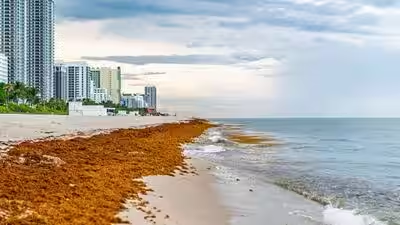

Mexico cleaned over 100K tons of sargassum at the beginning of 2026, but is still facing a seaweed crisis due to the invasive species deeply impacting its tourism
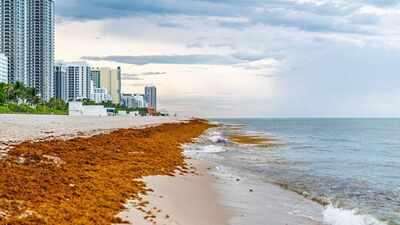
A vast belt of brown seaweed is stretching across the Atlantic Ocean, from the coast of West Africa to the Gulf of Mexico, creating a phenomenon so extensive that it can be tracked from space. Known as the Great Atlantic Sargassum Belt (GASB), it has reached extraordinary proportions in 2026, about 5,000 miles in length.Satellite measurements showed 37.5 million metric tons of sargassum across the Atlantic in May, while researchers at the University of South Florida (USF) recorded 33.6 million metric tons across the monitored Atlantic basin in June. They now expect 2026 to be at least the second-biggest year on record.The transformation has been remarkably fast. The enormous belt was virtually nonexistent before 2010. Within a year, about 1 million metric tons were recorded across the region in 2011, compared with approximately 40 million in 2025. Brian Barnes, a research assistant professor at USF’s College of Marine Science, told Reuters that the trend suggests the amount could be doubling roughly every five years.
What is sargassum and why is it spreading?
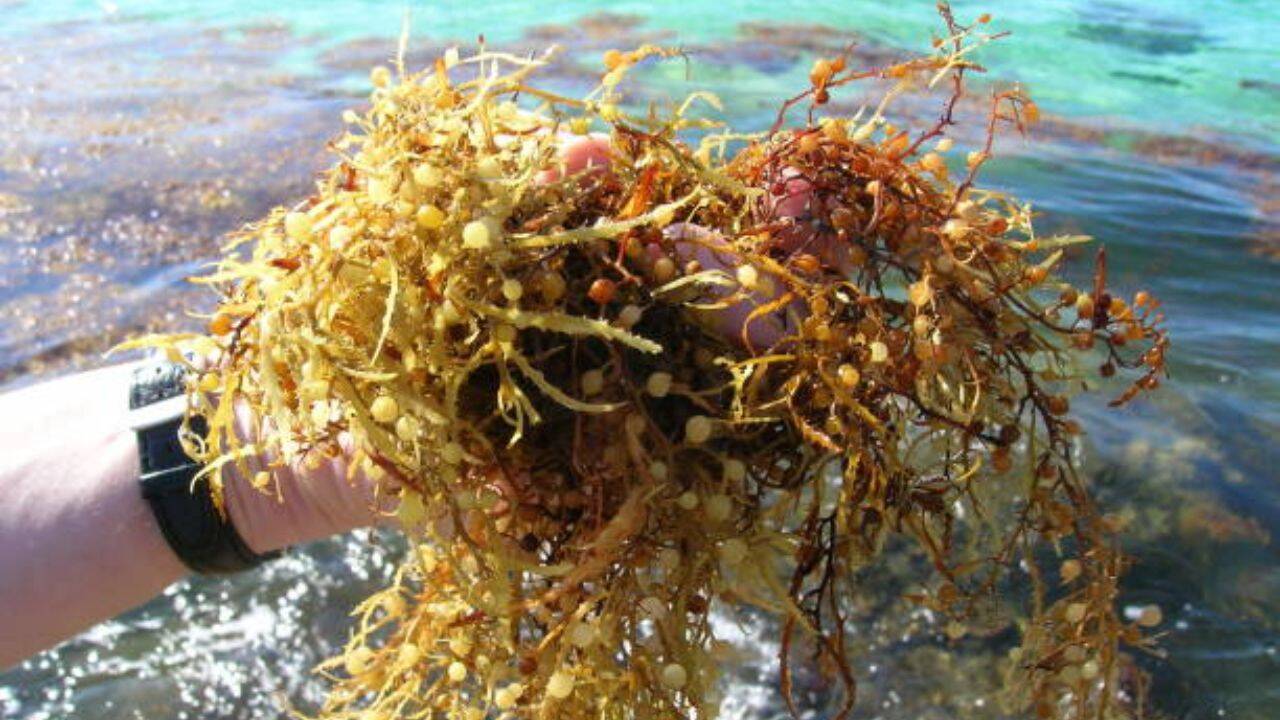
Sargassum is a brown seaweed that naturally forms floating mats and has long been associated with the Sargasso Sea in the North Atlantic. Around 2010, extremely strong winds carried it into tropical waters off West Africa, where it was met with favourable growing conditions. Consistent ocean currents then helped establish the recurring belt extending towards northern South America, the Caribbean and the Gulf of Mexico. Sargassum requires nutrients, particularly nitrogen and phosphorus. Scientists believe its growth is being supported by several sources, including material carried into the Atlantic by the Amazon, Orinoco and Congo rivers, nutrients rising from deeper ocean waters and Saharan dust. Warmer ocean temperatures may also be helping create favourable conditions. Previous research found that the nitrogen content of sargassum increased by 55% between the 1980s and 2010s, while its nitrogen-to-phosphorus ratio rose by around 50%.Sargassum itself plays an important ecological role. Floating mats provide habitat for fish, turtles and numerous other marine species. Problems arise when huge quantities reach the coast and begin decomposing. The seaweed releases hydrogen sulfide, a toxic gas responsible for its distinctive rotten-egg smell. Large accumulations can also reduce oxygen levels in coastal waters, damage coral reefs and release methane.
Record amounts reaching the Caribbean
The consequences of this growth and spread are increasingly visible along the Caribbean coastlines. Around 1 million metric tons of sargassum were already present in the western Caribbean in January, approximately 10 times the usual amount for that month. By June, USF researchers were describing Caribbean levels as record high.Mexico in particular has been having a difficult season. By late July, authorities had collected approximately 100,000 metric tons of sargassum in 2026, already surpassing the roughly 92,783 metric tons removed during the whole of last year.A round-the-clock defence is underway against the invasion in the country’s tourism hub, including boats, barriers and manual beach cleaning teams. An AFP team travelled through the Riviera Maya and Tulum aboard one of the 27 specialised ships the Mexican Navy has used since 2019 to contain the proliferation of sargassum, a type of algae with tiny berry-like sacs allowing it to float, that started arriving in 2011. The boat moves as if through a video game, searching for concentrations of the weeds to suck up. A ramp built into the prow uses a mechanical belt to scoop the sargassum off the surface of the water, bringing it into a chute inside the boat.Efforts to scoop up sargassum are carried out on the high seas with a ship that can carry 300 tons of the seaweed, as well as smaller boats and amphibious vehicles. The final tactic entails gathering the brown algae by hand.
A loss for Mexican tourism
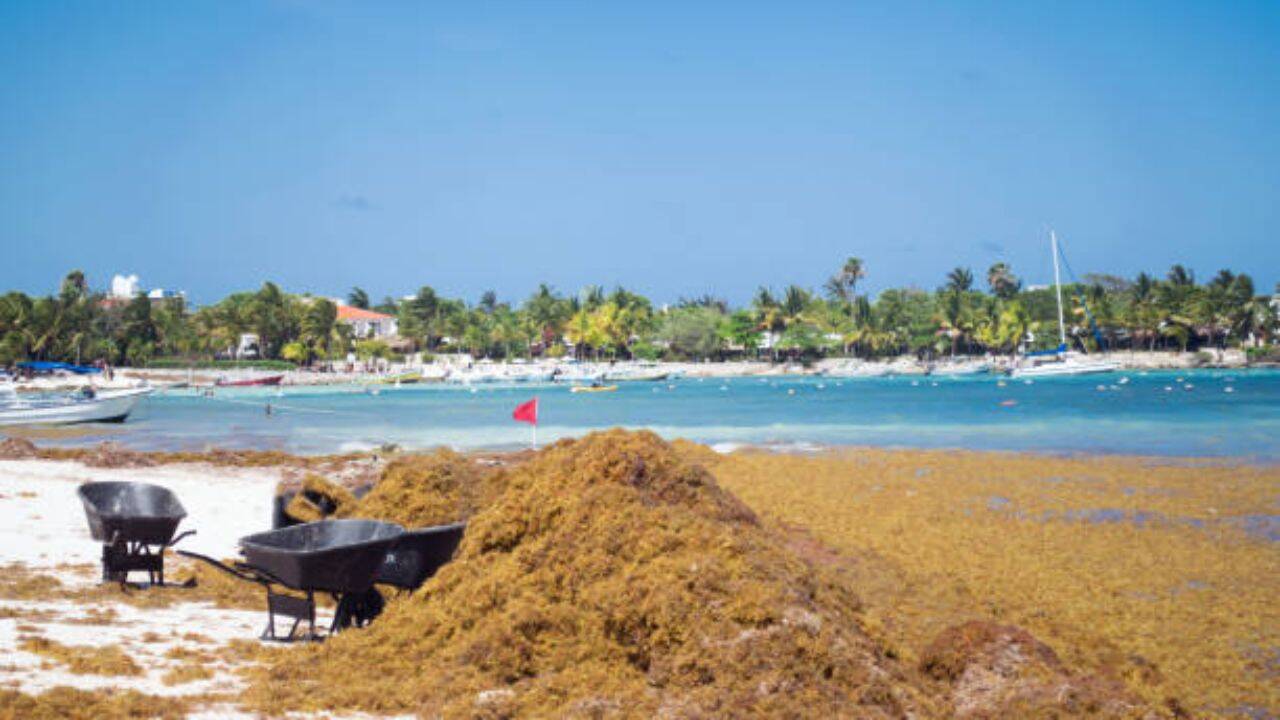
While operations to weed out the seaweed are ongoing, sargassum has still managed to reach numerous beaches of the Mexican Caribbean, where tourists don’t want to sunbathe or swim while enveloped in the stench of rotting eggs.
While operations to weed out the seaweed are ongoing, sargassum has still managed to reach numerous beaches of the Mexican Caribbean, where tourists don’t want to sunbathe or swim while enveloped in the stench of rotting eggs. Businesses have reduced their staff to adjust to the drop in tourism. Azul Lucero, a 26-year-old Argentine waitress who works in Playa del Carmen, where she makes the majority of her income off tips, said her restaurant “doesn’t have over 50” customers a day, as per a report by Gulf Today. Normally, that number is closer to 400 when the ocean is clean and clear.The government insists that foreign tourists are arriving in record numbers, although President Claudia Sheinbaum acknowledged a slight drop when she unveiled an ambitious joint strategy between the government and hotel industry to fight the weedy invasion.“There haven’t been major losses,” she added, attributing the shift to the price of plane fuel. Hotel occupancy this summer has floated between 55 per cent and 70 per cent depending on the destination, whereas the high-season average reached up to 90 per cent 15 years ago, according to industry statistics. Near one mountain of sargassum is the Playa del Carmen hotel where Tere May, 47, works as a chef, but she complained that the “unbearable stench” was keeping all 24 rooms empty.“There is nothing right now,” she said. The sargassum “has affected everything.” Bianca Ibanez, 33, had come to spend a few days of vacation with her family but was surprised by the sheer quantity of seaweed on the beach. “You can’t really enjoy things,” she said.Chuanmin Hu, distinguished university professor of optical oceanography at the University of South Florida (USF), said the warning signs appeared unusually early. “The primary reason [for the large amount of sargassum] is that this year, the western Caribbean, including the Mexican coast, started high: about 1 million metric tons of sargassum in January, about 10 times the typical amount for that month.”As of now, scientists expect conditions along Mexico’s Caribbean coast to improve significantly by late October or early November. But a long-term solution is still unclear.