Japanese Kick streamer Nanatty is facing backlash after a short livestream clip began spreading online and allegedly showed her using a racial slur while speaking to another streamer. The clip appeared on social media on August 11, 2026, and quickly drew attention from people in the streaming community. Another post also accused Nanatty of making comments about Black people that viewers found offensive. However, the full livestream and the exact context of the conversation have not been independently confirmed. Nanatty and Kick have also not made a public statement about the allegations at the time of writing.
Who is Nanatty? Kick streamer faces backlash over alleged racist remarks
Nanatty is a Japanese travel and lifestyle streamer who broadcasts on Kick. She is known for making IRL (“in real life”) streams while traveling in different countries. The streamer is now facing backlash after a short clip from one of her livestreams began spreading online on August 11, 2026.In the viral clip, Nanatty is allegedly heard using a racial slur while speaking to another person. One social media post claimed she said, “You fucking N***…”** during the livestream. Another post accused her of making comments describing Black people as “scary.”The clip has led to criticism from viewers and people in the streaming community. However, the video circulating online is short, and the full conversation has not been made available. This means the complete context of the exchange cannot yet be independently confirmed.There is also no confirmed information that Kick has suspended or banned Nanatty over the incident. Her Kick channel remains publicly accessible. As of now, neither Nanatty nor Kick has publicly addressed the allegations.
What other controversies has Nanatty faced before?
The latest controversy is not the first time Nanatty has faced criticism over her livestreams.In February 2026, she reportedly became involved in an incident in Peru after an argument with an elderly street vendor during a livestream. The incident received strong backlash online. Nanatty later returned to apologize to the vendor, reportedly getting down on her knees while apologizing.She was also involved in another incident in Istanbul in June 2026. Reports said a man harassed Nanatty while she was livestreaming. Local shopkeepers reportedly stepped in to help, and the man was later fined.These incidents have added to the attention around Nanatty as her latest controversy spreads online.For now, the viral clip remains the main evidence behind the latest allegations. No official statement from Nanatty or Kick has confirmed the claims or explained the full context of the clip.
Baby rescued alive from rubble nearly 48 hours after a 7.4-magnitude earthquake struck Colombia.
A baby was rescued alive from the rubble of a collapsed residential building in Cali, Colombia, nearly 48 hours after a powerful 7.4-magnitude earthquake struck the country, as rescuers entered the third day of search operations on Wednesday. The infant was found along with a trapped man after a faint voice from beneath the debris alerted rescuers to their presence.The dramatic rescue took place at the La Torres del Limonar residential complex, a five-storey building that collapsed after Monday’s earthquake. Brian Osorio Zuluaga, who was returning home on his motorbike after fleeing his office in Cali, stopped when he saw the building reduced to rubble.He approached the wreckage and began calling out for survivors, despite warnings of a possible gas leak. He then asked everyone around him to remain silent. A faint sound emerged from the debris, almost like a whisper, CNN reported.“Yes, I’m here. I’m with a baby,” a man’s voice said.Osorio and other volunteers immediately began clearing the rubble by hand to reach the pair. Their path, however, was blocked by a large concrete slab.“On the first attempt, we couldn’t lift it,” he said. Then, “we all lifted together — one, two, three, up.”The rescuers held the heavy slab aloft while others cleared a path towards the infant. Osorio said the baby’s head appeared purplish because he was struggling to breathe.“You can see the baby’s little head there — which, at the time, looked sort of purplish because he couldn’t breathe,” the CNN news report quoted Osorio saying. “Once we started removing the rubble, the baby began to… breathe, and his color started to come back.”Video showed the baby, covered in dust, being carefully pulled from the wreckage. A man with a bloodied arm could be seen lying on his side, still partially trapped beneath a concrete plank.Osorio said he was handed the baby and passed him to a police officer, who took the infant to an ambulance. Rescuers then turned their attention to freeing the trapped man.The 7.4-magnitude earthquake was the strongest to hit Colombia in more than a decade. The powerful tremor struck western Colombia on Monday, killing more than 200 people.
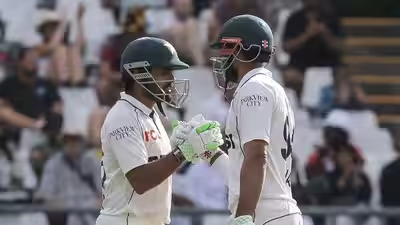
Pakistan’s successful Caribbean campaign has brought a significant boost in the latest ICC Men’s Test Player Rankings, with captain Babar Azam returning to the top 10 while Abdullah Shafique and Sajid Khan also made notable gains. Babar’s rise comes after Pakistan secured an eight-wicket victory over the West Indies in Port of Spain to level the two-match World Test Championship series 1-1. The right-handed batter played a crucial role in the win, scoring 88 in the first innings before remaining unbeaten on 24 during the chase.The performance saw Babar climb five places to No. 10 in the Test batting rankings, marking his return to the elite top 10 for the first time since September 2024. Babar had spent five consecutive years inside the top 10 before dropping out of the group. He reached a career-high ranking of No. 2 in December 2022.
Babar returns to elite group as Pakistan stars rise
Babar’s return to the top 10 provides a timely boost for Pakistan ahead of their upcoming Test assignment against England. Abdullah Shafique and Sajid Khan also benefited from Pakistan’s performance in the Caribbean, making notable movements in the latest rankings.At the top of the Test batting rankings, Australia’s Travis Head continues to hold the No. 1 position, while India’s Jasprit Bumrah remains the leading Test bowler. Ravindra Jadeja continues to occupy the No. 1 spot in the Test all-rounders’ rankings.
Shan Masood returns to training ahead of England Tests
Pakistan have received another boost ahead of the England series, with experienced batter Shan Masood returning to training with the squad at Beckenham on Tuesday. Masood had sustained a finger injury during the opening Test against the West Indies in the Caribbean and subsequently missed the second match. Pakistan went on to register an eight-wicket victory in Port of Spain, securing their first away Test win in three years.His return to training has raised hopes that Masood could be available for the opening Test against England in Leeds, which begins on August 19.
Actress Celina Jaitly has come forward about her “bizarre” divorce proceedings against husband Peter Haag, revealing that she faced questioning in court over the roughly ninety minutes she spends exercising every day. In an emotional social media post, she opened up about how fitness became a source of strength through some of life’s toughest moments for her.
Celina Jaitly’s workout routine framed as ‘self obsession’ in court
Sharing her thoughts on Instagram on Wednesday, August 12, Celina wrote, “Imagine having to defend weightlifting in court. Of all the things filed against me in my bizarre divorce proceedings, perhaps the most incomprehensible was having to answer for the fact that I spent one to 1 hour a day working out.” She disclosed that this very weightlifting routine was subsequently held against her in court, where it was framed as ‘self obsession.‘ Celina spoke of everything her body has withstood: two sets of twins, a twin C-section, dance injuries, the loss of a child, losing both her parents, and other family crises, alongside the trauma involving her brother and the heartbreak of separation from her children. Despite it all, she said, she never gave up her workout routine.
Celina Jaitly on the strength her workouts gave her
The actress asked whether an hour and a half of weightlifting each day was truly something to fault her for, or whether it was that very routine that gave her the strength to hold everything else together. “The weight on the barbell was never the heaviest weight I carried. It was simply the one weight I could choose to put down,” Celina wrote.
Celina Jaitly’s marriage and family with Peter Haag
Celina and Peter Haag got married in 2010, and their family grew with the arrival of twin sons, Winston Jaitly Haag and Viraaj Jaitly Haag, in March 2012. A second set of twin boys, Arthur Jaitly Haag and Shamsher Jaitly Haag, followed in 2017, but the couple tragically lost Shamsher to a hypoplastic heart condition.
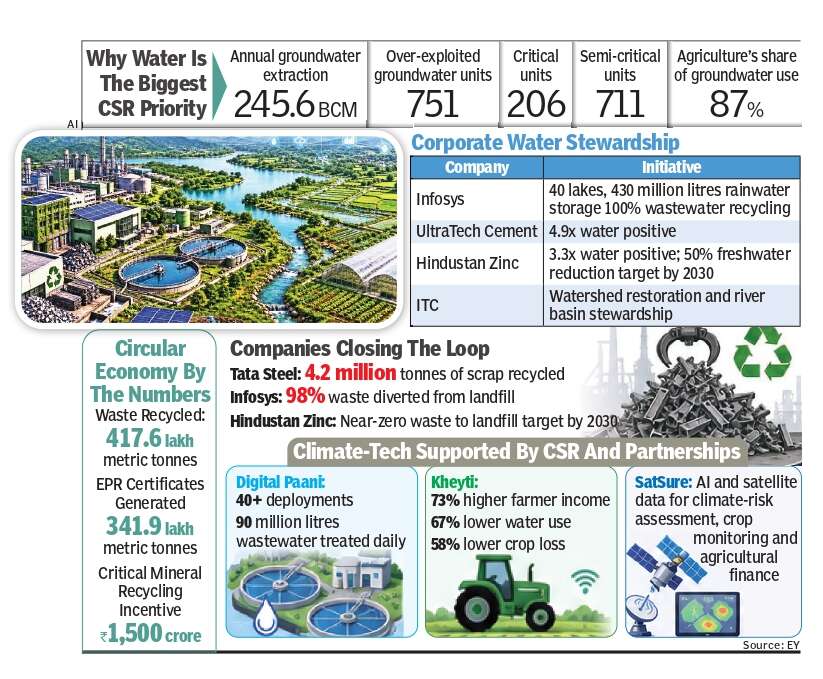
For years, environmental CSR in India was largely associated with tree plantation drives, cleanliness campaigns and occasional conservation projects. While those initiatives continue, companies are increasingly directing their CSR efforts towards something far more strategic. They’re strengthening climate resilience, securing water resources, promoting circular use of materials, and helping communities adapt to a warming world.The change reflects a growing realisation that environmental sustainability is no longer just about protecting nature. It is about protecting livelihoods, businesses, and the economy itself.Climate change is already affecting water availability, agriculture, supply chains, and industrial operations. As these risks intensify, Corporate India is beginning to see environmental CSR not as philanthropy but as an investment in long-term resilience.The scale of the challenge is enormous. India’s draft Climate Finance Taxonomy estimates that the country will require around $2.5 trillion (Roughly an estimated Rs 2,50,00,000 crore or Rs 250 trillion) to meet its climate commitments by 2030, while climate adaptation alone could require investments of nearly Rs 56.7 trillion during the same period. These figures underline why resilience has become a business imperative as much as an environmental one.Increasingly, companies are aligning their CSR programmes with this new reality. Water has emerged as one of the biggest priorities.According to the Central Ground Water Board, India extracts 245.6 billion cubic metres (BCM) of groundwater annually, with 751 assessment units already categorised as over-exploited, 206 as critical and another 711 as semi-critical. Agriculture accounts for 87% of groundwater extraction, making water scarcity a concern that extends far beyond farms to industries, cities and supply chains.For CSR programmes, this has meant a shift from isolated water projects towards landscape-level interventions. Infosys, for instance, reports creating 40 lakes across its campuses with a combined rainwater storage capacity of 430 million litres, supported by 409 deep injection wells and complete recycling of wastewater.
UltraTech Cement says its operations became 4.9 times water positive during FY2024-25 through rainwater harvesting, groundwater recharge, watershed management and recycling initiatives. Hindustan Zinc reports achieving 3.3 times water positivity while targeting a 50% reduction in freshwater consumption by 2030. ITC, meanwhile, has expanded watershed restoration and river basin stewardship programmes alongside improvements in water-use efficiency.The common thread running through these initiatives is that they benefit both communities and businesses. Restoring watersheds improves groundwater availability for nearby villages while also reducing water-related risks for industrial operations. Wastewater recycling lowers pressure on freshwater resources while helping industries operate more sustainably.The focus is also widening beyond water. Another emerging area for CSR is the circular economy, where companies seek to minimise waste and maximise the productive use of resources. Rather than viewing waste simply as something to be disposed of, businesses are increasingly investing in recycling, reuse and resource recovery.India’s policy framework now covers plastics, batteries, e-waste, waste tyres, construction waste and several other waste streams under Extended Producer Responsibility rules. As of March 2026, registered recyclers had processed 417.6 lakh metric tonnes of waste, generating nearly 342 lakh metric tonnes of EPR certificates. The government has also introduced a Rs 1,500 crore incentive scheme to promote recycling of critical minerals such as lithium, nickel and cobalt.Corporate initiatives are increasingly reflecting this transition. Tata Steel reported recycling around 4.2 million tonnes of scrap during FY2024-25. Infosys diverted 98% of its waste away from landfills, while Hindustan Zinc is working towards achieving near-zero waste to landfill by 2030 through greater reuse and recycling. These examples demonstrate how environmental investments can reduce raw material consumption, lower disposal costs, and improve resource security.CSR is also beginning to support innovation rather than only funding conventional projects. Technology-led solutions are emerging as an important area of investment. Digital Paani, featured in NITI Aayog’s Frontier Tech Repository, uses Internet of Things-based automation to optimise wastewater treatment plants. The platform has been deployed at more than 40 facilities, treating over 90 million litres of wastewater every day.In agriculture, Kheyti’s “greenhouse-in-a-box” model has demonstrated how climate-smart farming can improve resilience. According to the study cited in the report, participating farmers recorded a 73% increase in income, 58% lower crop losses, 67% lower water consumption, and significantly lower fertiliser use. Satellite-enabled platforms such as SatSure are also helping govts, financial institutions and agribusinesses assess climate risks and improve decision-making using artificial intelligence and Earth observation data.
The evolution of environmental CSR reflects a broader shift in corporate thinking. Earlier, environmental spending was often evaluated through the number of trees planted or awareness campaigns organised.
Today, companies are increasingly asking whether their investments improve water security, strengthen ecosystems, reduce resource consumption, and help communities withstand climate shocks.The approach also aligns more closely with business priorities. Healthier watersheds mean more reliable water supplies. Circular resource use reduces dependence on virgin materials. Climate-resilient agriculture strengthens rural livelihoods while improving supply-chain stability. Investments in environmental resilience, therefore, generate benefits that extend beyond compliance or corporate reputation.
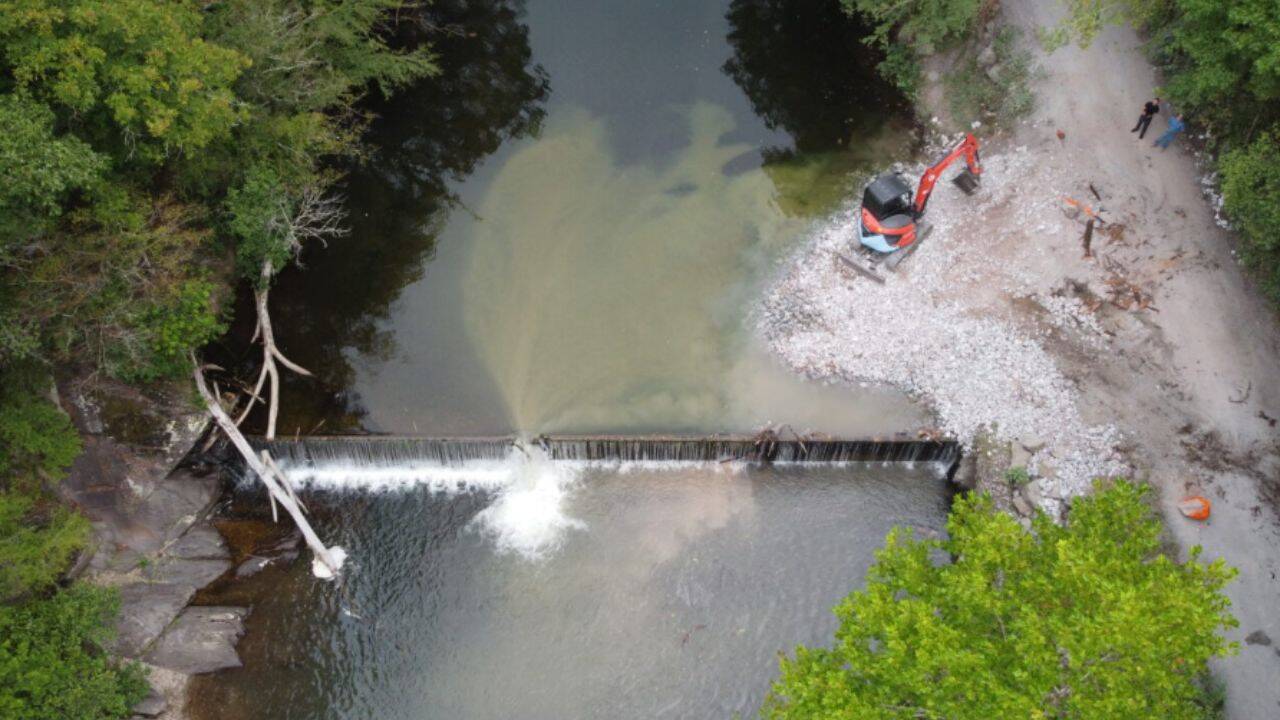
Dam removal on the Middle Fork Nooksack River, Washington (American Rivers photos)
The United States removed 100 dams across 30 states in 2025, reconnecting more than 4,893 miles of rivers, according to a report by the organisation American Rivers. The organisation said it was the largest number of upstream river miles reconnected through dam removal in a single year in the US.The removal of these dams has allowed water to flow freely again in places where rivers had been blocked for decades, and in some cases, for centuries. The work is also helping restore access to habitats used by fish and other wildlife.Pennsylvania removed the highest number of dams in the US in 2025, with 14 structures taken out. The state now has 433 documented dam removals since 1912.Other states in the Northeast also recorded significant numbers. Massachusetts removed 11 dams in 2025, while Vermont removed nine. Flooding in both states has highlighted the need to address failing dams and undersized road-stream crossings.
Why are old dams being removed?
Many dams in the US are no longer serving the purpose for which they were originally built. The country has more than 500,000 dams in its national inventory, and many are no longer generating power, supplying water or serving another practical purpose. At the same time, they can affect river ecosystems and public safety.Dams can change the way rivers naturally flow. When a dam blocks a river, it can prevent fish from reaching spawning areas upstream. Water held behind dams can also become warmer and more stagnant. Additionally, some ageing can also create safety risks and increase flooding concerns during storms.Ecology was the most commonly cited reason for dam removal in 2025. It was given as a reason for 59 of the 100 projects completed during the year. Dilapidated or failing structures were the second most common reason, with 37 projects. Safety concerns were cited in 20 projects.The effects can begin soon after a dam is removed. The report said bugs can return within days, while native fish can reach sections of rivers they had been unable to access for generations within weeks.
Lower Citico Dam removal, Citico Creek, Tennessee
Restoring wildlife habitat
Some of the projects completed in 2025 show how removing a single structure can reconnect large parts of a river system. In Iowa, the Forest City Dam was removed from the Winnebago River. The project reconnected 99 upstream miles for fish passage and opened wetland spawning habitat for northern pike. It also reduced flood risk to a local park.In Delaware, the historic DuPont Experimental Station Dam on the Brandywine River was removed as part of a wider effort involving multiple dams. A previous dam removal upstream in 2019 had already helped change the river. After that project, American shad were seen spawning in the Brandywine in Wilmington for the first time in more than 100 years.The return of the fish showed how river restoration can affect species that had been unable to reach parts of their former habitat for generations.In Virginia, the Georges Mill Dam was removed from the South Mayo River. Seven people had drowned at the site over the years. Removing the dam improved passage for the endangered orangefin madtom and also removed a site that had become a serious safety hazard.Another major project took place in Maine. The removal of Mill Pond Dam on the Sabattus River was part of a wider effort to open access to 2,429 acres of spawning habitat and 75 miles of stream for sea-run fish.The area could support an annual run of more than one million adult alewives. The fish are an important food source for wildlife, including eagles and whales.
Cultural importance
Dam removal projects are also connected to the cultural practices of Indigenous communities in some places. In California, the Jenny Creek Diversion Dam near the Klamath River was removed by Trout Unlimited and the state Department of Fish and Wildlife. The Yurok Tribe and Shasta Indian Nation also took part in the cleanup and cultural monitoring.A similar restoration effort took place in Utah’s Zion National Park, where the Temple of Sinawava Dam was removed. The project was part of an effort to restore the Virgin River, which is a Wild and Scenic River.American Rivers said the 2025 projects also showed the role of local communities, government agencies, conservation groups and Tribal Nations in restoring rivers. It now wants to build on the progress made in 2025 and its target is to remove 30,000 dams by 2050.
Global energy markets continue to be affected by the twin impact of two major geopolitical conflicts.
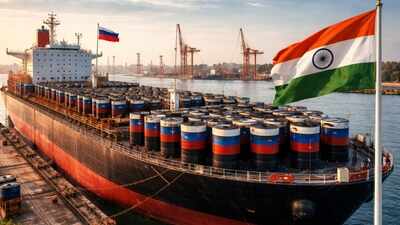
Russia has started importing gasoline from India for the first time as repeated Ukrainian attacks on its refineries have deepened fuel shortages in the domestic market. Global energy markets continue to be affected by the twin impact of two major geopolitical conflicts.While Ukraine has intensified its campaign targeting Russian refineries, tensions between the US and Iran have continued in the Middle East. Together, these disruptions have tightened fuel supplies, prompting Russia, traditionally an exporter of refined fuels, to prohibit exports of both gasoline and diesel in order to prioritise domestic demand.
In a first, Russia imports gasoline from India
According to Kpler data quoted in a Bloomberg report, this marks Moscow’s first import of gasoline from the South Asian nation. The long-distance shipment underscores the severity of the supply crunch that Russia is facing.Also Read | Reverse oil flow: India supplies gasoline to Russia – why it mattersKpler data shows the first cargo arrived on August 5, with additional shipments expected to follow. Nayara Energy Ltd, the Indian refiner backed by Russia’s largest oil producer Rosneft PJSC, has emerged as a supplier. The fuel is being transported through a chain of Russian-linked tankers, involving ship-to-ship transfers off the coast of Egypt, the Bloomberg report said.“The emergence of Indian barrels is particularly notable,” said Sumit Ritolia, lead analyst at Kpler. He said the shipments, alongside continued imports from Belarus and other neighbouring markets, demonstrate “the severity of the current domestic gasoline imbalance, and the extent to which lower refinery runs are reshaping Russia’s traditional product trade flows.”EA Analytics estimated that, following successive attacks, Russia’s crude processing averaged 3.6 million barrels a day in July, roughly one-third below the normal seasonal level. Since then, Ukraine has stepped up its strikes, targeting five refineries last week and at least two more this week.After being sanctioned by the European Union in July last year, Nayara Energy has increasingly depended on so-called dark-fleet tankers and ship-to-ship transfer operations to import crude and export refined products.Its 400,000-barrel-per-day refinery at Vadinar on India’s west coast has also been seeking to diversify its export markets after one of its major buyers, Hindustan Petroleum Corp., recently increased its own fuel production in the region.For the first shipment, the Russian-flagged products tanker Cyclone, loaded around 42,000 tonnes of gasoline at Vadinar on June 18, according to ship-tracking data compiled by Bloomberg.The cargo was subsequently transferred to the Oman-flagged tanker Garnet through a ship-to-ship operation at Damietta Port off Egypt’s Mediterranean coast on July 6. Garnet later arrived in Russia in early August.Also Read | 100% tariffs: Why India may ignore Trump threat and continue buying Russian crude oil
More shipments to follow
Additional shipments appear to be in the pipeline. According to Kpler, the product tanker Varg loaded nearly 40,000 tonnes of gasoline at Vadinar on July 6 and is believed to have completed a ship-to-ship transfer at Damietta toward the end of July, based on changes in the vessel’s draft. Such transfers are commonly used to reduce overall voyage times for individual ships.Kpler has not confirmed the receiving vessel for that cargo, although it identified Beast as a likely candidate. The tanker was present at Damietta and showed an increase in draft between July 30 and 31. While Beast had declared Morocco’s Tangier as its destination, tracking data showed it subsequently sailed past the port and is now heading north in the Atlantic Ocean with the cargo still onboard.Ship-tracking data also showed that another products tanker, the Cameroon-flagged Photon, departed Vadinar on July 13 before transferring its gasoline cargo to the Russia-flagged Talisman at Damietta during July 28-29.With the exception of Garnet, all of the vessels involved are classed under the Russian shipping register. Every ship has been sanctioned by the European Union, while Garnet and Talisman are also subject to US sanctions.“The final destination of Talisman and Beast remains unconfirmed but the emerging trading pattern suggests Damietta STS hub continues to facilitate the movement of Indian-origin gasoline toward Russian import channels,” Kpler said in a report.Also Read | Beijing’s billion-barrel weapon: Why India must prepare for China-driven oil prices
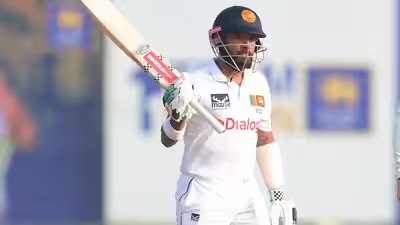
Sri Lanka Cricket (SLC) have announced a 16-member squad for the opening Test of their two-match series against India, with veteran wicketkeeper-batter Niroshan Dickwella making his return to the Test side.Dhananjaya de Silva will captain the team, while Kamindu Mendis has been named his deputy. Dickwella has been included as the wicketkeeper after Kusal Mendis was ruled out of the first Test with an injury.Batter Pathum Nissanka has also been left out of the squad for the opening match.Lahiru Udara, Nishan Madushka, Dinesh Chandimal, Pasindu Sooriyabandara and Sonal Dinusha make up the rest of Sri Lanka’s batting options.The hosts have three specialist spinners in Ramesh Mendis, Prabath Jayasuriya and Keshara Nuwantha. Their pace department includes Milan Rathnayake, Asitha Fernando, Lahiru Kumara, Vishwa Fernando and Dilshan Madushanka.The first Test will be played at the Galle International Cricket Stadium from August 15 to 19. The two-match series is part of the ICC World Test Championship 2025-27 cycle.India, led by Shubman Gill, are currently fifth in the World Test Championship standings. They have recorded four wins and four losses in nine matches, with a Points Percentage (PCT) of 48.150.Sri Lanka are sixth in the standings, having registered one win, one draw and two defeats.With home conditions expected to play a role in the series, Sri Lanka will look to their experienced players, including Chandimal and the returning Dickwella, as they prepare to take on India’s Test side.Sri Lanka squad: Dhananjaya de Silva (captain), Lahiru Udara, Nishan Madushka, Kamindu Mendis (vc), Dinesh Chandimal, Pasindu Sooriyabandara, Sonal Dinusha, Niroshan Dickwella (wk), Ramesh Mendis, Prabath Jayasuriya, Keshara Nuwantha, Milan Rathnayake, Asitha Fernando, Lahiru Kumara, Vishwa Fernando, Dilshan Madushanka.
Rhea Chakraborty opens up about life after jail, facing awkward reactions and being misunderstood: ‘People would stop laughing and joking around me’
Rhea Chakraborty recently spoke about the controversy surrounding Sushant Singh Rajput‘s case, choosing to address the difficult period with humour. The actress shared that people around her used to stop laughing and joking whenever she would enter the room. Here’s what the actress talked about regarding her tough time post SSR’s demise.
Rhea Chakraborty recalls people’s reaction
The actress appeared on a YouTube video by comedian Tanmay Bhat, where she reacted to memes alongside a panel of comedians, including Rohan Joshi, Kushagra Srivastava, Aaditya Kulshreshth and Piyush Sharma.During the conversation, Tanmay Bhat recalled his own AIB controversy and how people would speak to him with exaggerated sympathy at the time. Rhea said she faced something similar. “With me, if people were like laughing and joking in a group and if I came in there, then suddenly they would like change the tone be like, ‘Ha ha ha, oh hi Rhea, how are you?'” she said, mimicking the sudden shift in tone.Tanmay noted that while they were comfortable joking about their own controversies, others found it surprising to see them laugh about it. Rohan Joshi joined in jokingly, saying, “How can you? Like Rhea, how could you say that? Don’t you know what you’ve been through?”Rhea agreed, adding, “It’s true though, like if I would make these jokes like we’re doing today, like four years ago, the room would suddenly just get very heavy. They didn’t know whether they should laugh or they should not laugh.”
Rhea Chakraborty reacts to her ‘Imma bounce’ message
Tanmay also brought up the incident where Rhea’s personal WhatsApp message, “Imma bounce,” was misinterpreted by a news channel as “cheque bounce.” He recalled, “Dude, remember there was that crazy shit, man. Remember like Rhea saying, ‘Imma bounce,’ and everyone was like, ‘Some cheque is bouncing.'” Rohan added, “That was the dumbest thing ever. I will never forget that. After that, I thought I, like, I never want to be misunderstood. I have never said, ‘I am a head’ ever again.”Piyush joked, “No cap. Rhea refuses to wear a cap,” leaving everyone laughing. Rhea, who recently made her acting comeback, added, “Now, if I, if someone even texts me, ‘I’m on the pot,’ I’m like, ‘Please specify’,” triggering another round of laughter. She then quipped, “Good guys, good guys. You find my trauma very entertaining. I’m glad someone’s laughing.”
Rhea Chakraborty’s work front
On the work front, Rhea Chakraborty will next feature in the second instalment of ‘Traitors’. The show will be hosted by filmmaker Karan Johar.
A person uses his phone near the Eiffel Tower in Paris, Wednesday. (File Photo)
France has banned unsolicited telemarketing calls unless consumers have given prior permission, in a move described by a consumer advocacy group as a “small revolution” for consumers.The ban, which took effect on Tuesday, applies to businesses across all sectors. Companies can still contact customers about an existing contract, but they must obtain consent before making marketing calls.A 2025 parliamentary report found that 97% of people in France were annoyed by unsolicited sales calls. It also found that 72% of French people received calls on their mobile phones at least once a week, while 38% said they were contacted daily.The report described telemarketing as “one of those rare issues that unites people in France”.Businesses making marketing calls will now need prior approval from consumers and must retain evidence of that consent.Consumer advocacy group Que Choisir Ensemble welcomed the move, calling it a “small revolution” for the sales industry.“It cannot be stressed enough that peace and quiet is a right, and it is time to stop exposing consumers to unwanted solicitations,” the group said in a statement.Its president Marie-Amandine Stévenin said the issue extended beyond telephone marketing.“This observation also holds true online and on the street, which are saturated with demands to consume,” she said.Stévenin said the organisation had long campaigned “for an end to the automatic assumption that someone in their home or private life is a potential customer.”“This is a victory for consumers, the vast majority of whom do not want to receive sales calls,” she said.The new restrictions have raised concerns among businesses and in Morocco, where the call-centre industry relies heavily on the French market.A Moroccan government minister estimated that the restrictions could put up to 50,000 jobs at risk, according to a report in newspaper Le Matin.France’s direct-selling industry has also criticised the new requirements.Frédéric Billon, head of the Fédération de la Vente Directe (FVD), said companies would face additional administrative burdens.“You’ll have to obtain written consent from your customer, and you’ll also have to keep proof of that consent,” Billon said in comments reported by the New York Times.
European countries take different approaches
France’s move comes as Germany, Austria and Italy already have restrictions on unsolicited telemarketing calls.The UK has a less restrictive approach. Most cold calls remain legal as long as the recipient has not objected and the number is not on the statutory list covering people or businesses that do not wish to receive such calls.