
465 Soviet gold bars sank with a British warship in 1942. Nearly 40 years later, divers found the wreck 800 feet below the ocean’s surface in a daring salvage mission

465 Soviet gold bars sank with a British warship in 1942. Nearly 40 years later, divers found the wreck 800 feet below the ocean’s surface in a daring salvage mission

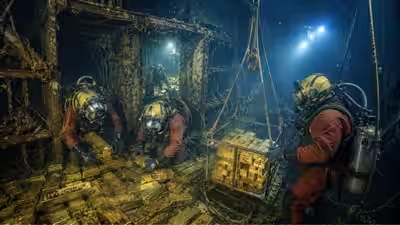
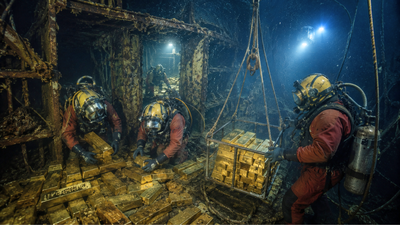
In 1942, British light cruiser HMS Edinburgh sank in the Barents Sea after being badly damaged by German torpedoes, taking 58 crew members and 465 Soviet gold bars with it. The bullion, weighing about 4.6 tonnes, was being carried as part of wartime payment for supplies and equipment. The wreck settled about 800 feet below the surface, where the gold remained for almost four decades. In 1981, British salvage diver Keith Jessop led an ambitious expedition to locate the ship and recover its cargo. After weeks of dangerous saturation diving in freezing Arctic waters, divers finally reached the bomb room and recovered hundreds of gold bars from the wreck.

How 465 Soviet gold bars ended up on a British warship

The gold was being transported as part of wartime financial arrangements between the Soviet Union and its Allies. HMS Edinburgh left Murmansk on April 28, 1942, carrying 465 gold bars connected to Soviet purchases of wartime supplies, including equipment from the United States. The bullion was worth around £1.5 million at the time and was covered by a 1942 War Risks Insurance agreement. The journey soon turned into a disaster when German forces detected the convoy. The submarine U-456 fired torpedoes at HMS Edinburgh, with two striking the cruiser and severely damaging it. The attack killed 58 sailors and left the ship crippled. British vessels attempted to tow it towards safety, but another German attack made recovery impossible, and the damaged cruiser was eventually scuttled in the Barents Sea. The ship sank with the gold stored in its bomb room and became the final resting place of the sailors who died. A salvage contract was prepared as early as 1954, but the operation was delayed because of political difficulties involving the Soviet Union, concerns about disturbing the wartime grave and doubts about the technology available to recover the bullion safely. The gold therefore remained underwater for decades.

Keith Jessop and the search for the sunken gold

Interest in the lost fortune returned in the late 1970s as gold prices increased sharply. British salvage diver Keith Jessop assembled a consortium of specialist companies and secured a contract with the British government under a “no cure, no gain” arrangement. The agreement meant the consortium would receive nothing if it failed to recover the gold but would receive a substantial share of its value if the operation succeeded. The team combined survivor accounts, historical records and information from Norwegian fishermen whose nets had become caught on underwater obstructions to identify a likely search area. In April 1981, they began searching using sonar and echo-sounding equipment. On May 14, an underwater remotely operated vehicle inspected a wreck and confirmed that it was HMS Edinburgh, lying on its port side roughly 800 feet below the surface. Before beginning the recovery, the team studied HMS Belfast, Edinburgh’s surviving sister ship, at the Imperial War Museum in London to understand the sunken cruiser’s layout and locate the bomb room. The preparation was crucial because the divers would have to work inside a damaged wartime vessel that still contained dangerous material.

Divers spent weeks underwater to recover the gold

The depth and Arctic conditions made the operation extremely dangerous. The divers used saturation diving, living and working inside a controlled pressurised environment for extended periods before travelling to the wreck in a diving bell. They breathed a helium and oxygen mixture suited to extreme depths, while gas-reclamation technology helped recycle helium during the lengthy operation. The original plan was to enter through the torpedo damage that had crippled the ship, but debris blocked the route. The team instead had to cut through the hull and spent about a week clearing a passage towards the bomb room, where ammunition and other hazards remained. The breakthrough came on September 16, 1981, when diver Jon Rossier located the gold and radioed the surface to announce that he had found it. The divers then began bringing the bullion up in metal cages, with each bar weighing about 23 pounds. By the time worsening weather forced the expedition to leave, 431 of the 465 bars had been recovered. The gold was worth around £45 million at the time, and the extraordinary operation became known as the “salvage of the century”.

Do you think the British government made the right decision to allow the salvage operation for HMS Edinburgh?

3k+ users shared opinion today

5k+ users already voted today

3k+ users shared opinion today

Share Opinion

460 bars were eventually recovered, but five remain missing

The recovery continued after the first expedition. The salvage team returned to HMS Edinburgh in 1986 and recovered another 29 gold bars, bringing the total recovered to 460 of the original 465. Five bars remain unaccounted for and could still be somewhere inside the wreck, beneath debris or in an inaccessible section of the ship. The recovered bullion was divided between the parties with claims to it. The salvage consortium received its contractual share, while the remaining gold was divided between the Soviet Union and Britain. Britain’s share was sent to the Bank of England, with much of it later melted down and refined, while some recovered bullion was used to produce coins at the Royal Mint. The salvage operation became a landmark in commercial deep-sea diving, demonstrating the potential of saturation diving, sonar, remotely operated vehicles and helium-reclamation systems in extreme conditions. More than eight decades after HMS Edinburgh sank, the five missing bars remain the only part of the legendary cargo that has never been accounted for.




Source link

New York woman pleads guilty to trafficking Indians from Canada, says she picked people from border and dropped them off inside US for profit


New York woman pleads guilty to trafficking Indians from Canada, says she picked people from border and dropped them off inside US for profit
New York woman pleads guilty to trafficking Indians into the US from Canada border.

New York woman Stacey Taylor, 43, who was arrested and charged with human trafficking in 2025, has now pleaded guilty to her role in an international smuggling conspiracy that primarily brought Indians to the US through the US-Canada border. On January 20, 2025, Taylor’s vehicle was stopped by the border patrol agents near Churubusco, New York. Four men, three Indians and one Canadian, were sitting inside her vehicleWhen law enforcement later examined Taylor’s cellphone, they learned that Taylor had received coordinates for the illegal migrants’ location and instructions for picking them up. The four migrants illegally entered the United States on foot through a wooded area and got into Taylor’s waiting vehicle, and she then drove them away from the border and further into the interior of the United States. Stacey’s role in the racket began this side of the US border after migrants crossed over.After law enforcement stopped her vehicle, Taylor admitted that she picked up the four migrants and expected to receive payment for doing so. Additional review of Taylor’s phone revealed text messages that indicated that she had been involved in multiple other human smuggling events in the days prior. But after the January incident, she went back to the racket and was found smuggling illegal migrants again in August and September, 2025.Taylor pleaded guilty to conspiracy to engage in alien smuggling and four counts of alien smuggling for profit. She is scheduled to be sentenced on December 3 and faces a statutory minimum penalty of five years in prison. A federal district court judge will determine any sentence after considering the U.S. Sentencing Guidelines and other statutory factors.

Human trafficking in the US-Canada borders

The US-Canada border is notorious for human trafficking and many facilitators are involved in gangs that operate these on both sides of the border. In 2022, a similar case of trafficking involving Indians came to the surface when an Indian family froze to death during a blizzard while crossing into the US from Canada. Harshkumar Ramanlal Patel and Steve Anthony Shand were convicted in the case in 2025.Jagdish Patel, 39, his wife Vaishaliben, 37, and their two children, 11-year-old Vihangi and three-year-old Dharmik, were found dead near the border in January 2022. They were caught in a blizzard with temperatures as low as -38C (-36F).


Source link

Minnesota, South Carolina & Wisconsin: Trump endorsement delivers mixed results in Republican primaries


Minnesota, South Carolina & Wisconsin: Trump endorsement delivers mixed results in Republican primaries
Trump’s post on Truth Social endorsing Lindell on August 11. (Photo: @realDonaldTrump)

President Donald Trump’s endorsements produced mixed results in Tuesday’s Republican primaries, with his preferred candidates losing one key race, advancing to a runoff in another and securing nominations in Wisconsin.The contrasting outcomes in Minnesota, South Carolina and Wisconsin offered a fresh test of Trump’s influence within the Republican Party, showing that his backing can be decisive but does not always overcome established local candidates, party support and campaign organisation.

Demuth defeats Trump-backed Lindell in Minnesota

NBC News projected Minnesota House Speaker Lisa Demuth as the winner of the Republican gubernatorial primary, putting Trump-backed candidate Mike Lindell behind less than a month after Trump formally endorsed the MyPillow founder.Trump endorsed Lindell on July 15, calling him one of America’s “greatest and most hard working Patriots” and giving him his “Complete and Total Endorsement”. He later urged Minnesota voters to “Vote for Mike Lindell for Governor” and returned to the race on primary day, saying Lindell “deserves a BIG WIN.”

Trump endorsed Lindell on Truth Social. (Photo: @realDonaldTrump)

Trump’s post on Truth Social endorsing Lindell on August 11. (Photo: @realDonaldTrump)

Lindell competed against two Republicans with established support within the state party. Kendall Qualls secured the Minnesota Republican Party endorsement after 10 rounds of voting at its May convention, while Demuth, the state House speaker, won backing from several Republican elected officials.Demuth had initially pledged to honour the convention endorsement but remained in the race after problems with the voting system disrupted the convention. Republican state chairman Alex Plechash later released candidates from their commitment to follow the convention result.Lindell’s electability had also become an issue during the campaign. News agency Associated P reported that Plechash had questioned his prospects in a general election, while some Republican voters expressed concern that his controversies could make it harder for the party to win in November.Demuth is expected to face Democratic US Sen Amy Klobuchar, who won her party’s gubernatorial primary after defeating six challengers. Klobuchar entered the race after Democratic Gov Tim Walz decided not to seek another term.Minnesota Republicans last won a statewide office in 2006.Republicans also nominated former NFL sideline reporter Michele Tafoya for the US Senate seat being vacated by retiring Democratic Sen Tina Smith. Tafoya defeated a crowded field that included former Navy SEAL Adam Schwarze and Royce White, the party’s 2024 Senate nominee.

In your opinion, should Trump continue to endorse candidates in future primaries?

3k+ users shared opinion today

5k+ users already voted today

3k+ users shared opinion today

Share Opinion

Trump-backed Darline Graham heads to runoff

In South Carolina, Trump’s endorsement helped Darline Graham finish first in a 10-candidate Republican Senate primary, but she fell short of the majority needed to secure the nomination.

Trump congratulated Graham on her win. (Photo: @realDonaldTrump)

Trump’s congratulatory post on Graham’s win on Truth Social, August 12. (Photo: @realDonaldTrump)

With about 80% of the vote counted, Graham had 32.6% against US Rep Ralph Norman’s 24%, according to Reuters. The two will meet in an August 25 runoff.Trump’s involvement in Graham’s candidacy began before she formally entered the race. On July 13, he recommended Lindsey Graham’s sister to South Carolina Gov Henry McMaster for an interim Senate appointment. McMaster appointed her later that day to fill the vacancy created by her brother’s death.Four days later, after meeting Graham at the White House, Trump urged her to run for the full term and gave her his “Complete and Total Endorsement”, ending his appeal with “RUN, DARLINE, RUN!”Eight candidates were eliminated in the primary, including US Rep Russell Fry, former governor Mark Sanford and businessman Mark Lynch.Graham entered the race without previous elected experience, while Norman and other rivals had established campaign operations. Norman, a member of the House Freedom Caucus who has represented South Carolina’s 5th District since 2017, has also aligned himself with Trump’s “America First” agenda.The winner of the August 25 runoff will face Democratic nominee Annie Andrews in November.

Trump-backed candidates score wins in Wisconsin

Wisconsin delivered the strongest results for Trump’s endorsed candidates.US Rep Tom Tiffany won the Republican gubernatorial nomination, defeating Andy Manske and advancing to the November election. Democratic Gov Tony Evers is not seeking another term. Trump endorsed Tiffany in January.

Trump congratulated Tiffany on Truth Social. (Photo: @realDonaldTrump)

Trump’s congratulatory post for Tiffany on Truth Social, August 12. (Photo: @realDonaldTrump)

Tiffany’s move to the governor’s race created an opening in Wisconsin’s Republican-leaning 7th Congressional District. Michael Alfonso, 26, won the Republican primary in a five-way contest after receiving Trump’s endorsement and support from US Transportation Secretary Sean Duffy.Alfonso is married to Duffy’s daughter. Duffy represented the district before leaving Congress in 2019. Trump also joined a telephone rally for Alfonso ahead of the primary.

Trump congratulated Alfonso on Truth Social. (Photo: @realDonaldTrump)

Trump’s congratulatory post for Alfonso on Truth Social, August 12. (Photo: @realDonaldTrump)

Republican Rep Derrick Van Orden advanced without a primary challenger in Wisconsin’s 3rd Congressional District after receiving Trump’s endorsement for re-election in April 2025.

Trump congratulated Orden on Truth Social. (Photo: @realDonaldTrump)

Trump’s congratulatory post for Orden on Truth Social, August 12. (Photo: @realDonaldTrump)

Democrat Rebecca Cooke won her party’s primary and will face Van Orden again after narrowly losing their 2024 contest. Democrats are targeting the district as they seek to gain seats in the House in November.

Scott advances in Vermont

In Vermont, Republican Gov Phil Scott advanced unopposed as he seeks a sixth two-year term. Scott won 73% of the vote in his 2024 re-election.

Lamont, Fazio set for Connecticut governor race

In Connecticut, Republican state Sen Ryan Fazio had already secured his party’s gubernatorial nomination before Tuesday’s primary. He won 92% of delegates at the Republican convention on May 16, while Betsy McCaughey failed to reach the 15% threshold required to qualify for the primary.Democratic Gov Ned Lamont won his party’s primary on Tuesday, setting up a Lamont-Fazio contest in November.


Source link

‘Imran Khan no longer with us’: Noted Pakistani journalist makes big claim, cites ‘military sources’


'Imran Khan no longer with us': Noted Pakistani journalist makes big claim, cites 'military sources'
Imran Khan has remained largely out of public view since his imprisonment in August 2023.

A noted Pakistani journalist has claimed that three senior officers at Pakistan’s General Headquarters (GHQ) expressed fears that jailed former prime minister Imran Khan may no longer be alive, while stressing that the claim remains unconfirmed. His remarks came amid growing concerns over Imran’s health and demands from his Pakistan Tehreek-e-Insaf (PTI) party for access to his family and doctors.“Three GHQ officers expressed in different ways that Imran Khan is no longer with us and that is the reason why the Pakistan army and the army chief are keeping him from the rest of the country. This is serious if it’s true I hope it’s not. It’s not confirmed yet. This is fear, this is apprehension, this is not news. Three senior military sources are fearing that Imran Khan is no longer with us but these are fears. They did not see with their own eyes but heard with their own ears, said Pakistani journalist Wajahat Khan.The journalist said the information had not been independently verified.The claims come as PTI on Tuesday staged a protest outside Pakistan’s Supreme Court over concerns about Imran Khan’s health and delays in his pending cases.The demonstration was called off after the court registrar assured party leaders that the cases would be fixed for hearing next week.PTI secretary general Salman Akram Raja said the party had also sought access for Imran’s sisters and personal doctors to meet him.“We have been assured that all the cases will be fixed for hearing next week and the cause list will be issued,” Pakistani news outlet Dawn quoted Raja saying after he met the registrar.Imran Khan, 73, has been incarcerated since August 5, 2023, when he was arrested following his conviction in the Toshakhana case. He remains in prison in Pakistan, facing multiple convictions and pending cases.


Source link

Trump admin plans to spend $900m on White House ‘modernisation projects’: Report


Trump admin plans to spend $900m on White House 'modernisation projects': Report
Construction continues on a helipad and the White House Ballroom on the South Lawn of the White House. (AP Photo)

The Donald Trump administration is planning to spend at least $900 million on construction and modernisation projects across the White House grounds, a significantly higher figure than previously reported, according to an exclusive report by The Washington Post.The development comes days after a federal appeals court ordered the administration to halt construction of Trump’s proposed USD 400 million ballroom on the site of the demolished East Wing, ruling that such a major overhaul required congressional approval.According to records, confidential contracts and planning documents reviewed by The Washington Post, the administration has assembled money for the projects through transfers from other government agencies and private donations rather than seeking a direct appropriation from Congress.The funds have reportedly been routed through the White House’s Executive Residence maintenance account, which is traditionally used for routine repairs and restoration work and typically receives only a few million dollars annually.The Washington Post reported that the planned expenditure could reach at least USD 927 million and includes the East Wing project, upgrades around Lafayette Square, construction of a helipad, a new visitor screening centre and other work on the White House grounds.Public budget records show that about USD 875 million has been directed to the maintenance account since Trump returned to office, the report said.The funding reportedly includes USD 500 million transferred from the US Secret Service and the White House Military Office, while USD 305 million came from private donations.Another USD 70 million was directed to the account, though its source was not identified in the documents reviewed by the newspaper.The White House has maintained that the ballroom itself would be financed through private donations and has defended the involvement of security agencies in funding infrastructure linked to the project.The spending plans have drawn fresh scrutiny after the US Court of Appeals for the District of Columbia Circuit ruled on Friday that Trump could not continue construction of the East Wing ballroom without congressional approval.The court upheld a preliminary injunction obtained by the National Trust for Historic Preservation, which challenged the administration after the East Wing was demolished and work began on the proposed 90,000-square-foot ballroom.“Whether or not a massive ballroom should be constructed is for Congress to decide and is not a matter for Executive self-help,” the appeals court said.Trump has vowed to challenge the ruling before the US Supreme Court, calling the decision politically motivated and arguing that the project is necessary for White House security.The administration has not publicly disclosed the full projected cost of all the construction planned for the White House complex.


Source link

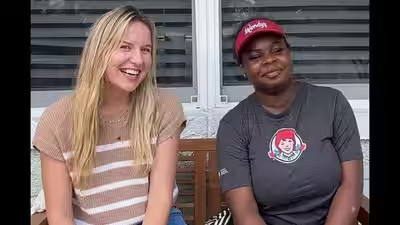
Florida homeowner Abigail Mwaungulu let a Wendy’s worker named Dara eat lunch on her porch; their chance meeting became a friendship and raised over $13,000


Florida homeowner Abigail Mwaungulu let a Wendy's worker named Dara eat lunch on her porch; their chance meeting became a friendship and raised over $13,000

Sometimes the smallest acts of kindness create the biggest ripples. For Abigail Mwaungulu, a Florida homeowner, it began with a simple “yes” to a stranger’s unusual lunch request. For Dara, a Wendy’s employee having a difficult day, it began with a doorbell ring and a hopeful question. What followed was a friendship neither expected, a viral video that touched millions and a fundraiser that has raised more than $13,000 to help Dara pursue her dreams.A difficult day, a simple requestThe story started on an ordinary afternoon in Palm Beach County, Florida. Dara, a Wendy’s worker, needed a few minutes away from work and eat her lunch. But walking all the way home was not an option during her short break.As she walked through the neighbourhood, she noticed Abigail’s house and its welcoming porch. On impulse, she rang the doorbell and asked through the Ring camera intercom if she could have her lunch on the porch.Abigail’s response was immediate and warm.What could have been a brief, forgettable encounter turned into something more. The two women struck up a conversation. They talked about their days, their lives and the challenges they faced. By the time Dara’s lunch break ended, a connection had been made.From strangers to friendsAbigail shared the Ring camera footage on TikTok, where she posts as @abigailsauthentic. The video quickly went viral, getting more than 1.5 million views, as per Storyful. Viewers were moved by the simple humanity of the moment; a worker asking for a place to rest, a homeowner saying yes without hesitation.But the story did not end online. Abigail and Dara continued to spend time together after that first meeting, according to WPBF. And they continued to post their videos online, documenting their freindship.As they got to know each other better, Abigail learned more about Dara’s life. On a GoFundMe page created to provide her financial support, Dara was said to walk to work every day; she hopes to eventually build a career caring for and helping others. Abigail described her as “one of the kindest, hardest-working people I’ve ever met,” as read on her fundraiser.A community rallies around DaraAfter the video went viral, viewers began asking how they could support Dara. The response prompted Abigail to launch a GoFundMe campaign, created with Dara’s permission, to help with expenses, including transportation and education.“I shared our unexpected meeting on TikTok, and thousands of people fell in love with her just like I did…So many asked how they could help,” the fundraiser reads.The campaign has raised more than $13,000, providing Dara with additional financial flexibility as she works toward her goals. The money will help with costs such as transportation, making it easier for her to get to work and pursue training or education opportunities.“Sometimes all it takes is one unexpected conversation on a porch to remind us how powerful kindness can be,” the fundraiser concludes.Why this story is resonantIn a world where the headlines are often filled with division and conflict, the story of Abigail and Dara is one of simplicity and warmth. It’s a reminder that kindness doesn’t need to be grand to be meaningful. A porch, a lunch break and a willingness to say yes changed two people’s lives.The viral reaction also shows how social media can do some good things. It’s easy to blame platforms for negativity, but this story shows how they can amplify acts of compassion and mobilise communities to support those in need.More than money for Dara, the support means. It is recognition of her hard work, her resilience and her dreams. For Abigail it’s about watching how one tiny action can become something much bigger.A friendship that grows and growsAbigail and Dara are still good friends today. They’ve continued to post about their time together on social media, from everyday outings to deep conversations. Their friendship has become a symbol of what is possible when people choose connection over indifference.The story began without a fundraiser, millions of views or any expectation that the two women would see each other again. It started with Dara looking for somewhere to spend a few minutes of her lunch break, and a stranger opening up her porch.In the end, the porch was more than a place to sit and eat. It was the beginning of a friendship, a support system and a reminder that sometimes the most powerful thing we can give is just a place to land.


Source link

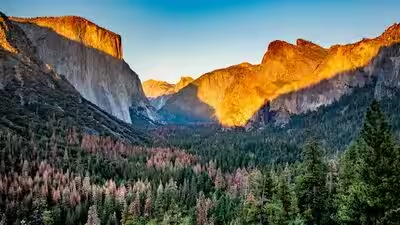
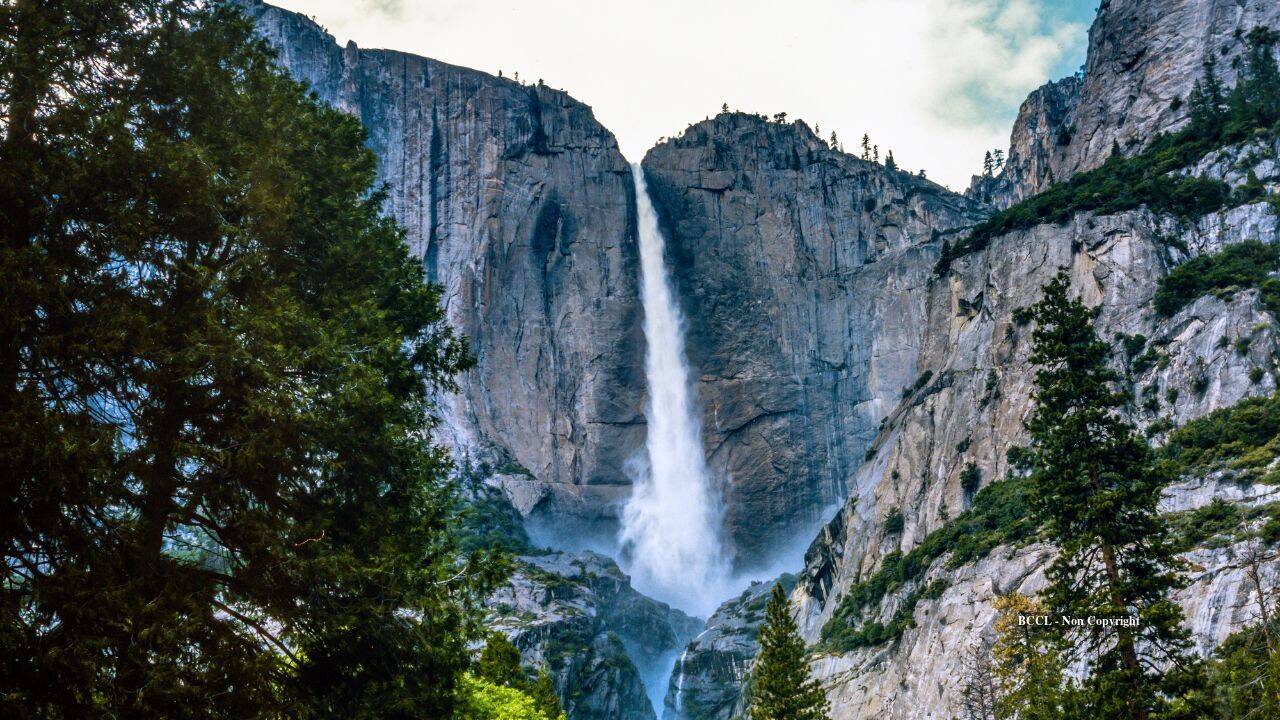
A hidden wonder in Yosemite was disappearing for more than 100 years, in 2023, a massive restoration began filling a 3.5-mile erosion gully with 162,000 cubic yards of soil and woodchips, restoring 94 acres of lost wetlands


A hidden wonder in Yosemite was disappearing for more than 100 years, in 2023, a massive restoration began filling a 3.5-mile erosion gully with 162,000 cubic yards of soil and woodchips, restoring 94 acres of lost wetlands

In the heart of Yosemite National Park, where granite cliffs rise above ancient forests and waterfalls cascade into deep valleys, lies a quieter kind of wonder: Ackerson Meadow. One of the largest mid-elevation meadows in the Sierra Nevada, and the largest in Yosemite, it is a place of stillness, wildlife and ecological importance. But for more than a century, this landscape was slowly being drained, eroded and diminished by human activity.In 2023, a landmark restoration project began. By June 2025, it had become the largest wetland restoration effort in Yosemite’s history; and the largest, by fill volume, ever undertaken in the Sierra Nevada. The results were transformative: 94 acres of lost wetlands restored, 84 additional acres protected and a 230-acre headwater meadow system returned to self-sustaining hydrologic function, according to a report on NPS.gov.A meadow in crisisAckerson Meadow is an ecologically critical wildlife corridor and habitat for several at-risk species, including the state-endangered great grey owl and little willow flycatcher. Yet for decades, a massive erosion gully network, up to two miles long, 14 feet deep and 100 feet wide, had been draining the meadow’s wetlands.The gully was the result of over a century of landscape manipulation, including domestic water diversion, farming, ranching and timber harvest. It had already drained 90 acres of wetlands and was actively eroding an additional 100 acres. Without intervention, the meadow’s ecological functions, including water storage, flood protection, wildlife habitat and carbon sequestration, would continue to decline.In 2016, Ackerson Meadow was purchased from private ownership and donated to Yosemite by a coalition including the Trust for Public Lands, National Park Trust, Yosemite Conservancy and American Rivers. The stage was set for restoration, as per the report.Filling the gully, restoring the flow

Yosemite National Park

Yosemite National Park

Between August 2023 and June 2025, a partnership of Yosemite National Park, Stanislaus National Forest, American Rivers and Yosemite Conservancy implemented a bold plan: fill the erosion gully to the elevation of the surrounding meadow.The team filled 18,538 linear feet, 3.51 miles, of gully with 162,000 cubic yards of locally sourced material. This included 132,900 cubic yards of mineral soil combined with 29,100 cubic yards of woodchips. The “full fill” approach was chosen because it offered rapid, comprehensive restoration of the wetland area lost to human impacts, protected remaining intact wetlands and was expected to become a self-sustaining ecosystem within three to five years, requiring minimal long-term maintenance.The work was carried out in two phases. Phase 1, from August to November 2023, focused on filling the gully in the lower half of main Ackerson Meadow and the full extent of the gully in south Ackerson Meadow. Phase 2, from August to November 2024, completed the fill in the main meadow. Revegetation followed each phase in the spring of 2024 and 2025.Bringing the meadow back to lifeRestoring the land was only part of the work. The team also replanted the meadow with native species to ensure the ecosystem could thrive. Revegetation efforts included:– Broadcast seeding of more than 117 pounds of native, locally collected seed from 25 plant species– Installation of 434,000 wetland container plants, including species such as Scirpus microcarpus, Juncus dubius and Carex athrostachya– Harvest and replanting of wetland sod and 600 whole-plant willows– Restoration of 15.11 acres of borrow area with broadcast seeding, mulching and planting of 170 black oak saplingsThe result was a meadow reborn, one that could once again support the wildlife and ecological processes that had defined it for millennia.Benefits for wildlife, water and climateThe restoration provides outstanding long-term benefits for rare and endangered species, including the Pacific fisher (federally endangered), northwest pond turtle (proposed federally threatened), great grey owl (California endangered) and little willow flycatcher (California endangered). It also supports a diverse suite of native songbirds.Beyond wildlife, the project improves water quality and drinking water supply, increases groundwater storage, sequesters carbon and enhances resilience to drought and wildfire. The healthy headwater system helps mitigate the impacts of drought and floods on downstream communities within the Tuolumne River watershed, including the cities of Turlock and Modesto.The project also aligns with California’s 30 by 30 Initiative, which aims to protect 30% of the state’s land and coastal waters by 2030, and supports the Sierra Meadow Partnership goal to restore 30,000 acres of meadow by 2030, as per the report.A collaborative effortThis monumental project was made possible through the collaboration of multiple partners, including American Rivers, the National Park Service, the U.S. Forest Service, Yosemite Conservancy and numerous funding organisations such as the California Department of Fish and Wildlife, Google, the National Park Foundation and the Bipartisan Infrastructure Law, as per NPS.Tribal participation was also a key component. The National Park Service initiated consultation with seven associated American Indian tribes and groups in October 2017. Tribal members participated in revegetation, beaver dam analogue development and on-site resource protection throughout the project.Volunteers played a vital role as well. In 2021 and 2022 combined, 167 volunteers provided 3,145 hours of support. In 2023, 137 volunteers contributed 2,018 hours. In 2024, 233 volunteers provided 2,933 hours, and in 2025, 44 volunteers contributed 689 hours.A model for the futureAckerson Meadow is now a living example of what is possible when science, partnership and community come together. Research studies are ongoing, including USGS-led work on topography, vegetation and habitat structure change, as well as soil carbon sequestration studies to improve decision-support tools for future restoration projects.The meadow’s recovery is not just a victory for Yosemite. It is a model for wetland restoration across the Sierra Nevada and beyond; a reminder that even landscapes scarred by a century of human impact can be healed, given time, care and commitment.Today, Ackerson Meadow is a living testament to what happens when we choose restoration over degradation and protection over exploitation. It’s a place where water is flowing again, wildlife is thriving and the future of the Sierra Nevada looks a little brighter.


Source link

Who is Kick streamer Nanatty? Viral clip sparks backlash over alleged racist remarks on livestream


Who is Kick streamer Nanatty? Viral clip sparks backlash over alleged racist remarks on livestream

Japanese Kick streamer Nanatty is facing backlash after a short livestream clip began spreading online and allegedly showed her using a racial slur while speaking to another streamer. The clip appeared on social media on August 11, 2026, and quickly drew attention from people in the streaming community. Another post also accused Nanatty of making comments about Black people that viewers found offensive. However, the full livestream and the exact context of the conversation have not been independently confirmed. Nanatty and Kick have also not made a public statement about the allegations at the time of writing.

Who is Nanatty? Kick streamer faces backlash over alleged racist remarks

Nanatty is a Japanese travel and lifestyle streamer who broadcasts on Kick. She is known for making IRL (“in real life”) streams while traveling in different countries. The streamer is now facing backlash after a short clip from one of her livestreams began spreading online on August 11, 2026.In the viral clip, Nanatty is allegedly heard using a racial slur while speaking to another person. One social media post claimed she said, “You fucking N***…”** during the livestream. Another post accused her of making comments describing Black people as “scary.”The clip has led to criticism from viewers and people in the streaming community. However, the video circulating online is short, and the full conversation has not been made available. This means the complete context of the exchange cannot yet be independently confirmed.There is also no confirmed information that Kick has suspended or banned Nanatty over the incident. Her Kick channel remains publicly accessible. As of now, neither Nanatty nor Kick has publicly addressed the allegations.

What other controversies has Nanatty faced before?

The latest controversy is not the first time Nanatty has faced criticism over her livestreams.In February 2026, she reportedly became involved in an incident in Peru after an argument with an elderly street vendor during a livestream. The incident received strong backlash online. Nanatty later returned to apologize to the vendor, reportedly getting down on her knees while apologizing.She was also involved in another incident in Istanbul in June 2026. Reports said a man harassed Nanatty while she was livestreaming. Local shopkeepers reportedly stepped in to help, and the man was later fined.These incidents have added to the attention around Nanatty as her latest controversy spreads online.For now, the viral clip remains the main evidence behind the latest allegations. No official statement from Nanatty or Kick has confirmed the claims or explained the full context of the clip.


Source link

The United States removed 100 outdated dams in 2025, reconnecting more than 4,893 river miles across 30 states and setting a single-year record for upstream habitat


The United States removed 100 outdated dams in 2025, reconnecting more than 4,893 river miles across 30 states and setting a single-year record for upstream habitat
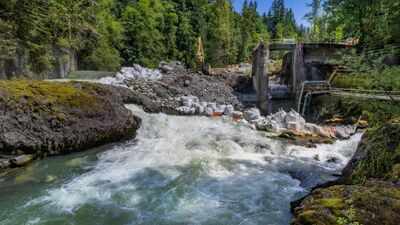
Dam removal on the Middle Fork Nooksack River, Washington (American Rivers photos)

The United States removed 100 dams across 30 states in 2025, reconnecting more than 4,893 miles of rivers, according to a report by the organisation American Rivers. The organisation said it was the largest number of upstream river miles reconnected through dam removal in a single year in the US.The removal of these dams has allowed water to flow freely again in places where rivers had been blocked for decades, and in some cases, for centuries. The work is also helping restore access to habitats used by fish and other wildlife.Pennsylvania removed the highest number of dams in the US in 2025, with 14 structures taken out. The state now has 433 documented dam removals since 1912.Other states in the Northeast also recorded significant numbers. Massachusetts removed 11 dams in 2025, while Vermont removed nine. Flooding in both states has highlighted the need to address failing dams and undersized road-stream crossings.

Why are old dams being removed?

Many dams in the US are no longer serving the purpose for which they were originally built. The country has more than 500,000 dams in its national inventory, and many are no longer generating power, supplying water or serving another practical purpose. At the same time, they can affect river ecosystems and public safety.Dams can change the way rivers naturally flow. When a dam blocks a river, it can prevent fish from reaching spawning areas upstream. Water held behind dams can also become warmer and more stagnant. Additionally, some ageing can also create safety risks and increase flooding concerns during storms.Ecology was the most commonly cited reason for dam removal in 2025. It was given as a reason for 59 of the 100 projects completed during the year. Dilapidated or failing structures were the second most common reason, with 37 projects. Safety concerns were cited in 20 projects.The effects can begin soon after a dam is removed. The report said bugs can return within days, while native fish can reach sections of rivers they had been unable to access for generations within weeks.

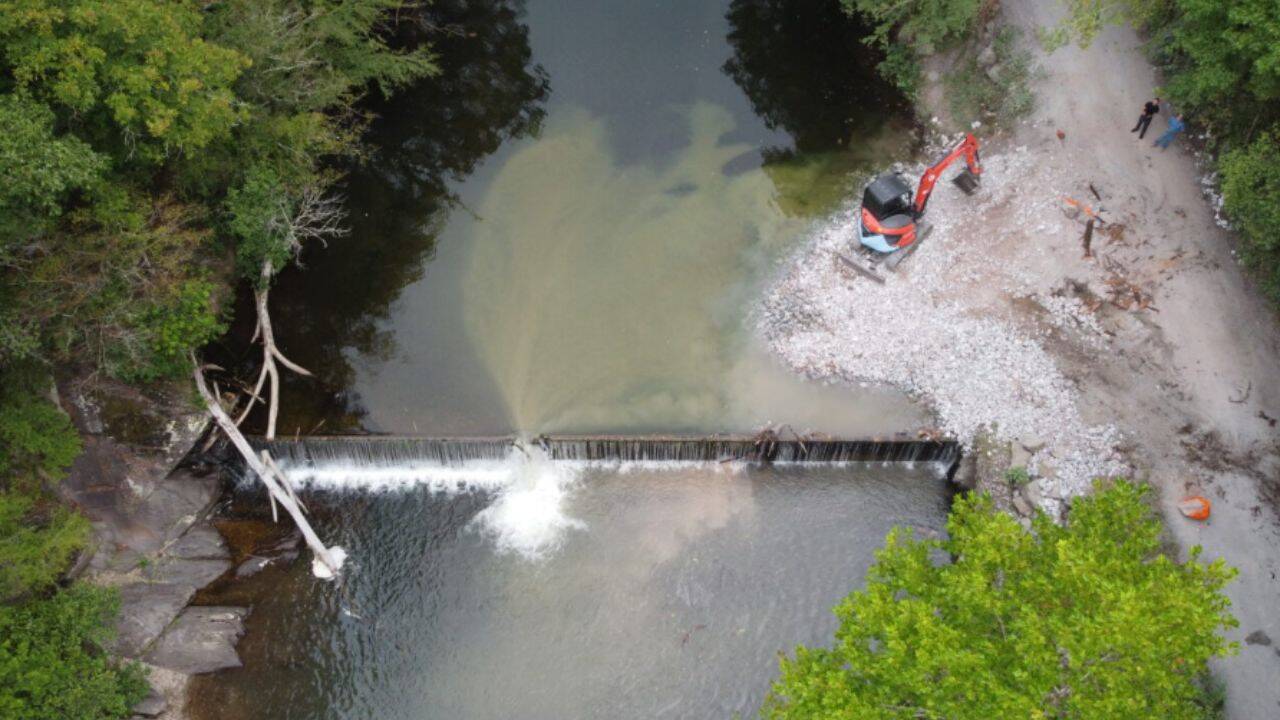
Lower Citico Dam removal, Citico Creek, Tennessee

Lower Citico Dam removal, Citico Creek, Tennessee

Restoring wildlife habitat

Some of the projects completed in 2025 show how removing a single structure can reconnect large parts of a river system. In Iowa, the Forest City Dam was removed from the Winnebago River. The project reconnected 99 upstream miles for fish passage and opened wetland spawning habitat for northern pike. It also reduced flood risk to a local park.In Delaware, the historic DuPont Experimental Station Dam on the Brandywine River was removed as part of a wider effort involving multiple dams. A previous dam removal upstream in 2019 had already helped change the river. After that project, American shad were seen spawning in the Brandywine in Wilmington for the first time in more than 100 years.The return of the fish showed how river restoration can affect species that had been unable to reach parts of their former habitat for generations.In Virginia, the Georges Mill Dam was removed from the South Mayo River. Seven people had drowned at the site over the years. Removing the dam improved passage for the endangered orangefin madtom and also removed a site that had become a serious safety hazard.Another major project took place in Maine. The removal of Mill Pond Dam on the Sabattus River was part of a wider effort to open access to 2,429 acres of spawning habitat and 75 miles of stream for sea-run fish.The area could support an annual run of more than one million adult alewives. The fish are an important food source for wildlife, including eagles and whales.

Cultural importance

Dam removal projects are also connected to the cultural practices of Indigenous communities in some places. In California, the Jenny Creek Diversion Dam near the Klamath River was removed by Trout Unlimited and the state Department of Fish and Wildlife. The Yurok Tribe and Shasta Indian Nation also took part in the cleanup and cultural monitoring.A similar restoration effort took place in Utah’s Zion National Park, where the Temple of Sinawava Dam was removed. The project was part of an effort to restore the Virgin River, which is a Wild and Scenic River.American Rivers said the 2025 projects also showed the role of local communities, government agencies, conservation groups and Tribal Nations in restoring rivers. It now wants to build on the progress made in 2025 and its target is to remove 30,000 dams by 2050.


Source link

‘Small revolution’: France bans unsolicited telemarketing calls without consent


‘Small revolution’: France bans unsolicited telemarketing calls without consent
A person uses his phone near the Eiffel Tower in Paris, Wednesday. (File Photo)

France has banned unsolicited telemarketing calls unless consumers have given prior permission, in a move described by a consumer advocacy group as a “small revolution” for consumers.The ban, which took effect on Tuesday, applies to businesses across all sectors. Companies can still contact customers about an existing contract, but they must obtain consent before making marketing calls.A 2025 parliamentary report found that 97% of people in France were annoyed by unsolicited sales calls. It also found that 72% of French people received calls on their mobile phones at least once a week, while 38% said they were contacted daily.The report described telemarketing as “one of those rare issues that unites people in France”.Businesses making marketing calls will now need prior approval from consumers and must retain evidence of that consent.Consumer advocacy group Que Choisir Ensemble welcomed the move, calling it a “small revolution” for the sales industry.“It cannot be stressed enough that peace and quiet is a right, and it is time to stop exposing consumers to unwanted solicitations,” the group said in a statement.Its president Marie-Amandine Stévenin said the issue extended beyond telephone marketing.“This observation also holds true online and on the street, which are saturated with demands to consume,” she said.Stévenin said the organisation had long campaigned “for an end to the automatic assumption that someone in their home or private life is a potential customer.”“This is a victory for consumers, the vast majority of whom do not want to receive sales calls,” she said.The new restrictions have raised concerns among businesses and in Morocco, where the call-centre industry relies heavily on the French market.A Moroccan government minister estimated that the restrictions could put up to 50,000 jobs at risk, according to a report in newspaper Le Matin.France’s direct-selling industry has also criticised the new requirements.Frédéric Billon, head of the Fédération de la Vente Directe (FVD), said companies would face additional administrative burdens.“You’ll have to obtain written consent from your customer, and you’ll also have to keep proof of that consent,” Billon said in comments reported by the New York Times.

European countries take different approaches

France’s move comes as Germany, Austria and Italy already have restrictions on unsolicited telemarketing calls.The UK has a less restrictive approach. Most cold calls remain legal as long as the recipient has not objected and the number is not on the statutory list covering people or businesses that do not wish to receive such calls.


Source link