
The United States removed 100 outdated dams in 2025, reconnecting more than 4,893 river miles across 30 states and setting a single-year record for upstream habitat

The United States removed 100 outdated dams in 2025, reconnecting more than 4,893 river miles across 30 states and setting a single-year record for upstream habitat
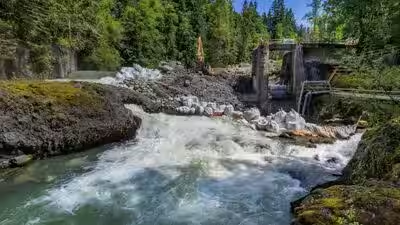
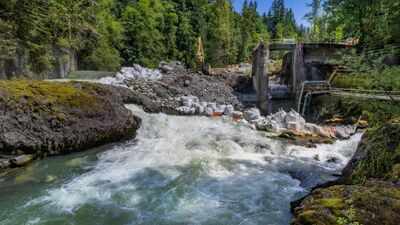
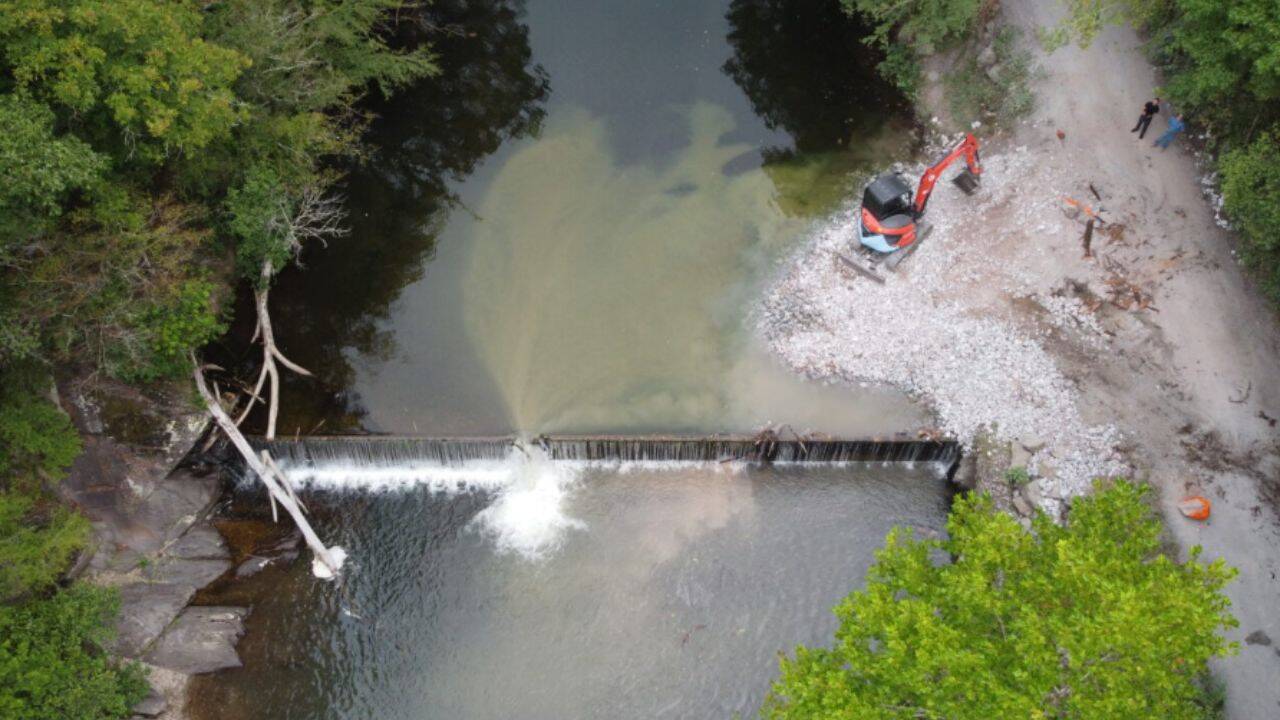
Dam removal on the Middle Fork Nooksack River, Washington (American Rivers photos)

The United States removed 100 dams across 30 states in 2025, reconnecting more than 4,893 miles of rivers, according to a report by the organisation American Rivers. The organisation said it was the largest number of upstream river miles reconnected through dam removal in a single year in the US.The removal of these dams has allowed water to flow freely again in places where rivers had been blocked for decades, and in some cases, for centuries. The work is also helping restore access to habitats used by fish and other wildlife.Pennsylvania removed the highest number of dams in the US in 2025, with 14 structures taken out. The state now has 433 documented dam removals since 1912.Other states in the Northeast also recorded significant numbers. Massachusetts removed 11 dams in 2025, while Vermont removed nine. Flooding in both states has highlighted the need to address failing dams and undersized road-stream crossings.

Why are old dams being removed?

Many dams in the US are no longer serving the purpose for which they were originally built. The country has more than 500,000 dams in its national inventory, and many are no longer generating power, supplying water or serving another practical purpose. At the same time, they can affect river ecosystems and public safety.Dams can change the way rivers naturally flow. When a dam blocks a river, it can prevent fish from reaching spawning areas upstream. Water held behind dams can also become warmer and more stagnant. Additionally, some ageing can also create safety risks and increase flooding concerns during storms.Ecology was the most commonly cited reason for dam removal in 2025. It was given as a reason for 59 of the 100 projects completed during the year. Dilapidated or failing structures were the second most common reason, with 37 projects. Safety concerns were cited in 20 projects.The effects can begin soon after a dam is removed. The report said bugs can return within days, while native fish can reach sections of rivers they had been unable to access for generations within weeks.
Lower Citico Dam removal, Citico Creek, Tennessee

Lower Citico Dam removal, Citico Creek, Tennessee

Restoring wildlife habitat

Some of the projects completed in 2025 show how removing a single structure can reconnect large parts of a river system. In Iowa, the Forest City Dam was removed from the Winnebago River. The project reconnected 99 upstream miles for fish passage and opened wetland spawning habitat for northern pike. It also reduced flood risk to a local park.In Delaware, the historic DuPont Experimental Station Dam on the Brandywine River was removed as part of a wider effort involving multiple dams. A previous dam removal upstream in 2019 had already helped change the river. After that project, American shad were seen spawning in the Brandywine in Wilmington for the first time in more than 100 years.The return of the fish showed how river restoration can affect species that had been unable to reach parts of their former habitat for generations.In Virginia, the Georges Mill Dam was removed from the South Mayo River. Seven people had drowned at the site over the years. Removing the dam improved passage for the endangered orangefin madtom and also removed a site that had become a serious safety hazard.Another major project took place in Maine. The removal of Mill Pond Dam on the Sabattus River was part of a wider effort to open access to 2,429 acres of spawning habitat and 75 miles of stream for sea-run fish.The area could support an annual run of more than one million adult alewives. The fish are an important food source for wildlife, including eagles and whales.

Cultural importance

Dam removal projects are also connected to the cultural practices of Indigenous communities in some places. In California, the Jenny Creek Diversion Dam near the Klamath River was removed by Trout Unlimited and the state Department of Fish and Wildlife. The Yurok Tribe and Shasta Indian Nation also took part in the cleanup and cultural monitoring.A similar restoration effort took place in Utah’s Zion National Park, where the Temple of Sinawava Dam was removed. The project was part of an effort to restore the Virgin River, which is a Wild and Scenic River.American Rivers said the 2025 projects also showed the role of local communities, government agencies, conservation groups and Tribal Nations in restoring rivers. It now wants to build on the progress made in 2025 and its target is to remove 30,000 dams by 2050.




Source link

‘Small revolution’: France bans unsolicited telemarketing calls without consent


‘Small revolution’: France bans unsolicited telemarketing calls without consent
A person uses his phone near the Eiffel Tower in Paris, Wednesday. (File Photo)

France has banned unsolicited telemarketing calls unless consumers have given prior permission, in a move described by a consumer advocacy group as a “small revolution” for consumers.The ban, which took effect on Tuesday, applies to businesses across all sectors. Companies can still contact customers about an existing contract, but they must obtain consent before making marketing calls.A 2025 parliamentary report found that 97% of people in France were annoyed by unsolicited sales calls. It also found that 72% of French people received calls on their mobile phones at least once a week, while 38% said they were contacted daily.The report described telemarketing as “one of those rare issues that unites people in France”.Businesses making marketing calls will now need prior approval from consumers and must retain evidence of that consent.Consumer advocacy group Que Choisir Ensemble welcomed the move, calling it a “small revolution” for the sales industry.“It cannot be stressed enough that peace and quiet is a right, and it is time to stop exposing consumers to unwanted solicitations,” the group said in a statement.Its president Marie-Amandine Stévenin said the issue extended beyond telephone marketing.“This observation also holds true online and on the street, which are saturated with demands to consume,” she said.Stévenin said the organisation had long campaigned “for an end to the automatic assumption that someone in their home or private life is a potential customer.”“This is a victory for consumers, the vast majority of whom do not want to receive sales calls,” she said.The new restrictions have raised concerns among businesses and in Morocco, where the call-centre industry relies heavily on the French market.A Moroccan government minister estimated that the restrictions could put up to 50,000 jobs at risk, according to a report in newspaper Le Matin.France’s direct-selling industry has also criticised the new requirements.Frédéric Billon, head of the Fédération de la Vente Directe (FVD), said companies would face additional administrative burdens.“You’ll have to obtain written consent from your customer, and you’ll also have to keep proof of that consent,” Billon said in comments reported by the New York Times.

European countries take different approaches

France’s move comes as Germany, Austria and Italy already have restrictions on unsolicited telemarketing calls.The UK has a less restrictive approach. Most cold calls remain legal as long as the recipient has not objected and the number is not on the statutory list covering people or businesses that do not wish to receive such calls.


Source link

With a massive 242,000 acres, Bill Gates is the largest private farmland owner in the United States | World News


With a massive 242,000 acres, Bill Gates is the largest private farmland owner in the United States
William (Bill) H. Gates, founder, technology advisor of Microsoft Corporation. Image Credit: Ken Shipp/ Wikimedia commons

Bill Gates, the co-founder of Microsoft, has shifted from a global technology leader into the most significant private owner of farmland in the United States. His portfolio now spreads to approximately 242,000 acres of agricultural land, which represents a massive investment in the nation’s soil. His name is sometimes associated with software and global health initiatives, but the shift into the agricultural sector highlights a growing trend of wealthy private interest in rural property.Much of these holdings are concentrated in the southern states, particularly in Louisiana and Arkansas, where vast stretches of productive land are now managed by his investment. This development has given rise to a widespread conversation among agricultural communities and economists about the impact of non-farming landlords.

Total amount of farmland owned by Bill Gates in the US

According to ‘Arkansas Money & Politics,’ Gates has accumulated a total of 268,984 acres of land across the country. The majority of this contains farmland, but the portfolio also includes more than 25,000 acres of transitional land and over 1,200 acres used for recreation. The distribution of these holdings is particularly dense in the Delta region. In Louisiana, the Gates family owns 69,071 acres, which represents more than a quarter of their entire land portfolio. Arkansas is close to this number, with total holdings of 47,927 acres.Despite these vast numbers, the Associated Press reports that Gates does not own the majority of American farmland. To put it in perspective, the United States Department of Agriculture reported there were roughly 895 million total acres of farmland in the country in 2021. This means that Bill Gates is indeed the largest private owner, but his holdings account for less than 1% of the total agricultural land in the US.

Total amount of farmland owned by Bill Gates in the US

Image Credit: Wikipedia

Why Bill Gates is investing heavily in the American soil

Bill Gates has indicated that his investment group is focused on environmental and scientific goals. As reported by the Associated Press, he suggested that these acquisitions are connected to the development of more productive seeds and the advancement of biofuels. He believes that better seeds can help in preventing deforestation and help regions like Africa in dealing with climate difficulties. Furthermore, he noted that cheap biofuels could eventually solve emissions problems in the aviation and trucking industries.However, there is also a clear financial logic to these purchases. Research fromLouisiana State University (LSU) explains that farmland has become a highly attractive alternative investment. Historically, farmland has acted as a hedge against inflation, which means that its value sometimes rises even when the purchasing power of money falls. The thesis notes that agricultural assets are different from traditional financial assets like stocks.

Private investment as a wider trend in American agriculture

The rise of Bill Gates as a landlord is part of a larger shift in how American land is owned and managed. The National Farmers Union points out that nearly 40% of US farmland is now owned by non-farmers who rent the land out to agricultural producers. In some specific regions, this figure is as high as 80%. This ‘financialisation’ of the countryside is causing the farmland to move from local families to the portfolios of pension funds, private equity firms, and wealthy individuals.

Private investment as a wider trend in American agriculture

A centre pivot irrigation system on a field. Image Credit: Laura Wilson farm , USDA Natural Resources Conservation Service

Concerns for the future of farmland in the United States

The National Farmers Union warns that the entry of wealthy investors like Bill Gates has pushed up the price of farmland, which makes it almost impossible for small-scale farmers to buy their own property. Since 1970, the price of an average acre of American farmland has more than tripled when adjusted for inflation. This has led to a situation where just 13% of farming operations now control 75% of the country’s cropland.There are also environmental concerns. The National Farmers Union explains that when farmers only rent land on short-term leases, they become less motivated to invest in long-term conservation practices like protecting soil and water quality. Landowners without agricultural experience may not understand the importance of these natural resources or may be unwilling to spend that rental income on the efforts for conservation. Roughly 400 million acres of land is expected to shift from one owner to the next in the coming decade, which suggests that the battle over who owns the American soil, and how they treat it, is just beginning.


Source link

California is developing a smart mooring line that could detect whale entanglements and monitor floating wind turbines |


California is developing a smart mooring line that could detect whale entanglements and monitor floating wind turbines
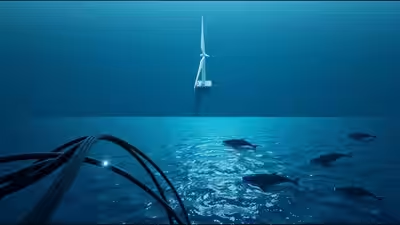
Representative Image of a floating wind turbine monitored by fibre optic cables in deep ocean waters (AI-generated image)

California’s push into offshore wind energy faces a problem most coastal states never had to solve. The state’s strongest winds sit far from shore in water too deep for turbines fixed to the seafloor, meaning any large-scale project has to rely on floating structures instead. Floating turbines bring their own headaches, since constant wave motion, shifting tidal loads and long distances from land make routine inspection and maintenance slow and expensive. Researchers are now trying to turn one part of that same structure into the solution. With funding from the California Energy Commission, a team led by Lawrence Berkeley National Laboratory is developing a smart mooring line fitted with fibre optic sensors that can monitor a turbine’s structural health while also listening for whale calls and detecting the moment a whale becomes entangled nearby.

Why floating wind turbines need a different kind of monitoring

Most offshore wind farms built so far, including those along the American Atlantic coast, sit in shallow enough water to use fixed bottom foundations anchored directly into the seabed. California’s coastline offers no such option for much of its strongest wind resource, since the continental shelf drops off quickly, leaving floating platforms as the only realistic path to capturing that energy. According to Lawrence Berkeley National Laboratory’s own account of the project, California’s Pacific waters can be strong enough only 20 miles offshore to generate more than double the energy of shallower sites, but the depth involved makes floating systems the only viable choice for much of that potential. Floating structures also experience far more constant motion than fixed ones, which complicates both their design and the ongoing task of keeping them safe to operate.

How fibre optic cables can sense strain, vibration and sound

The technology at the centre of the project relies on distributed fibre optic sensing, a method that sends light down a thin glass-cored cable and analyses how that light scatters and returns. According to a project description from the California Energy Commission, this approach allows operators to monitor vibration, strain and temperature throughout a structure continuously rather than relying on periodic manual inspection. The same cables can also pick up ambient underwater sound, including whale vocalisations, meaning a single sensing system embedded into a turbine’s mooring line could simultaneously track the health of the structure itself and monitor marine life moving through the surrounding water.

What earlier testing revealed about the technology’s sensitivity

This is not the first time researchers have tested fibre optic sensing on offshore wind hardware. A study titled Structural health monitoring of offshore wind turbines using distributed acoustic sensing (DAS), published in the Journal of Civil Structural Health Monitoring and led by James T. Xu alongside Berkeley Lab scientist Yuxin Wu, tested a full-scale, 25-metre-tall wind turbine tower on a shake table at the Pacific Earthquake Engineering Research Centre at the University of California, Berkeley. Researchers subjected the tower to bending and multidirectional shaking meant to simulate the kind of ocean-driven stress a floating turbine would face, while fibre optic cables installed throughout the structure tracked how it deformed under pressure. One of the study’s clearest findings was that the sensing system proved sensitive enough to detect loose bolts at the tower’s joint connections, a routine maintenance issue that can otherwise go unnoticed until it becomes a serious structural problem.

Why the mooring line itself is becoming a sensing device

Building on that earlier structural work, the smart mooring project extends the same underlying sensing approach to the cables that anchor a floating turbine to the seafloor. Rather than functioning purely as a mechanical connection, the mooring line becomes an active monitoring system in its own right, continuously reporting on both its own structural condition and the activity occurring in the water around it. The California Energy Commission has identified real-time entanglement detection, structural monitoring and environmental acoustic monitoring as the project’s central goals, reflecting a dual purpose rarely combined in a single piece of offshore hardware.

What this could mean for whales living near future wind farms

Whale entanglement in fishing gear and other underwater lines remains a serious and closely tracked risk in ocean conservation, and floating wind farms introduce yet another set of mooring cables into waters whales regularly pass through. A sensing system capable of detecting both a whale’s call and a physical tug on the line offers a way to catch potential entanglements as they happen rather than after the fact, giving operators a chance to respond in near real time. Berkeley Lab researcher Yuxin Wu, who has led earlier fibre optic testing on turbine towers, has described the long-term goal as building what amounts to a nervous system for offshore wind structures, one capable of reporting on its own condition continuously rather than waiting for scheduled human inspection.

Why this approach could shape future offshore wind projects

If the smart mooring system performs as intended, researchers say the underlying concept could extend well beyond California’s coastline to any floating offshore wind project operating in waters shared with marine mammals. Better monitoring of how these structures interact with the ocean around them could also inform how future wind farms are sited and operated more broadly, offering regulators and developers more direct evidence of a project’s real environmental footprint rather than relying on periodic surveys alone. As floating offshore wind moves from early pilot projects toward larger-scale deployment along the Pacific coast, technology capable of listening as carefully as it measures could end up shaping how, and where, these turbines are allowed to operate.


Source link

Decades before Trump’s secret plane swap, Bill Clinton used a decoy to land in Pakistan; reporter reveals how


Decades before Trump’s secret plane swap, Bill Clinton used a decoy to land in Pakistan; reporter reveals how
More than 25 years later, Trump revives Clinton-era flight switch tactic

When then-US President Bill Clinton arrived in Islamabad, Pakistan, in March 2000, a decoy aircraft bearing Air Force One markings landed in view of the media, followed by a Secret Service agent resembling Clinton. An unmarked aircraft then landed, carrying the president, who disembarked from it.Susan Page, a White House reporter for USA Today at the time, was among a small group of people who knew about the operation.Before Clinton’s flight from India to Pakistan, White House officials summoned Page, who was then president of the White House Correspondents’ Association, for an off-the-record briefing. White House press and security officials told her about the operation, including Clinton’s location and the safety measures in place for journalists travelling with him, Page told The Washington Post in messages.The briefing meant that at least one journalist travelling with the presidential press corps knew that Clinton would not be aboard Air Force One.“They told me about the extraordinary security procedures being taken because of the dangers in flying there, including use of the decoy plane,” Page was quoted as saying by The Washington Post. “Of course, the dangers threatened the journalists covering the trip as well as President Clinton.”“I haven’t spoken about this episode before, because of the off-the-record ground rules of that discussion,” Page said through a text message. “But since more than a quarter-century has passed — and since the ruse became evident as soon as President Clinton disembarked in Pakistan — I think it’s OK for me to relay it now.”The White House press pool is a rotating group of journalists responsible for reporting on the president’s activities and sharing reports, photographs and video with the wider press corps. The formal system has been in place since 1937, although the White House first used a pool reporter in 1881 after President James Garfield was shot.Associated Press reporter Franklin Trusdell was stationed outside Garfield’s room, monitoring his condition and sharing updates with other journalists.The system is intended to ensure that a member of the press is present to observe the president’s movements and activities, providing the public with an independent account.

Trump left, others stayed

More than 25 years later, the White House faced a similar security challenge but handled the press differently. Last month, security personnel in Turkey secretly moved President Donald Trump from an aircraft marked as Air Force One to a smaller, unmarked Air Force plane using an airport catering truck. The operation was prompted by a credible Iranian threat to Trump, The Washington Post reported.More than 100 aides, officials and journalists remained aboard the larger Air Force One and continued flying towards Britain, most of them unaware that Trump had secretly switched aircraft on the tarmac, according to a US official.As the aircraft swap took place, reporters aboard the plane were instructed to keep their window shades lowered.Secretary of state Marco Rubio and treasury secretary Scott Bessent, who had accompanied Trump at the Nato summit in Ankara, were among those who stayed aboard the blue-and-white Boeing 747. Other White House staff, military personnel and members of the press also remained on the aircraft, most of them unaware of Trump’s whereabouts.

Trump acknowledges plane switch

US President Donald Trump has confirmed that he was moved to another aircraft while leaving Turkey last month, saying he followed instructions from the Secret Service and military after being told that the plane he had initially boarded faced a “greater risk”.“I go by Secret Service and the military. They wanted me to go on a different flight, a different plane… I do what they say… I guess there was a threat out there. I didn’t really ask too much about it. I get a lot of threats,” the US president said.“I think actually the plane that I flew on was at greater risk! I think it was at greater risk because that would be the plane, I think that they would be more likely to go for it,” Trump added.


Source link

New York, New Jersey declare August 15 ‘India Independence Day’ ahead of 80th anniversary


New York, New Jersey declare August 15 'India Independence Day' ahead of 80th anniversary
New York and New Jersey have issued separate proclamations for August 15 ahead of India’s 80th Independence Day. (Photo: @IndiainNewYork)

New York and New Jersey have issued separate proclamations for August 15 ahead of India’s 80th Independence Day, recognising Indian-American contributions and ties between India and the United States.The Consulate General of India in New York, posting from its X account India in New York (@IndiainNewYork), first announced New York’s proclamation and later shared the recognition issued by New Jersey.In the earlier post, the Consulate said New York was joining celebrations of India’s 80th Independence Day with “a special recognition of the enduring bonds between India and the United States”.New York Governor Kathy Hochul proclaimed August 15, 2026, as “India Independence Day” across the state. Thanking Hochul, @IndiainNewYork said the proclamation celebrated India’s journey of independence and the democratic values shared by India and the US.It also recognised the Indian-American community’s contribution to New York’s cultural, economic and civic life. The proclamation linked India’s freedom movement to nonviolence, truth, self-discipline and moral courage, and described Independence Day events in the US as occasions for cross-cultural harmony across generations.New Jersey followed with a separate proclamation from Governor Mikie Sherrill designating August 15, 2026, as “Indian Independence Day”.“New Jersey joins in celebrating India’s Independence Day,” @IndiainNewYork said while announcing the proclamation and thanking Sherrill for the recognition.The New Jersey proclamation credited Indian-Americans with contributions to education, healthcare, research, technology, business, public service and community leadership. The Consulate said it also celebrated the enduring India-US friendship and the growing partnership in education, commerce, technology, healthcare and cultural exchange.The proclamation further described India’s Independence Day as a tribute to those whose peaceful freedom movement inspired generations around the world and upheld ideals of justice, equality and human dignity.The proclamations come as India prepares to mark its 80th Independence Day. This year’s celebrations will also commemorate 150 years of ‘Vande Mataram’ and focus on ‘Yuva Shakti’, or youth power, with an emphasis on the achievements of students and young people.


Source link

Lake Erie fish gather near low-oxygen zones as scientists study how climate change could reshape their habitat |


Lake Erie fish gather near low-oxygen zones as scientists study how climate change could reshape their habitat

Lake Erie can look deceptively uniform from the surface. Beneath it, however, temperature, oxygen and nutrients divide the water into shifting layers, creating habitats that can change over surprisingly short distances. During the warmer months, parts of the lake’s deeper water can become depleted of dissolved oxygen, forming seasonal hypoxic zones that restrict where fish can remain. Scientists studying Lake Erie expected those conditions to alter how fish species used the water and interacted with one another. What they observed was less straightforward. Rather than simply retreating from oxygen-poor water, fish often gathered along the boundary of the hypoxic zone, occupying the narrow area where oxygenated and depleted waters met. That behaviour matters because it changes how scientists interpret fish distributions, food-web interactions and even fisheries data.

How Lake Erie hypoxia changes fish habitat and food webs

As per the US Geological Survey project, climate-related environmental changes could reshape aquatic food webs across the Great Lakes. Lake Erie was used as a representative system because it combines strong nutrient gradients, seasonal hypoxia and fish communities containing species adapted to different temperature conditions. The project examined fish communities, their distribution, available prey, diets and biochemical indicators across areas with different nutrient levels. The researchers also compared years in which rainfall, winter ice cover and thermal stratification varied considerably.The expectation was that periods of thermal stratification and low oxygen would produce clearer changes in dietary overlap and interactions between selected fish species. That was not what the observations showed. Instead, the USGS report states that the team found “fish tended to aggregate at the edges of hypoxia”. The seemingly small detail has a practical consequence: a fish population can appear more concentrated in a particular area not necessarily because the population itself has changed, but because environmental conditions have compressed its usable habitat.

Why the edges of hypoxic zones matter to Lake Erie fish

Hypoxia is often described as a dead zone, which can give the impression of a fixed patch of water that fish simply avoid. Lake Erie is more complicated. The position and intensity of low-oxygen water can shift, while the boundary between oxygen-rich and oxygen-poor conditions can be surprisingly dynamic. Earlier work associated with the same research programme found that dissolved oxygen near the edge of the hypoxic zone could move from normal conditions to anoxic conditions and back again within hours. The team used high-resolution instruments recording oxygen and temperature at short intervals to capture these changes.For a fish, that boundary is therefore not necessarily an invisible wall. It can represent a narrow strip of usable habitat, with conditions changing as the water column shifts. Later research on Lake Erie yellow perch reinforced the importance of this pattern, reporting that fish could aggregate around both the horizontal and vertical edges of hypoxic water. When oxygen-poor conditions were present, fish generally moved towards better-oxygenated water, but they did not necessarily move far away from the hypoxic zone.That distinction helps explain why the original result surprised the researchers. The fish were not simply choosing between “safe” and “unsafe” water on opposite sides of a line. Their movements were responding to a changing three-dimensional environment in which temperature, oxygen and habitat availability were interacting.

How climate change could affect fish communities in the Great Lakes

The project was designed around a broader question: how might climate change affect the way fish communities use the Great Lakes? Warmer conditions can alter thermal stratification, while changes in rainfall and nutrient inputs can influence the processes that contribute to oxygen depletion. In Lake Erie, these factors intersect with an already complex food web in which cold- and cool-water fish occupy overlapping but changing habitats. The researchers therefore collected information not just on where fish were found, but also on prey availability, diets and biochemical tracers that could reveal aspects of food-web structure.The important point is that a climate-driven change in habitat does not necessarily have to begin with a species disappearing from the lake. Fish may first redistribute themselves within the available water. That can bring species closer together in some places and separate them in others, changing access to prey and altering the apparent structure of the community. According to the report by USGS, some relatively straightforward indicators could be incorporated into existing monitoring programmes to track short-term changes in fish communities, while other measurements would be more useful for following longer-term ecological shifts. This makes the edge of hypoxia an unusually informative place to watch. It is where environmental stress and usable habitat meet. If the position of that boundary changes, the distribution of fish can change with it, even without an immediate change in the number of fish in the lake.

Why fish gathering near hypoxic zones can change catch rates

There is a less obvious consequence to fish gathering around hypoxic boundaries: fishing surveys can be affected by the same movement. If fish become concentrated into smaller areas, fishing gear may encounter them more frequently than it would if they were spread evenly through the lake. That can make a population seem larger or more abundant in survey data than it actually is. The USGS project specifically identified potential changes in catch efficiency as a consequence of fish aggregating near hypoxic edges.This issue was also observed in yellow perch, with increased catch rates reported in both commercial trap nets and scientific trawl surveys under some hypoxic conditions. The study linked this to the aggregation of fish along the horizontal and vertical margins of the hypoxic zone. Such “habitat compression” can make fish easier for fishing gear to encounter, complicating assumptions used in stock assessments about catchability being relatively consistent across space.The implications have already reached management. The USGS project contributed to an interim decision rule for handling data collected during hypoxic events in yellow perch stock assessment. Its observations of how the hypoxic zone varied in space and time also helped the US Environmental Protection Agency modify its sampling approach for measuring the central basin’s hypoxic area. The study sites later contributed to wider food-web monitoring under the binational Coordinated Science and Monitoring Initiative.What began as an attempt to understand climate effects on Great Lakes food webs therefore exposed something more immediate: fish do not always respond to environmental stress by simply leaving an affected area. In Lake Erie, some instead gather along its moving boundary. That narrow zone can influence where fish feed, how communities are distributed and how easily fisheries detect them. As climate, nutrients, temperature and oxygen continue to interact, understanding those shifting edges may be just as important as measuring the size of the low-oxygen zone itself.


Source link

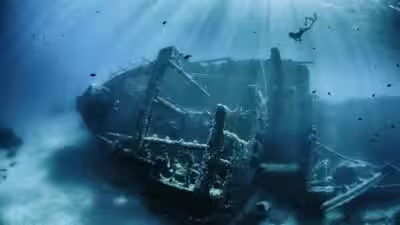
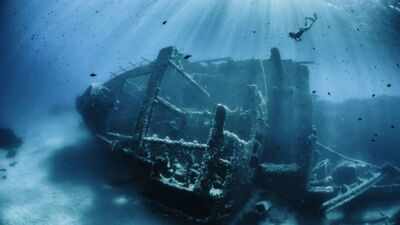
A Byzantine ship sank off Croatia more than 1,300 years ago; archaeologists have now recovered about 600 grams of gold that points to an imperial passenger


A Byzantine ship sank off Croatia more than 1,300 years ago; archaeologists have now recovered about 600 grams of gold that points to an imperial passenger

A shipwreck beneath the Mediterranean has recently revealed more gold than any other in the region to date. The vessel sank in the Adriatic Sea in the seventh or eighth century C.E. and its cargo included a gold signet ring likely associated with an emperor along with a gold belt encrusted with gems.More than 40 gold objects were found along with other luxurious imperial objects. The finds were located in the waters off the coast of Mljet, a Croatian island in the Adriatic Sea, which is home to more than two dozen sunken ships spanning nearly 2,500 years. But one stands out as “the most important shipwreck of its period,” opening up the portal into the little-known chapter in Byzantine history, according to Justin Leidwanger, an archaeologist at Stanford University as per Reuters.

The treasure trove

The vessel contained a rich cargo of four gold belt sets and a pseudo buckle decorated with emeralds, rubies and pearls, as well as coins minted under four emperors of the Heraclian dynasty. Excavations also revealed a gold signet ring that may bear the likeness of the dynasty’s founder, Heraclius, who ruled the Byzantine Empire between 610 and 641. Per a statement from the state-run Croatian Conservation Institute, which started surveying the wreck in 2015, the ring could only have been worn by a high-ranking official authorised to seal documents in the emperor’s name. When it comes to the trade context, there are amphorae, ceramic vessels, scales, weights, and ivory tokens and playing dice, all of which testify to the developed trade relations of the Byzantine Empire.Collectively, the gold treasures recovered from the sunken ship weigh more than 21 ounces, making the trove the largest of its kind “ever found on a shipwreck in the entire Mediterranean,” Igor Miholjek, the institute’s head of research, said to the outlet.The ship is believed to have sunk during the period once known as the Dark Ages, named after the widespread cultural decline that supposedly took place across Europe at the time. More recent research has debunked the myth of intellectual stagnation between roughly 500 and 1000, but written records from this period are scarce, and many aspects of the early medieval era remain poorly understood.“It’s a blank,” Francesco Borri, a medieval historian at the Ca’ Foscari University of Venice who wasn’t involved in the research, told National Geographic’s Roff Smith as per a report by Smithsonian Magazine. “That’s why the discovery of this ship is so exciting.”

How does the ship fit into the Byzantine Empire timeline?

According to Smith, the vessel sank “when the fortunes of the Byzantine Empire were at a low point and when some historians believe that the Adriatic was an impoverished backwater, virtually devoid of shipping.” The ship’s cargo suggests otherwise, testifying to continued maritime activity in the region.According to scholars, the interesting assortment of goods recovered from the wreck raises more questions than answers. Why was the ship carrying so much goldsmithing equipment? Were the luxury items intended as gifts and more? To find the answers, researchers plan to continue analysing artefacts associated with the wreck, in addition to revisiting the site in search of further evidence.For now, the exact nature of the doomed voyage remains unclear. But Miholjek told National Geographic that “whatever was going on here, this was no normal trading venture.” The presence of gold treasures directly linked to a Byzantine emperor suggests that a high-ranking official was travelling on the ship, perhaps at the head of a diplomatic party bringing gifts to a faraway ally. Alternatively, it’s possible that the individual was simply a wealthy elite who booked passage on an otherwise ordinary cargo ship.“The material evidence does not yet force a choice between those explanations,” medieval history enthusiast Luciano Anastasi wrote on his blog. “What it does rule out, or at least weaken sharply, is the image of a routine small-scale coaster carrying nothing but staple goods between neighbouring ports.”Miholjek announced that the results of the research will be presented to the public through a large exhibition accompanied by a catalogue and publication, and a documentary film about the work of the Department of Underwater Archaeology and the rich cultural heritage of the island of Mljet is also in preparation. The film is being shot by Paula and Đelo Jusić from the Adriaton production company, and the premiere is expected at the end of the year.


Source link

In 1983, an Atlantic City widow rejected $1 million for her home; in 1994, a state agency offered $251,250 and threatened eminent domain, but she ultimately won in court


In 1983, an Atlantic City widow rejected $1 million for her home; in 1994, a state agency offered $251,250 and threatened eminent domain, but she ultimately won in court

“Individual freedom finds tangible expression in property rights.” Those words, written by U.S. Supreme Court Justice Anthony Kennedy, capture a principle that lies at the heart of a free society. Yet across the country, that principle has often been tested, sometimes by powerful developers, sometimes by government agencies eager to serve private interests under the guise of public good.Few stories illustrate this tension more vividly than that of Vera Coking, an elderly widow from Atlantic City, New Jersey, whose modest boarding house became the centre of a decades-long legal battle involving Donald Trump, state condemnation powers and the limits of eminent domain, according to Institute of Justice.A home worth more than moneyVera Coking had lived in her three-story boarding house on Atlantic Avenue for more than 30 years. The property was not grand, but it was hers; a place of stability, independence and memory. In the early 1980s, as Donald Trump was expanding his casino empire in Atlantic City, he approached Coking with an offer to buy her home. According to later reports, Trump offered her more than $1 million, along with housing for life, if she would sell.Coking refused.She was not interested in the money. She wanted to stay in the home she had built a life in. For years, she turned down repeated offers from Trump and other developers. But the pressure did not stop.The state steps inIn 1993, Trump sought to acquire several properties adjacent to his Trump Plaza Hotel and Casino to build a limousine parking lot for high-rolling guests. Coking’s home stood in the way. When she continued to refuse to sell, Trump turned to a government agency, the New Jersey Casino Reinvestment Development Authority (CRDA), to intervene.The CRDA filed a lawsuit to condemn Coking’s property using the power of eminent domain, offering her just $251,250, far less than Trump’s earlier offer and a fraction of what the property might have been worth in a different market.Eminent domain allows governments to take private property for public use, provided just compensation is paid. But in this case, the stated “public use” was a parking lot for a private casino. For Coking and her legal team, that was a clear abuse of power.A legal battle for principle

Representative image

Representative image

Coking refused the offer and fought back. With the help of the Institute for Justice, a public-interest law firm dedicated to defending property rights and individual liberty, she challenged the condemnation in court.The case dragged on for years. Coking, then in her 70s, became a symbol of resistance, a small homeowner standing up to a billionaire developer and the machinery of the state. Her story drew national attention, raising questions about how far governments should go to serve private interests under the banner of economic development.In July 1998, a New Jersey Superior Court judge ruled in Coking’s favour. The court found that the condemnation served private interests, specifically Trump’s, rather than a legitimate public purpose. The judge noted that there were insufficient assurances that the property would actually be used for the stated purpose and that the CRDA had failed to demonstrate a genuine public use for the taking.Thanks to the Institute for Justice’s advocacy, Vera Coking won in court and was able to remain in her home for more than a decade after the ruling.A folk hero, and a final chapterCoking’s victory made her a folk hero in Atlantic City and beyond. She had done what many thought impossible: she had beaten Donald Trump and the state in a legal fight over her home.But the story did not end there. In 2011, at the age of 86, Coking decided to move to California to be closer to family. She put her property up for auction. Bidding started at $199,000, reflecting Atlantic City’s depressed real estate market at the time. The home eventually sold for $530,000 plus commission to an anonymous buyer.Even in sale, Coking’s legacy endured. She had resisted decades of overtures from developers, including Trump, who later claimed he had offered her millions. She had stood firm when the state tried to take her home for a private project. And she had won.Why the case still mattersThe Vera Coking case is more than a local property dispute. It reminds us of the fragility of property rights when governments become agents of powerful private interests. Supposedly, eminent domain is for the public good, but it can be perverted to serve private gain. Political and economic expediency can trump constitutional protections.The triumph of coking showed you can push back. It demonstrated that ordinary people, armed with the right legal support, could stand up to even the mightiest of foes.Today, Vera Coking’s story remains relevant as the debate over development, gentrification and government power continues. This is evidence that property rights are not just about land and buildings, they are about dignity, autonomy and the right to say no.In the end, Coking did not just keep her home. She defended a principle. In so doing, she became a symbol of standing up for individual freedom in the face of overwhelming pressure.


Source link

Meet Rosie, the five-year-old who turned a princess-dress scooter ride into a £4,000 fundraiser for her friend


Meet Rosie, the five-year-old who turned a princess-dress scooter ride into a £4,000 fundraiser for her friend

Not all superheroes wear capes, some don tiaras and do the good work such as five-year-old Rosie. After befriending Sid at a birthday party and learning he uses a wheelchair due to having spinal muscular atrophy type 1 (SMA1), a condition which causes muscle weakness and a lack of motor neuron function in infants, she wanted to help.Rosie set herself a challenge, to scoot four miles in her favourite princess dress and so far, she has raised over £4,000, all to help her friend.Rosie’s mother, Michelle, said Rosie was curious about Sid’s condition and became “quite emotional” when she learned of some of the difficulties he faced. “Sid is a wheelchair-user and Rosie had questions around that,” Michelle said to the BBC. The mother said she explained to Rosie about SMA1 and how Sid’s parents had been raising funds to make their home more accessible. “Rosie wanted to raise money to help Sid. I initially struggled to think what she could do, given she’s only five,” she added.In the end, it was decided that Rosie would take on a 6.8 km (4.2 mile) scooter challenge, completing a lap of Leybourne Lakes Country Park in her favourite princess dress. “She’s never been all the way round the park before, but we’re confident she could do it,” Michelle said.“Every penny gets Sid closer to the house adaptations he and his family so desperately need,” Michelle said. A date for the scooter challenge has not yet been set, due to weather conditions.According to the charity Tree of Hope, Sid was treated with the £1.8m single dose of gene therapy Zolgensma. There is still no cure for SMA, but medications and therapies can help manage the condition.Sid’s mum Sophie said they needed a through-floor lift, which requires an extension including an accessible bedroom and bathroom. “He’s big for his age and, with low muscle tone, it’s unsafe to carry him, especially on the stairs,” the 37-year-old said. “Last year he broke his arm falling off the toilet, so we’re desperate to make our home accessible.”The entire work, she said, would cost £138,000. She added that she was “grateful” for every donation and especially thankful to Rosie’s “incredibly thoughtful” support. The family is being supported by Tree of Hope, which helps families navigate their child’s healthcare journey by offering a fundraising service. “We’re really pleased to be supporting Sid’s family as they raise funds for the home adaptations he needs,” said chief executive Becky Andrew.


Source link