


Texas avoided a huge electricity crisis and blackout risk, thanks to the massive 20,000-megawatt solar buffer | World News


Texas avoided a huge electricity crisis and blackout risk, thanks to the massive 20,000-megawatt solar buffer
Solar panel installation, Krugerville. Image Credit: Ken Oltmann/US Department of Energy

Texas has relied on its old thermal power plants for a long time, but a massive shift is currently reforming the state’s electric network. The Electric Reliability Council of Texas(ERCOT), the body responsible for managing the majority of the state’s power flow, has supervised a required change towards renewable energy sources. This transition reached an important milestone during the cruel heat of July 2024.It broke many all-time records for energy demand, but still the grid remained stable, and avoided the conservation notices that had filled its basket for many years. This new resilience is because of a rapid expansion of solar panels and battery systems. These technologies provided a large safety margin, securing the grid from the extreme stress during peak summer demands. Texas continues to move ahead of other regions in green energy adoption, but it also faces a balancing act between innovation and future reliability.

Solar power becoming the silent saviour of Texas

In late July 2024, the state experienced a hard test of its electrical framework. On July 21st and 22nd, the Electric Reliability Council of Texas (ERCOT) managed record-breaking demand that was not registered as a crisis. This stability became possible because solar infrastructure provided a 20,000 megawatt buffer to protect the grid.The Dallas Federal Reserve reports that between June and August of that year, solar generation contributed nearly 25% of the total power needs of the state during the hottest hours of the day. Energyscape Renewables reports that Texas now has the fastest-growing solar market in America, by installing 7.4 gigawatts in the first 9 months of 2025, which is almost double of California’s output. This growth has shifted a system which was vulnerable at a time, to a national leader in renewable integration.

Solar power becoming the silent saviour of Texas

Solar array in Austin. Image Credit: Larry D. Moore/Wikipedia

How are batteries changing the landscape of renewable energy in Texas

Modern solar projects are not just about panels, they are majorly defined by storage. Energyscape Renewables points out that 85-90% of new solar installations now have battery systems as a standard feature. During evening hours, when demand remains high but solar output decreases, battery output fills the gap.The Dallas Federal Reserve highlights a record-breaking moment in August 2024 when battery facilities provided 3,927 megawatts to support the grid during a peak load event. This capacity has brought a new economic principle known as ‘arbitrage,’ where operators charge batteries when prices are low and sell energy when it is most expensive. However, the Dallas Fed also reports that when more batteries enter the market, they may bring down the prices, which can affect the profitability of these storage projects.

Is the current infrastructure ready for future demands

The electricity demand of Texas is growing at great speed. The Baker Institute for Public Policy claims that a strong population growth and robust economic activity are primary drivers of this increasing demand. New sectors such as cryptocurrency mining, electric vehicles, and large-scale data centres are placing a huge pressure on ERCOT. Data centres alone could cover almost 156 gigawatts of new load by the end of the decade.However, the Baker Institute warns about significant ‘geographic inconsistency’ between where power is generated and where it is consumed. Problem in transmissions is an ever present issue, with limitations in nearly 78% of operating intervals during the summer of 2023. To address this, Energyscape Renewables reports that ERCOT has approved a ‘$33 billion transmission backbone’ to update the grid and remove the limitations.
Is the current infrastructure ready for future demands

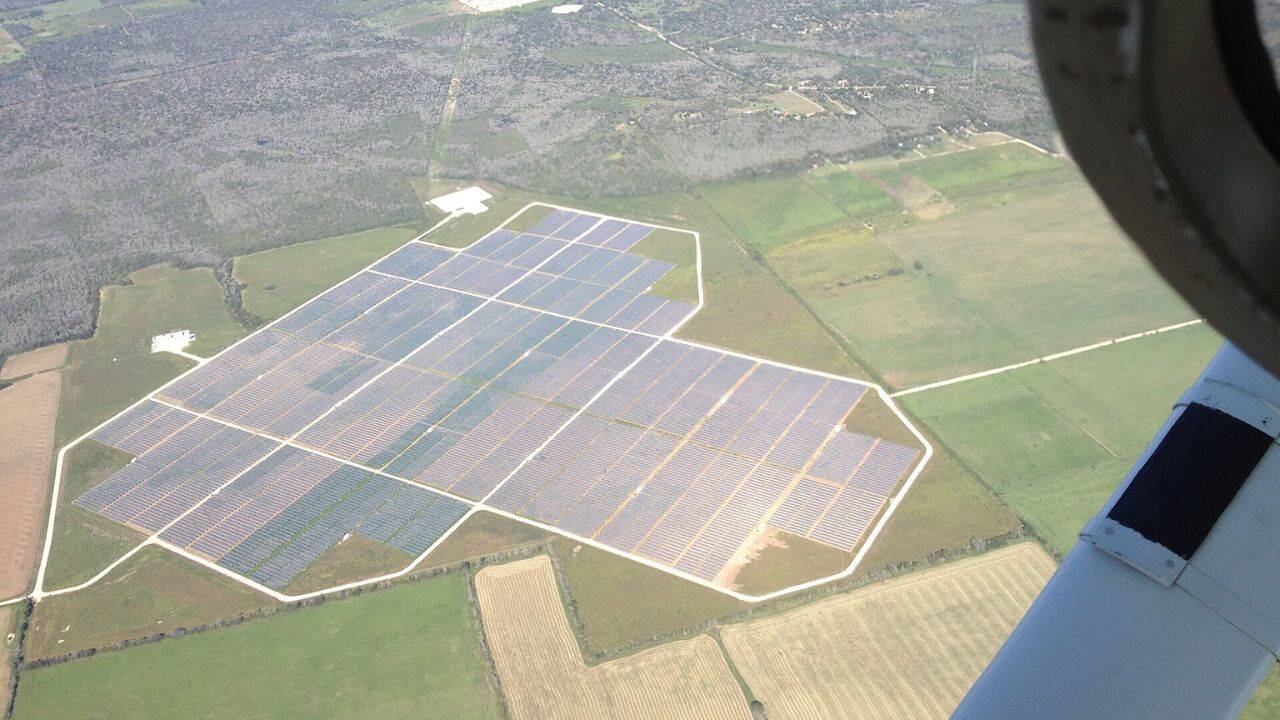
Aerial Photo of Webberville Solar Farm in Texas. Image Credit: Wikipedia

What are the possible challenges for the winter season

Winter presents a different set of challenges. The Dallas Federal Reserve warns that the pairing between the panel and the battery that works so well in the afternoon heat, is less effective during cold winter mornings. On cold days, peak demand usually occurs before sunrise, which makes the grid dependent on thermal sources like natural gas and coal.The Baker Institute notes that there has been limited investment in these generation sources, which are necessary to provide a backup plan when renewable sources are unavailable. This creates a situation where reliability must be treated like an insurance policy, which requires a mix of resources to protect high-impact weather events.The transition of the Texas energy market represents a massive shift towards a resilient electrical grid. The state’s solar industry is valued at approximately $50.1 billion. However, the Baker Institute suggests that the real challenge is the inclusion of reliability in the model to ensure long-term stability. Balancing the fast adoption of renewable technology with the need for steady, reliable power will define the next chapter of Texas’s energy ecosystem.


Source link

2,300-year-old beer, well preserved inside an ancient bronze bottle containing nearly a gallon of liquid with more than 2,400 chemical compounds, was discovered by archaeologists |


2,300-year-old beer, well preserved inside an ancient bronze bottle containing nearly a gallon of liquid with more than 2,400 chemical compounds, was discovered by archaeologists

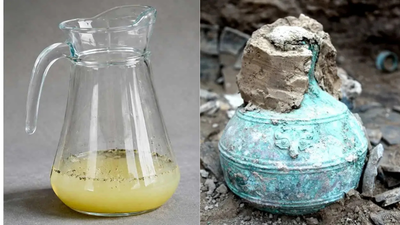
Archaeologists in China have uncovered an extraordinary alcoholic drink that remained remarkably well preserved for more than 2,000 years inside an ancient bronze bottle. The vessel, recovered from a Qin-period tomb at the Shanjiabao cemetery in the Ningxia Hui Autonomous Region, contained about 3.74 litres of pale blue-green liquid, equivalent to nearly a gallon. Scientific analysis detected more than 2,400 organic compounds in the ancient liquid, along with starch grains, phytoliths and yeast remains. The evidence suggests that the drink was a cereal-based alcoholic beverage made from broomcorn millet, with wheat or barley also involved. The discovery offers a rare glimpse into brewing practices during China’s Warring States period.

2,300-year-old beer was found inside an ancient bronze bottle

The remarkable vessel was discovered in Tomb M39 at the Shanjiabao cemetery in the Ningxia Hui Autonomous Region of north-western China. The cemetery contains 183 tombs dating to the Warring States period, which lasted from 475 to 221 BC. The findings were detailed in a study published in the Journal of Archaeological Science: Reports, in which researchers from Northwest University and other institutions examined the vessel and its contents.The tomb was associated with the Qin state, which eventually unified China under Qin rule. The bronze vessel discovered inside it has a distinctive garlic-shaped mouth and is believed to have been used for storing alcoholic beverages. The research team examined the vessel’s construction, contents and burial conditions to understand how the ancient liquid survived for more than two millennia.Researchers found that the bottle had been sealed with textile material on the inside and organic-tempered daub on the outside. According to the study, this unusual sealing arrangement, combined with the relatively dry local environment and burial conditions, may have helped protect the liquid from evaporation and contamination.The quantity of liquid found inside the vessel is one of the most remarkable aspects of the discovery. The researchers recovered approximately 3.74 litres, or nearly a gallon, of liquid along with sediment. The study notes that such a large surviving volume provides an unusually valuable sample for investigating ancient alcoholic beverages.The liquid appeared clear and light blue-green and had no noticeable odour when examined. The amount is unusually large for an ancient alcoholic beverage discovery because archaeologists more commonly recover only small residues left on the walls or bottoms of ancient containers.Having several litres of surviving liquid allowed the research team to conduct detailed chemical and microscopic analyses, helping them identify compounds, plant remains and evidence of fermentation. These analyses formed the basis for reconstructing the ingredients and brewing practices associated with the ancient beverage.

The ancient drink contained more than 2,400 compounds

Scientists subjected the liquid to several forms of chemical analysis to determine its composition. Their investigation detected more than 2,400 organic compounds, which were grouped into 24 broad classes.The compounds included amino acids, fatty acids, carbohydrates and other substances associated with fermentation and plant ingredients. Researchers also detected notable quantities of lactic acid and oxalic acid.The chemical profile provided evidence that the liquid was not simply groundwater that had entered the ancient tomb. Instead, it showed characteristics consistent with a fermented alcoholic beverage.

Researchers found clues to its ancient ingredients

Microscopic analysis of the material provided further evidence about what the ancient drink was made from. Researchers identified starch grains associated with broomcorn millet and members of the Triticeae group, which includes wheat and barley.The findings suggest that the beverage was made using cereal grains rather than being a simple fruit-based wine. Yeast remains were also identified, providing evidence that fermentation had occurred.The combination of chemical compounds, plant remains and yeast helped researchers reconstruct aspects of the brewing process used by people in ancient China.Although the discovery has been widely described as 2,300-year-old beer, the scientific evidence supports the more cautious description of a cereal-based alcoholic beverage.The drink would not have resembled a modern lager or other commercially produced beer. Researchers believe it was a non-distilled beverage made from cereals and fermented using ancient Chinese techniques.The study suggests that qu, an ancient fermentation starter made using moulded grains and microorganisms, played a role in the process. Qu was an important component of traditional Chinese alcohol production and could contain a combination of moulds, yeasts and bacteria.

The bronze vessel may have helped preserve the drink

The survival of the liquid for more than 2,000 years raises an obvious question: how did it remain inside the bottle for so long?Researchers believe several factors may have worked together. The relatively dry local environment probably reduced deterioration, while the bronze vessel provided a durable container.The sealing method was also likely important. The textile and organic-tempered daub used to close the vessel may have restricted exposure to the surrounding environment and helped prevent the liquid from evaporating.The researchers have suggested that the preservation was probably the result of the vessel, sealing technique and burial conditions working together.

The drink may have had a funerary purpose

The bronze bottle was found inside a tomb, suggesting that the beverage may have been placed there for a funerary or ritual purpose.Alcohol played an important role in ancient Chinese society and was used in ceremonies, feasts and offerings. Placing an alcoholic drink inside a tomb could therefore have had symbolic significance.However, researchers cannot say with certainty why this particular beverage was buried with the deceased. The idea that it was intended specifically for the person’s enjoyment in the afterlife remains an interpretation rather than a proven fact.

The discovery reveals ancient brewing practices

The finding provides researchers with rare physical evidence of brewing technology during the Warring States period.The presence of broomcorn millet together with possible wheat or barley shows that ancient brewers could use different cereal ingredients in alcoholic beverage production. The chemical evidence and fermentation remains also demonstrate that these drinks involved complex biological and chemical processes.The researchers say discoveries such as this provide valuable archaeological evidence for increasingly specialised brewing practices during the late Zhou and Qin periods.

China had an ancient tradition of alcohol production

The 2,300-year-old beverage is remarkable, but it is not the oldest evidence of alcohol in China. Archaeologists have found evidence of fermented drinks dating back thousands of years earlier.Research from Neolithic sites has identified evidence associated with early rice and millet-based alcoholic beverages. Some discoveries indicate that ancient communities were experimenting with fermentation long before the Warring States period.The Shanjiabao discovery is particularly valuable because of the large quantity and exceptional preservation of the surviving liquid. Rather than studying only chemical traces left behind in a vessel, researchers were able to analyse several litres of ancient fermented material.The discovery therefore offers an unusually detailed glimpse into what people in ancient China were brewing and how they produced alcoholic drinks more than two millennia ago.


Source link

Nasa’s New Horizons reached Arrokoth in 2019, revealing a frozen world that preserves clues to the early solar system |


Nasa’s New Horizons reached Arrokoth in 2019, revealing a frozen world that preserves clues to the early solar system

When Nasa’s New Horizons spacecraft left Pluto behind, its journey was far from over. The probe had already travelled farther than any spacecraft sent specifically to explore Pluto, but it continued into the dark outer reaches of the solar system. On 1 January 2019, New Horizons passed a small object in the Kuiper Belt that had never been seen up close before. The object, now called Arrokoth, was roughly four billion miles from the Sun and appeared in the spacecraft’s images as two rounded lobes joined at a narrow middle. It looked simple from a distance. Up close, however, its shape, surface and chemistry offered scientists an unusually well-preserved glimpse of the material from which the early solar system was assembled.

Why Nasa named the Kuiper Belt object Arrokoth

New Horizons launched in January 2006 with Pluto as its main destination. After using Jupiter for a gravity assist in 2007, the spacecraft continued towards the outer solar system and eventually made its historic Pluto flyby on 14 July 2015. The encounter transformed Pluto from a distant point of light into a world with mountains, plains, valleys and an atmosphere.The spacecraft did not stop there. Beyond Neptune lies the Kuiper Belt, a broad region populated by small bodies made largely of frozen material left over from the solar system’s formation. New Horizons was directed towards one of these objects after its Pluto encounter. The target was first discovered in 2014 by members of the New Horizons team using the Hubble Space Telescope and was initially designated 2014 MU69.Nasa later gave it the name Arrokoth, a Powhatan/Algonquian word meaning “sky”. According to Nasa, the name was chosen with the consent of Powhatan tribal elders and representatives and was formally submitted to the International Astronomical Union and the Minor Planet Centre.By the time New Horizons approached Arrokoth, scientists knew very little about what they would find. Even from Earth, the object was too small and distant for its physical form to be clearly resolved. The spacecraft’s encounter changed that within hours.

Nasa New Horizons reveals Arrokoth’s unusual two-lobed shape

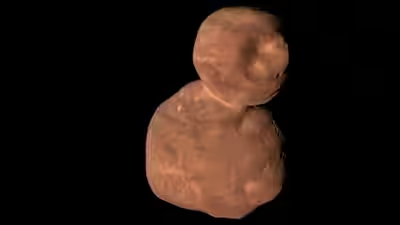
The first detailed images revealed something unlike the usual mental picture of a small asteroid. Arrokoth had two distinct lobes, one larger than the other, connected by a comparatively narrow region. The outline gave it the appearance of two snowballs that had come together and remained attached. The shape was not simply an unusual feature of its surface. It carried information about how the object itself formed.According to Nasa, the two lobes were probably separate bodies in the early solar system that orbited one another before eventually merging at a very low speed. The collision was gentle enough that neither body was shattered. Instead, the pair came together and remained as a single object. That matters because many objects in the solar system have been altered by billions of years of impacts, heating and internal activity. Arrokoth appears to have experienced much less of that disruption. Its lobes are remarkably flattened, their orientations are closely aligned, and there is little evidence of the kind of violent collision that would have dramatically reshaped them. The merger is thought to have happened at only a few metres per second, or possibly less. In astronomical terms, that is an unusually gentle encounter.The implication is that Arrokoth may preserve a physical record of how small bodies assembled before the planets themselves reached their present forms.

Nasa’s New Horizons finds Arrokoth is intensely red

Arrokoth’s location helps explain why scientists are interested in it. The object orbits in the Kuiper Belt, far beyond Neptune, where temperatures are extremely low, and sunlight is weak. Bodies in this region have not undergone the same degree of heating and geological alteration experienced by objects closer to the Sun. New Horizons’ observations showed that Arrokoth is intensely red. The smaller lobe is somewhat redder than the larger one, while the narrow region between them has different thermal properties from much of the surrounding surface. The reddish colour could be associated with tholins, complex organic substances produced when radiation acts on simpler compounds on an icy surface. Similar reddish materials are known elsewhere in the outer solar system, including on Pluto and Saturn’s moon Titan. The exact chemistry at Arrokoth is more complicated, but the colour gives scientists another clue about what has happened to its surface over enormous stretches of time.The spacecraft also found a world that is surprisingly smooth in places. There are impact craters, including a much larger feature informally called Maryland, but broad areas of the surface show relatively little disturbance. Its temperature is correspondingly extreme. Plotted brightness temperatures in some regions are below minus 350 degrees Fahrenheit. The narrow neck between the lobes was measured as relatively warmer, by as much as several degrees. There are no obvious rings surrounding Arrokoth, and no collection of small companion objects was found orbiting it during the encounter.

How Arrokoth formed more than four billion years ago

The significance of Arrokoth lies less in its size than in what its condition may reveal. It is thought to have formed more than four billion years ago, when the solar system was still developing from a rotating cloud of gas and dust around the young Sun. Tiny particles gradually accumulated into larger concentrations. In some parts of the nebula, these concentrations could have remained relatively local rather than being repeatedly mixed through violent collisions. Arrokoth’s composition and structure are consistent with that quieter kind of assembly.The uniformity of its colour and composition supports the idea that the material forming the object originated from a relatively small, local region of the solar nebula. Its two lobes may therefore represent material that formed together before eventually joining. This makes Arrokoth different from a conventional planetary body whose interior and surface have been extensively modified. It is closer to a preserved remnant of the raw material from which larger solar-system objects developed. Scientists have also identified evidence for materials such as methanol ice and complex organic compounds. Water ice, common on many other icy bodies, was not clearly detected on the visible surface. Some of the organic material may have existed in the original solar nebula, while other compounds could have formed later as radiation altered methane and other substances on the surface.The distinction is important because seeing an organic molecule on an ancient object does not by itself mean that life was present. These compounds can be produced through non-biological chemical processes. What Arrokoth offers instead is a chance to examine the chemistry of primitive material that has spent most of its existence in the cold outer solar system.

Nasa’s New Horizons completes the Arrokoth flyby in 2019

The Arrokoth flyby was completed on New Year’s Day in 2019, nearly three and a half years after New Horizons passed Pluto. At that point, the spacecraft was already billions of miles from Earth, operating in a region where even basic observations required careful planning. The images collected during the encounter were later combined with observations taken from different viewing angles to reconstruct Arrokoth’s three-dimensional form. That work helped establish that its unusual flattened shape was real and was closely connected to its formation history.Arrokoth is the most distant and most primitive object ever explored by a spacecraft. Its orbit takes about 298 years to circle the Sun, while it rotates roughly once every 16 hours.The spacecraft’s journey also demonstrated why the Pluto mission did not have to be the end of New Horizons’ scientific usefulness. After crossing Pluto’s orbit, the probe continued into a region containing many remnants from the solar system’s earliest period. Arrokoth became the first of these distant Kuiper Belt objects to be examined at close range.What New Horizons saw was a small, cold and largely undisturbed body whose shape still reflects the circumstances under which it formed. Rather than being heavily remodelled by geological activity, Arrokoth appears to have spent billions of years preserving much of its original character.


Source link

ଘରୋଇ ମେଡିକାଲ କଲେଜ କୁ ପ୍ରାୟ ୫୦ ଏକର ଜମିକୁ ଲିଜରେ ଦେବା ନିଷ୍ପତ୍ତି କୁ ଅଞ୍ଚଳବାସୀ ଙ୍କ ବିରୋଧ ,

ବ୍ରହ୍ମପୁର ,ଚେତନା ମିଡ଼ିଆ : କନିସି ତହସିଲ ଅନ୍ତର୍ଗତ ଲଉଡ଼ିଗାଁ ମୌଜାର ଆବାଦ ଅଯୋଗ୍ୟ ଅନାବାଦୀ ଜମିକୁ, ଆବାଦ ଯୋଗ୍ୟ ଅନାବାଦୀରେ ପରିବର୍ତ୍ତନ କରି ଘରୋଇ ମେଡିକାଲ କଲେଜ କୁ ଲିଜ ସୂତ୍ରରେ ପ୍ରଦାନ କରିବାକୁ ନେଇ ଗ୍ରାମବାସୀ ବିରୁଦ୍ଧ କରିଛନ୍ତି ।
କନିଷି ତହସିଲ ପକ୍ଷରୁ ଆନ୍ଧ୍ରପ୍ରଦେଶର ଏକ ଘରୋଇ ମେଡିକାଲ କଲେଜ କୁ ଲଉଡିଗାଁ ମୌଜା ରେ ପ୍ରାୟ ୫୦ ଏକର ଜମି କୁ ଦୀର୍ଘ ମିଆଦୀ ଲିଜ ରେ ଦେବା ନିଷ୍ପତ୍ତି କୁ ଅଞ୍ଚଳବାସୀ ବିରୋଧ କରିବା ସହ ତହସିଲ ପକ୍ଷରୁ ଏପରି ନକରିବାକୁ ଦାବି କରାଯାଇଛି। ଗ୍ରାମବାସୀଙ୍କ ଅଭିଯୋଗ ଅନୁଯାୟୀ କନିଷି ତହସିଲ ପକ୍ଷରୁ ଗତ ଜୁଲାଇ ୨୮ ତାରିଖରେ ଚିଠି ନଂ ୧୧୮୯୧ ଯୋଗେ ସର୍ବସାଧାରଣ ଅବଗତି ନିମନ୍ତେ ନୋଟିସ କରାଯାଇଛି। ନୋଟିସ ପ୍ରକାରରେ କନିସି ତହସିଲ ଅନ୍ତର୍ଗତ ଲଉଡ଼ିଗାଁ ମୌଜା ର ଖାତା ନଂ ୨୫୨ ପ୍ଲଟ ନଂ ୭୨୬ ମୋଟ ରକବା ୫୭.୪୪୭ ଏକର ଆବାଦ ଅଯୋଗ୍ୟ ଅନାବାଦୀ ରୁ ଆବାଦ ଯୋଗ୍ୟ ଅନାବାଦୀକୁ ପରିବର୍ତନ କରାଯାଇ ପ୍ରବିଣ ମେଡିକାଲ ଏଡ୍ୟୁକେସନ ଏବଂ ରିସର୍ଚ୍ଚ ଫାଉଣ୍ଡେସନ ନାମରେ ଲିଜ ସୂତ୍ରରେ ଜମି ପ୍ରଦାନ କରିବା ପାଇଁ ପ୍ରସ୍ତାବ ରଖାଯାଇଛି ।ଯାହାକୁ ଲଉଡ଼ିଗାଁ ର ଗ୍ରାମବାସୀ, ଜନ ପ୍ରତିନିଧି ଏବଂ କନିସି ତହସିଲ ଅନ୍ତର୍ଗତ ସର୍ବ ସାଧାରଣ ବିରୋଧ କରିଛନ୍ତି। ଅଭିଯୋଗ ଅନୁସାରେ ଏହି ସଂସ୍ଥା କୌଣସି ଅନୁଷ୍ଠାନ ନଥିବା ବେଳେ ସ୍ବାସ୍ଥ୍ୟ ସେବା କ୍ଷେତ୍ରରେ ଏହି ଅନୁଷ୍ଠାନ ର ସମାଜ ପାଇଁ କିଛି ଅବଦାନ ନଥିବା ସହ ଏହା ଆନ୍ଧ୍ର ପ୍ରଦେଶର ଗୋଟେ ନବାଗତ ସଂସ୍ଥା ଅଟେ । ଏଭଳି ଲଉଡ଼ିଗାଁ ମୌଜା ର ବହୁମୂଲ୍ୟ ସରକାରୀ ଜମି ହାତେଇବା ପାଇଁ ଏକ ସୁଚିନ୍ତିତ ଚକ୍ରାନ୍ତ କରିବାକୁ ଯୋଜନା ରଖିଥିବା ଅଭିଯୋଗ କରିଛନ୍ତି।ଏହା ସହ ଜମି ଲିଜ ନେଇ ଏଯାବତ କନିସି ତହସିଲ କାର୍ଯ୍ୟାଳୟ ପକ୍ଷରୁ ଗ୍ରାମରେ ଧେଣ୍ଡୁରା ମାଧ୍ୟମରେ ଅବଗତ କରାଯାଇ ନାହିଁ କିମ୍ଭା ଗ୍ରାମ ପଞ୍ଚାୟତ କାର୍ଯାଳୟକୁ ସର୍ବସାଧାରଣଙ୍କ ଅବଗତ ନିମନ୍ତେ ପତ୍ର ପ୍ରେରଣା କରା ଯାଇ ନାହିଁ । ଏଥି ପୂର୍ବରୁ କନିସି ତହସିଲ ର ବହୁ ସ୍ଥାନରେ ସରକାରୀ ଜମି ବିଭିନ୍ନ ସଂସ୍ଥା ମାନେ ଲିଜ ସୂତ୍ରରେ ନେଇ ପରବର୍ତୀ ସମୟରେ ନିଜ ନାମରେ
ପଟା କରି ବିକ୍ରୟ କରିଦେଇଥୁବା ନଜିର ଅଛି। ଏଣୁ କନିଷି ତହସିଲ ପକ୍ଷରୁ ଏପରି କରାଗଲେ ଆଗାମୀ ଦିନରେ ଅଞ୍ଚଳବାସୀ ଏହା ନେଇ ରାଜରାସ୍ତାକୁ ଓହ୍ଲାଉବାକୁ ବାଧ୍ୟ ହେବେ ବୋଲି ଅଭିଯୋଗ କରିଛନ୍ତି।

ଦୁଇ IPSଙ୍କୁ DG ପାହ୍ୟାକୁ ପଦୋନ୍ନତି,ନୂଆ ଡିଜିପି ନିଯୁକ୍ତି ଚର୍ଚ୍ଚା ଭିତରେ ବଡ଼ ନିଷ୍ପତ୍ତି

ଭୁବନେଶ୍ୱର, ଚେତନା ମିଡ଼ିଆ : ଓଡ଼ିଶା ପୁଲିସ ବିଭାଗରେ ବଡ଼ ପଦୋନ୍ନତି ହୋଇଛି। ରାଜ୍ୟ ସରକାର ଦୁଇ ବରିଷ୍ଠ ଆଇପିଏସ୍‌ ଅଧିକାରୀ ସଞ୍ଜୀବ ପଣ୍ଡା ଓ ଯଶୱନ୍ତ ଜେଠୱାଙ୍କୁ ଅତିରିକ୍ତ ଡିଜି (ଏଡିଜି) ପାହ୍ୟାରୁ ଡିଜି ପାହ୍ୟାକୁ ପଦୋନ୍ନତି ଦେଇଛନ୍ତି। ପଦୋନ୍ନତି ସମ୍ପର୍କିତ ପ୍ରସ୍ତାବକୁ ମୁଖ୍ୟମନ୍ତ୍ରୀ ଅନୁମୋଦନ କରିଥିବା ଜଣାପଡ଼ିଛି।

ଏହି ପଦୋନ୍ନତି ଏଭଳି ସମୟରେ ହୋଇଛି, ଯେତେବେଳେ ରାଜ୍ୟର ନୂଆ ପୁଲିସ ମହାନିର୍ଦ୍ଦେଶକ (ଡିଜିପି) ନିଯୁକ୍ତିକୁ ନେଇ ପୁଲିସ ମହଲରେ ଚର୍ଚ୍ଚା ଜୋର ଧରିଛି। ବର୍ତ୍ତମାନର ଡିଜିପି ୱାଇ.ବି. ଖୁରାନିଆଙ୍କ କାର୍ଯ୍ୟକାଳ ଆସନ୍ତା ୧୬ ତାରିଖରେ ଶେଷ ହେବ। ତେଣୁ ପରବର୍ତ୍ତୀ ଡିଜିପି କିଏ ହେବେ, ତାହା ଉପରେ ଏବେ ସମସ୍ତଙ୍କ ନଜର। ଦୁଇ ବରିଷ୍ଠ ଅଧିକାରୀଙ୍କୁ ଡିଜି ପାହ୍ୟାକୁ ପଦୋନ୍ନତି ପରେ ନୂଆ ଡିଜିପି ଚୟନକୁ ନେଇ ଚର୍ଚ୍ଚା ଆହୁରି ରୋଚକ ହୋଇଛି।

ଜନଶୁଣାଣିରେ ୨ ଚାଷୀଙ୍କ ଆତ୍ମହତ୍ୟା ଉଦ୍ୟମ, ଘଟଣାସ୍ଥଳରୁ ଉଭୟଙ୍କୁ କାବୁ କଲା ପୁଲିସ

ପଟ୍ଟାମୁଣ୍ଡାଇ, ଚେତନା ମିଡ଼ିଆ : ରାଜନଗର ବ୍ଲକ କାର୍ଯ୍ୟାଳୟରେ ଚାଲିଥିବା ଜିଲ୍ଲାପାଳଙ୍କ ଜନଶୁଣାଣି ସମୟରେ ଦୁଇ ଚାଷୀଙ୍କ ଚରମ ପ୍ରତିବାଦକୁ ନେଇ ଚର୍ଚ୍ଚା ସୃଷ୍ଟି ହୋଇଛି। ବେଆଇନ ଚିଙ୍ଗୁଡ଼ି ଘେରି ଯୋଗୁଁ ସମସ୍ୟା ଭୋଗୁଥିବା ଅଭିଯୋଗ କରି ତାଳଚୁଆ ଓ ଢୋଲମରା ଗାଁର ଦୁଇ ଚାଷୀ ଜନଶୁଣାଣିରେ ତୀବ୍ର ପ୍ରତିବାଦ କରି ଆତ୍ମହତ୍ୟା କରିବାଜୁ ଉଦ୍ୟମ କରିଥିଲେ। ପରିସ୍ଥିତି ଉତ୍ତେଜନାପୂର୍ଣ୍ଣ ହେବା ପୂର୍ବରୁ ପୁଲିସ ଉଭୟଙ୍କୁ ନିୟନ୍ତ୍ରଣକୁ ନେଇଥିଲା।

ଚାଷୀମାନଙ୍କ ଅଭିଯୋଗ ଅନୁଯାୟୀ, ଅଞ୍ଚଳରେ ଚାଲିଥିବା ବେଆଇନ ଚିଙ୍ଗୁଡ଼ି ଘେରି ଯୋଗୁଁ କୃଷିଜମି ଓ ପରିବେଶ ପ୍ରଭାବିତ ହେଉଛି। ଏନେଇ ପୂର୍ବରୁ ଅଭିଯୋଗ କରାଯାଇଥିଲେ ମଧ୍ୟ ଆଶାନୁରୂପ ପଦକ୍ଷେପ ନିଆଯାଇନଥିବା ନେଇ ସେମାନେ ଅସନ୍ତୋଷ ପ୍ରକାଶ କରିଥିଲେ।

ଜନଶୁଣାଣିରେ ଏଭଳି ଘଟଣା ପରେ ପ୍ରଶାସନ ପକ୍ଷରୁ ସ୍ଥିତି ସମ୍ପର୍କରେ ତଥ୍ୟ ନିଆଯାଇଛି। ବେଆଇନ ଚିଙ୍ଗୁଡ଼ି ଘେରି ସମ୍ପର୍କିତ ଅଭିଯୋଗର ତଦନ୍ତ ସହ ଆବଶ୍ୟକ ପଦକ୍ଷେପ ନେବାକୁ ଦାବି ଜୋର ଧରିଛି।