


Macquarie: Australia removed rats, mice and rabbits from Macquarie Island after nearly 200 years, and seabirds and native vegetation are now recovering | World News
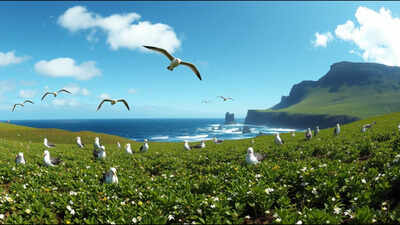
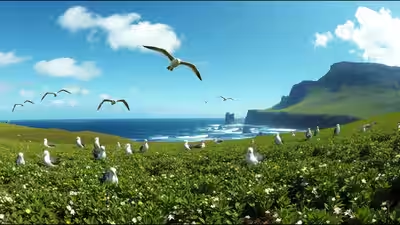
Macquarie Island, a windswept strip of land halfway between Australia and Antarctica, spent nearly two centuries under siege from animals that were never meant to be there. Sealers and whalers introduced cats, rats, rabbits and mice to the island in the nineteenth century, and those species went on to devastate the millions of seabirds that once bred there, wiping out two native bird species entirely along the way. Between 2011 and 2014, teams carried out what became the largest multi-predator eradication ever attempted on an island of its size, clearing Macquarie of its last rabbits, rats and mice after cats had already been removed years earlier. More than a decade later, scientists are now measuring exactly what has come back, tracking seabird populations, vegetation cover and the wider ecosystem to understand how thoroughly the island can recover once its invasive predators are gone.
Why Macquarie Island needed the world’s largest predator eradication
Introduced predators reshaped Macquarie Island’s ecosystem almost from the moment they arrived, with rats and mice preying directly on seabird eggs, chicks and smaller adult birds, while rabbits stripped away the vegetation those same birds relied on for cover and nesting. Left unchecked, rabbit grazing destroyed almost half of the island’s tall tussock grassland and depleted the plant species birds depended on most, according to a program summary describing the Macquarie Island Pest Eradication Program’s impacts on vegetation and seabirds. Loss of vegetation cover also triggered widespread slope erosion, further damaging the burrows and nesting sites that ground-nesting seabirds needed to breed successfully, compounding the direct predation pressure from rats and mice.
How the eradication project actually removed the invasive species
Feral cats were the first invasive predator tackled on Macquarie Island, eliminated through a sustained control program that ran from the 1970s through the 1990s. The far larger task of removing rabbits, rats and mice followed, funded jointly by the Australian and Tasmanian governments under an agreement reached in 2007, with the Tasmanian Parks and Wildlife Service leading the operation on the ground. Aerial baiting began in 2010 but ran into unexpected complications, including the deaths of some scavenging seabirds that fed on poisoned rabbit carcasses. Teams responded by introducing a rabbit-specific virus to help drive down rabbit numbers further, then followed up with detector dogs and hunters to track down the last surviving animals, a process that by 2014 led officials to declare the island free of all three target species.
What the science shows about how seabirds are recovering
A peer-reviewed study titled Patterns of Recovery in Extant and Extirpated Seabirds After the World’s Largest Multipredator Eradication, published in the journal Conservation Biology, examined how seabird populations have responded across the island in the years since the predators were removed. The researchers found that populations across multiple species were recovering passively, meaning the simple removal of the invasive predators was enough to allow numbers to rebound without any additional intervention required. According to the study, at least one seabird population is continuing to recover even without active management support, a finding the authors describe as an important signal for how resilient seabird populations can be once the core threat driving their decline is eliminated.
Why some species disappeared entirely before the predators were gone
Not every native species survived long enough to benefit from the eradication. Two endemic land bird taxa, a rail and a parakeet, went extinct during the period when introduced predators dominated the island, a loss the study’s authors describe as a permanently closed chapter in Macquarie Island’s history. For species that did survive, recovery has not looked identical across the board, with some seabirds rebounding quickly while others have taken longer to reestablish breeding colonies, reflecting differences in how directly each species was affected by predation versus habitat loss from rabbit grazing. Grey petrels, for instance, successfully bred on the island in 2000 for the first time in more than a century following the earlier removal of feral cats, well before the rabbit and rodent eradication had even begun.
How the island’s vegetation and terrain are also bouncing back
Alongside the return of seabirds, the island’s vegetation has shown clear signs of recovery in the years since rabbits were removed, with tussock grasses and megaherbs once stripped bare by grazing now regrowing across large sections of the island. According to the Australian Antarctic Program’s own account of the island’s recovery, researchers who returned to survey the island a decade after the eradication described dramatic changes to the landscape, with vegetation reclaiming slopes that had previously been left bare and eroded by decades of overgrazing. That regrowth matters directly for seabirds, since denser vegetation cover offers better protection for nesting burrows and reduces the erosion risk that once destabilised many breeding sites across the island.
What ongoing monitoring is expected to reveal next
Researchers say the work is far from finished, since a full ecological recovery on an island as large and complex as Macquarie is expected to unfold over decades rather than years. Long-term wildlife monitoring programs backed by the Australian and Tasmanian governments continue to track seabird populations, vegetation cover and predator-free status across the island, with officials stressing that preventing any reintroduction of pests through visiting ships remains just as critical as the original eradication effort. Because Macquarie Island now sits among a small but growing network of predator-free subantarctic islands, including recent or ongoing eradication projects on South Georgia and the Antipodes Islands, scientists say what continues to unfold there will help guide conservation planning on similarly threatened islands elsewhere in the world.